
A courthouse technician enables the firmware control that will not start an operating system whose boot files fail a signature check. Which control is that?
Select an answer to reveal the explanation.
Short Explanation
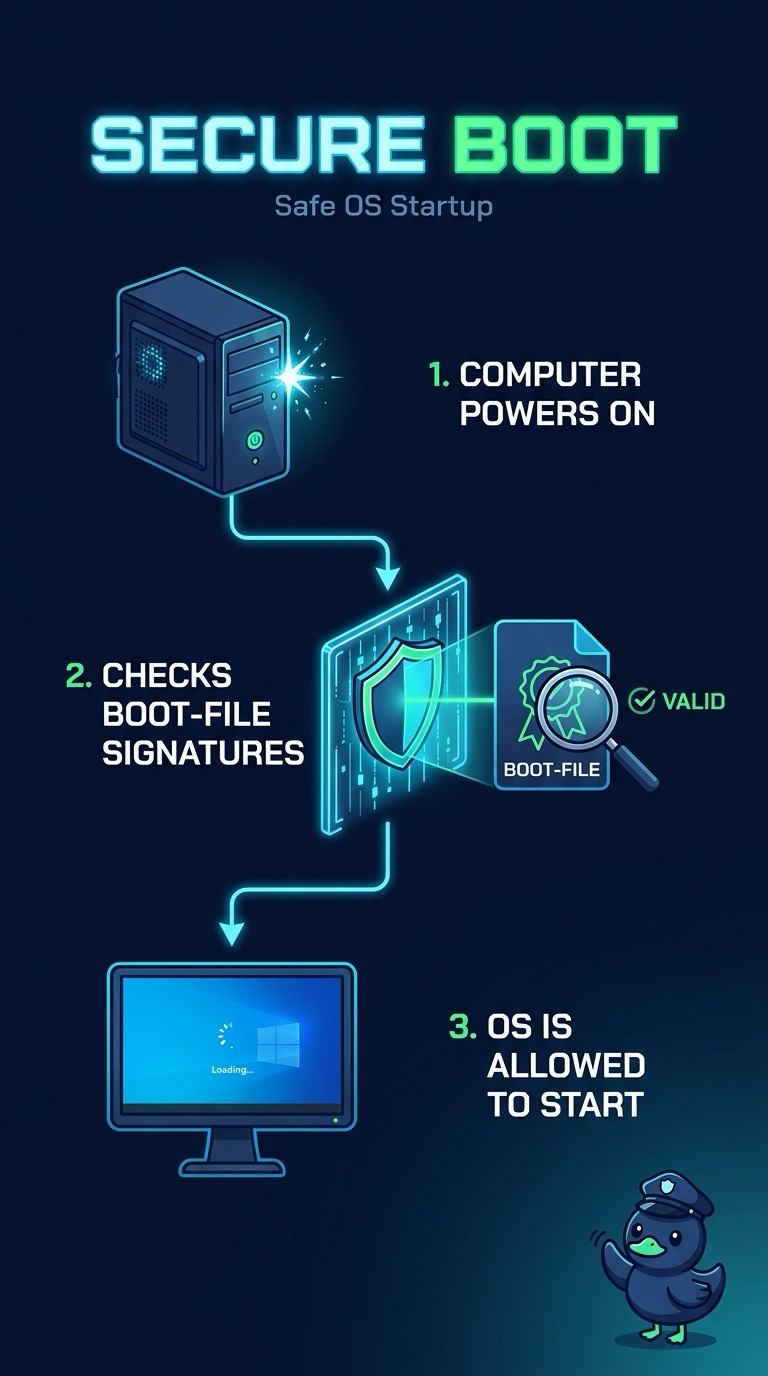
The firmware is a bouncer that checks the band's ID before it lets the show start. That check of boot signatures is Secure Boot, and you enable it in firmware. A setup password, the key-storage chip by itself, and the processor's virtualization switch do not perform this signature gate.
Full Explanation
Secure Boot is the firmware feature that verifies signatures on the boot files and refuses to start an operating system that fails the check. The courthouse control matches that behavior. A BIOS supervisor password only limits who can change firmware settings. It does not inspect boot-file signatures. A TPM stores keys and measurements. Secure Boot may work with keys the platform holds, and the feature that refuses the unsigned bootloader is Secure Boot, not the chip described as if it were the whole control. Virtualization extensions let a processor run guest machines efficiently. They do not verify boot signatures. Exam caveat: turning Secure Boot on can stop an unsigned recovery tool or an older operating system from starting. Confirm the operating system supports it before you enable it on a machine you still need to boot. Operational check: enable Secure Boot, confirm a normal startup still works, and confirm an unsigned test loader is refused. Boot the courthouse image once with Secure Boot on, and keep a signed recovery method nearby.