
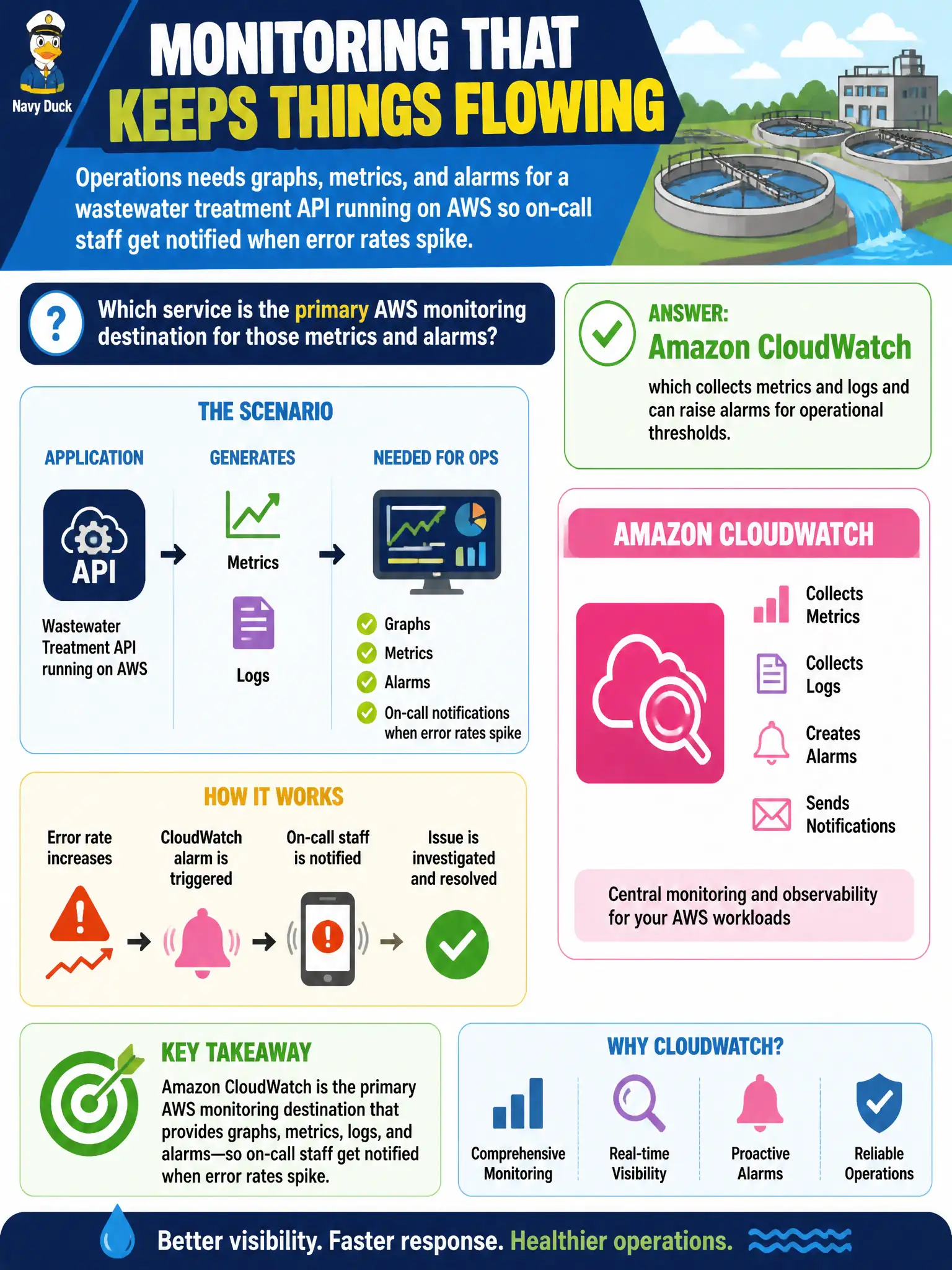
Operations needs graphs, metrics, and alarms for a wastewater treatment API running on AWS so on-call staff get notified when error rates spike. Which service is the primary AWS monitoring destination for those metrics and alarms?
Select an answer to reveal the explanation.
Short Explanation
CloudWatch is the ops dashboard and smoke alarm for AWS workloads — metrics, logs, and alarms live there so a wastewater API spike can page the right person. CloudTrail answers who called which API, not how hot the CPU is. Artifact and Shield are compliance docs and DDoS protection, not your day-to-day monitor.
Full Explanation
Amazon CloudWatch is the primary AWS monitoring destination for graphs, metrics, logs, and alarms when operations needs on-call notification for a wastewater treatment API whose error rates spike. CloudWatch collects metrics and logs and can raise alarms against operational thresholds so the right municipal engineer is paged. AWS CloudTrail is not the default metrics and alarm service for application latency; it records API activity for auditing who did what. AWS Artifact provides compliance reports and agreements; it does not stream live operational graphs for municipal APIs. AWS Shield Advanced focuses on enhanced DDoS protection and related support engagements; it does not replace CloudWatch for application performance monitoring. Distractors fail by confusing the API audit trail, compliance paperwork, and DDoS tooling with day-to-day metric monitoring. Exam caveat: CloudWatch instrumentation still requires customers to emit or enable relevant metrics, choose alarm thresholds wisely, and own response runbooks under shared responsibility. Operational check: define golden signals for the wastewater API, create alarms on error rate and latency, route notifications to the current on-call channel, retain logs per records policy, and test alarm delivery after roster changes so pages do not vanish into abandoned chat rooms.