
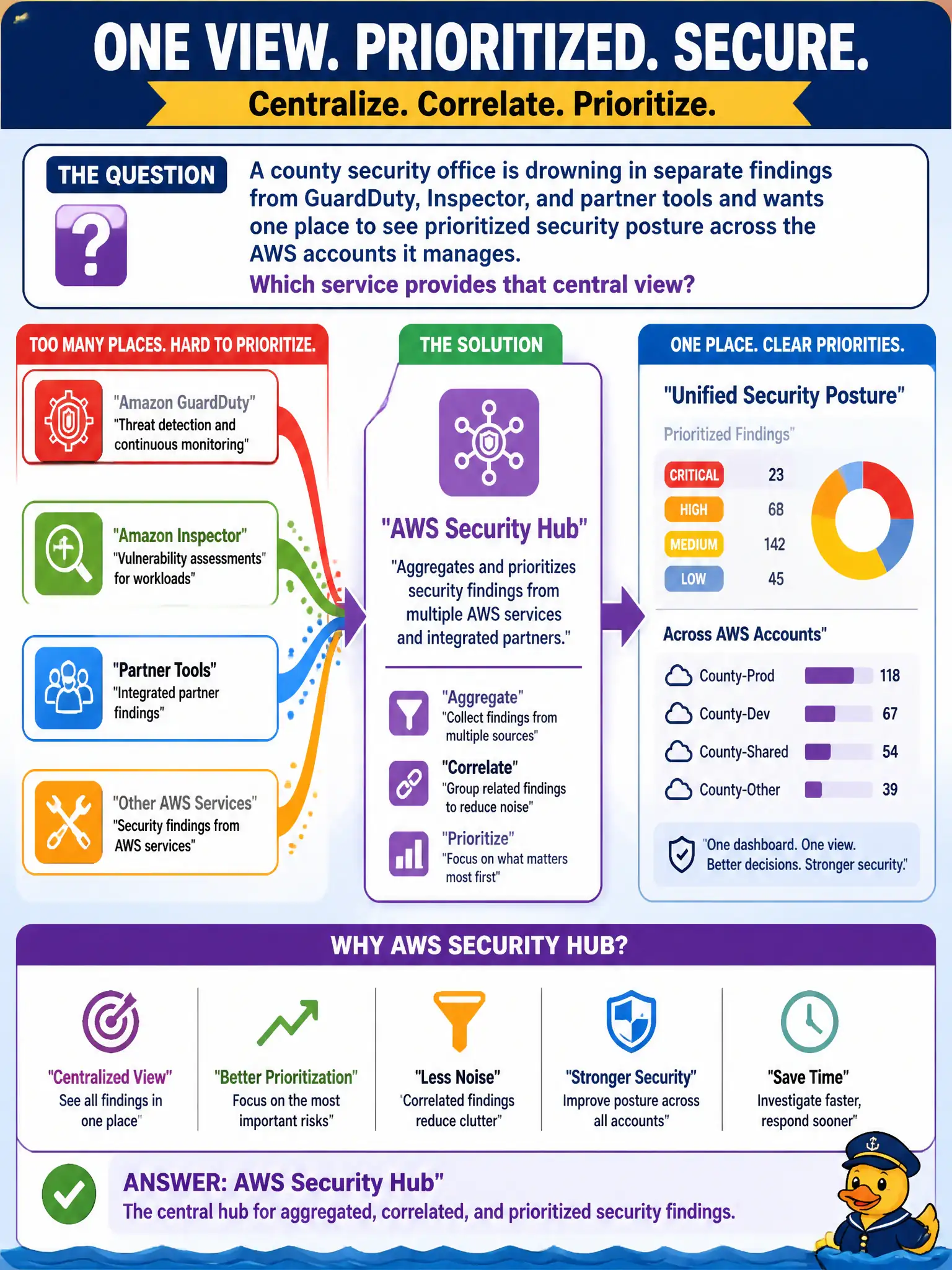
A county security office is drowning in separate findings from GuardDuty, Inspector, and partner tools and wants one place to see prioritized security posture across the AWS accounts it manages. Which service provides that central view?
Select an answer to reveal the explanation.
Short Explanation
Picture a county emergency board that pulls alerts from fire, police, and public works into one wall map. Security Hub is that wall — it gathers findings from GuardDuty, Inspector, and partners so leadership can prioritize what matters. It is not a single detector and it is not DDoS protection.
Full Explanation
AWS Security Hub aggregates and prioritizes security findings from multiple AWS services and integrated partners, giving municipal leadership a single wall map rather than forcing analysts to hop across consoles. Picture a county emergency board that pulls alerts from fire, police, and public works into one view — Security Hub plays that role for GuardDuty, Inspector, and partner findings so teams can prioritize what matters for civic systems. Amazon GuardDuty alone does not replace every other finding source or remove the value of aggregation. AWS Shield Standard focuses on DDoS protection, not consolidating vulnerability scan results into a posture dashboard. Amazon CloudWatch Logs Insights is powerful for log analytics but is not the only supported way to score account security posture and is not Security Hub's aggregation mission. Distractors fail by collapsing the ecosystem into one detector, by confusing DDoS protection with finding aggregation, or by overstating Logs Insights as the sole posture tool. Exam caveat: enabling Security Hub still requires customers to act on findings — aggregation is not automatic remediation. Operational check: enable Security Hub in municipal accounts, link key finding providers, set owners for high-severity items, and review dashboards in change-advisory or security operations meetings.