
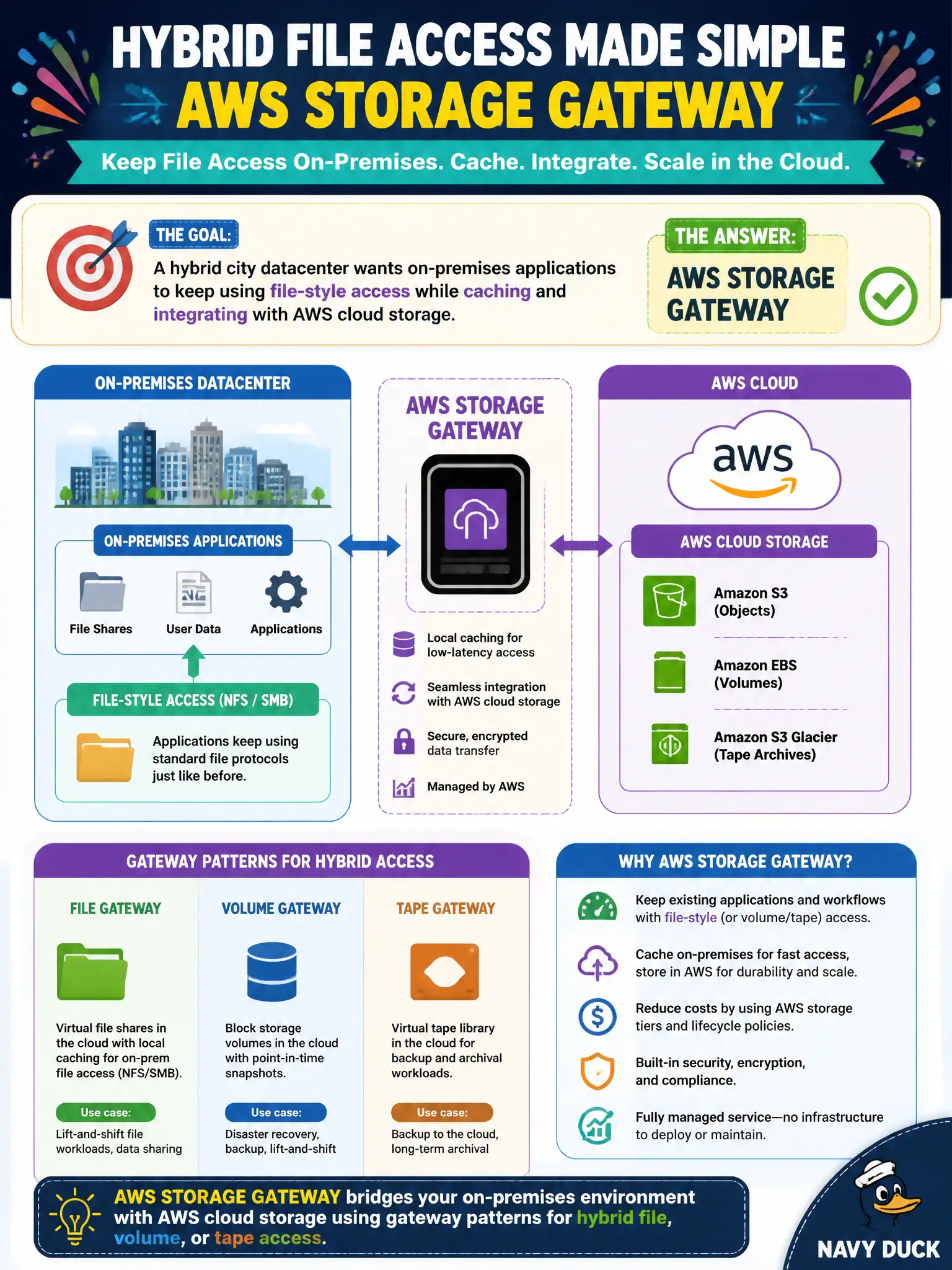
A hybrid city datacenter wants on-premises applications to keep using file-style access while caching and integrating with AWS cloud storage. Which service provides gateway patterns for that hybrid file, volume, or tape access?
Select an answer to reveal the explanation.
Short Explanation
Hybrid means the old datacenter apps still speak files or volumes while AWS holds the durable copy. AWS Storage Gateway sits in that middle lane with file, volume, and tape gateway patterns so on-premises access can cache and connect into cloud storage without a full rip-and-replace on day one.
Full Explanation
Hybrid city datacenters often need on-premises applications to keep using file-, volume-, or tape-style access while durable data integrates with AWS cloud storage. AWS Storage Gateway provides those gateway patterns: file gateway, volume gateway, and tape gateway modes so existing civic apps can cache and continue familiar protocols while content lands in cloud storage such as S3 or is presented as cloud-backed volumes/virtual tapes. It is the Cloud Practitioner service to identify for hybrid storage access without a full rip-and-replace of every on-premises application on day one.
Amazon API Gateway WebSocket APIs manage real-time API connections; they are not an SMB/NFS hybrid storage gateway. AWS Transit Gateway Connect peers relate to network transit connectivity, not file caching gateways. Amazon Cognito user pools manage application authentication identities; they are not a file cache appliance. Distractors recycle networking and identity brands into a storage-gateway role they do not fill.
Exam caveat: Storage Gateway = hybrid access patterns; Snow Family = physical data movement appliances; DataSync = managed data transfer between locations; S3 = the cloud object store often behind file gateway designs. Do not conflate "gateway" in API Gateway with Storage Gateway.
Operational check for the hybrid records path: select the gateway type matching protocol needs (file vs volume vs tape), deploy the gateway appliance or VM on-premises per AWS guidance, connect to the VPC/endpoints securely, validate cache hit behavior for hot reads, confirm cloud durability targets (for example S3), and run a restore or tape-recovery drill so archivists trust the hybrid design before decommissioning old physical libraries.