
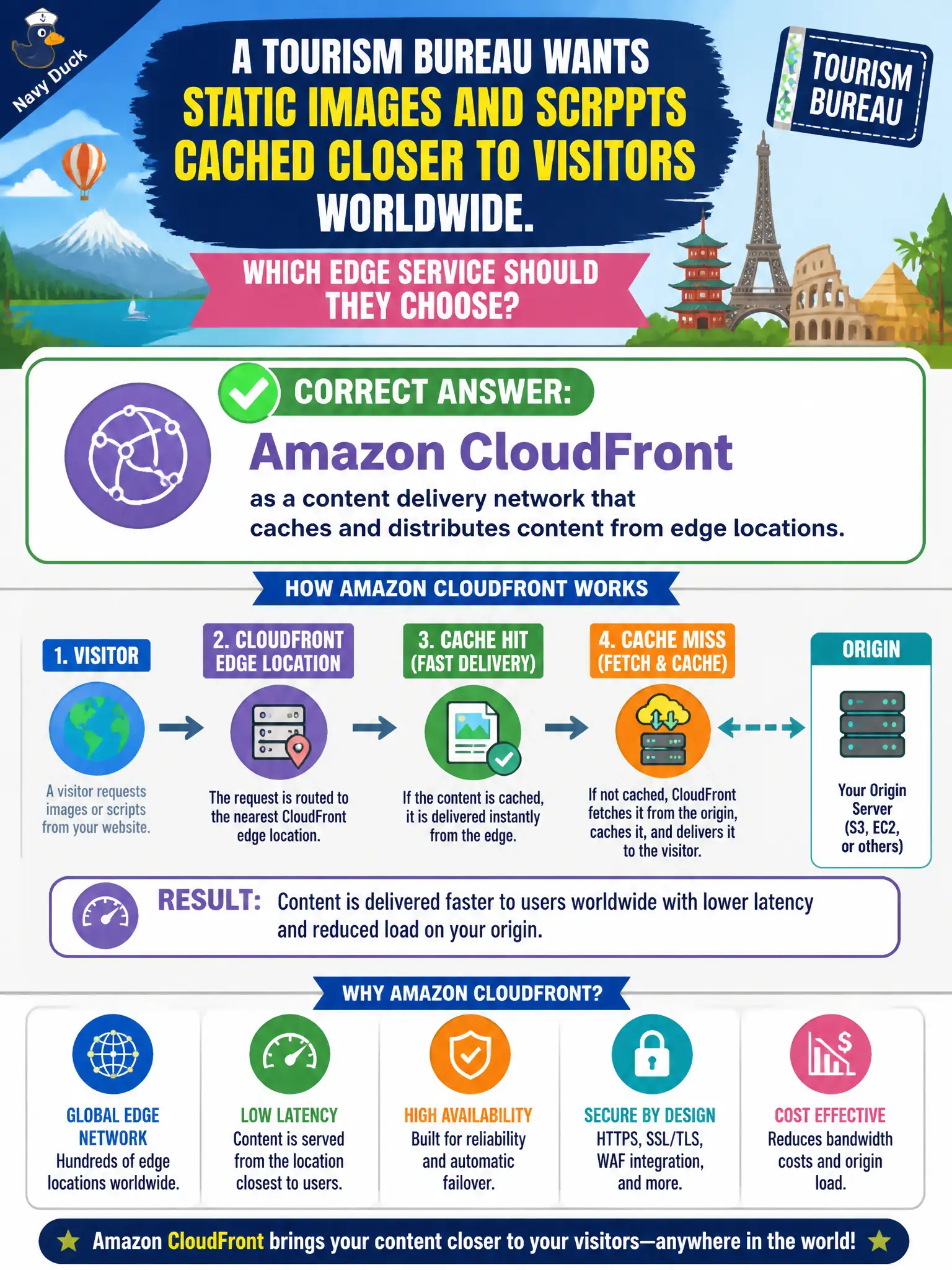
A tourism bureau wants static images and scripts cached closer to visitors worldwide. Which edge service should they choose?
Select an answer to reveal the explanation.
Short Explanation
CloudFront is the network of neighborhood newsstands—copies of your static assets sit closer to visitors so pages feel snappy. RDS is a database, CloudTrail logs API calls, and Config tracks resource compliance—not a CDN for images and scripts.
Full Explanation
A tourism bureau that wants static images and scripts cached closer to visitors worldwide should choose Amazon CloudFront. CloudFront is the AWS content delivery network that caches and distributes content from edge locations, reducing latency for static assets and lowering load on the origin Region. Brochure images, JavaScript, CSS, downloadable maps, and similar tourism-site assets are classic CloudFront workloads for civic marketing sites.
Amazon RDS Multi-AZ improves relational database availability inside a Region; it is not a global static asset CDN. AWS CloudTrail records API activity for governance and auditing; it is not an edge cache for images and JavaScript. AWS Config evaluates resource configuration compliance; it is not a content delivery network and is not used to terminate visitor TLS at Regions as a CDN design.
Exam caveat: Global static content caching → CloudFront edge locations. Global Accelerator improves network pathing to Regional applications using anycast; RDS, CloudTrail, and Config are unrelated distractors for this stem.
Operational check: place marketing assets in S3, create a CloudFront distribution with Origin Access Control, set TTLs appropriate for campaign update cadence, enforce HTTPS, invalidate caches when creative changes, and review cache-hit ratios after launch so the tourism bureau confirms worldwide visitors are mostly served from edges.