
The budget office asks why variable cloud spend can fit seasonal workloads better than fixed owned servers. What is the best foundational answer?
Select an answer to reveal the explanation.
Short Explanation
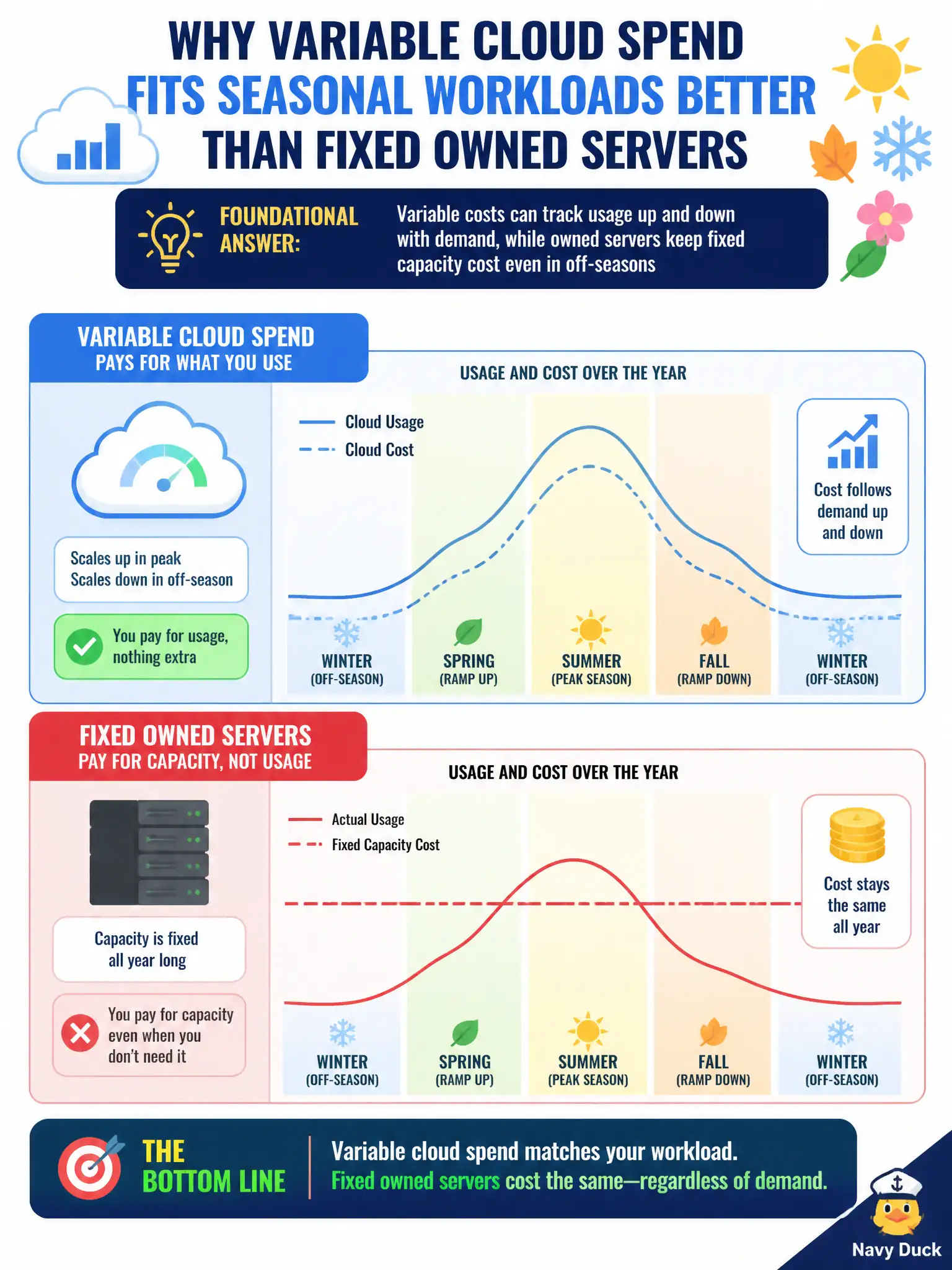
Summer festival traffic and quiet January look different — variable cloud spend can breathe with that rhythm. Owned servers still sit there costing money when the plaza is empty. That alignment to demand is the seasonal-workload win.
Full Explanation
Variable costs can track usage up and down with demand, while owned servers keep fixed capacity cost even in off-seasons—the best foundational answer for why variable cloud spend can fit seasonal municipal workloads better than fixed owned servers. Winter quiet periods stop burning the same iron cost as summer peaks when consumption billing follows usage.
Variable cloud spend does not always cost more than owned servers regardless of utilization—utilization and toil dominate TCO. Owned servers do not automatically shrink depreciation when demand falls. Seasonal workloads can and often should use cloud specifically because billing can change with usage.
Exam caveat: Variable vs fixed capacity cost is core CLF economics; do not treat “cloud always more expensive” as doctrine. Operational check: chart a seasonal civic workload’s monthly usage, estimate AWS variable cost versus owned peak-sized servers across twelve months, and present the off-season savings explicitly.
Municipal teams should keep a one-page decision record linking this Cloud Practitioner concept to resident outcomes, revisit it after major traffic or compliance changes, and ensure runbooks still match the chosen design.