
A municipal DBA team debates self-managing MySQL on Amazon EC2 versus using Amazon RDS. From a cloud economics and operations view, what is the key distinction?
Select an answer to reveal the explanation.
Short Explanation
Self-managing MySQL on EC2 is like owning the whole restaurant kitchen; RDS is closer to a managed kitchen where someone else handles more of the stove maintenance. You still own the recipes and the data, but you shed a lot of undifferentiated admin. That is the economics of managed services.
Full Explanation
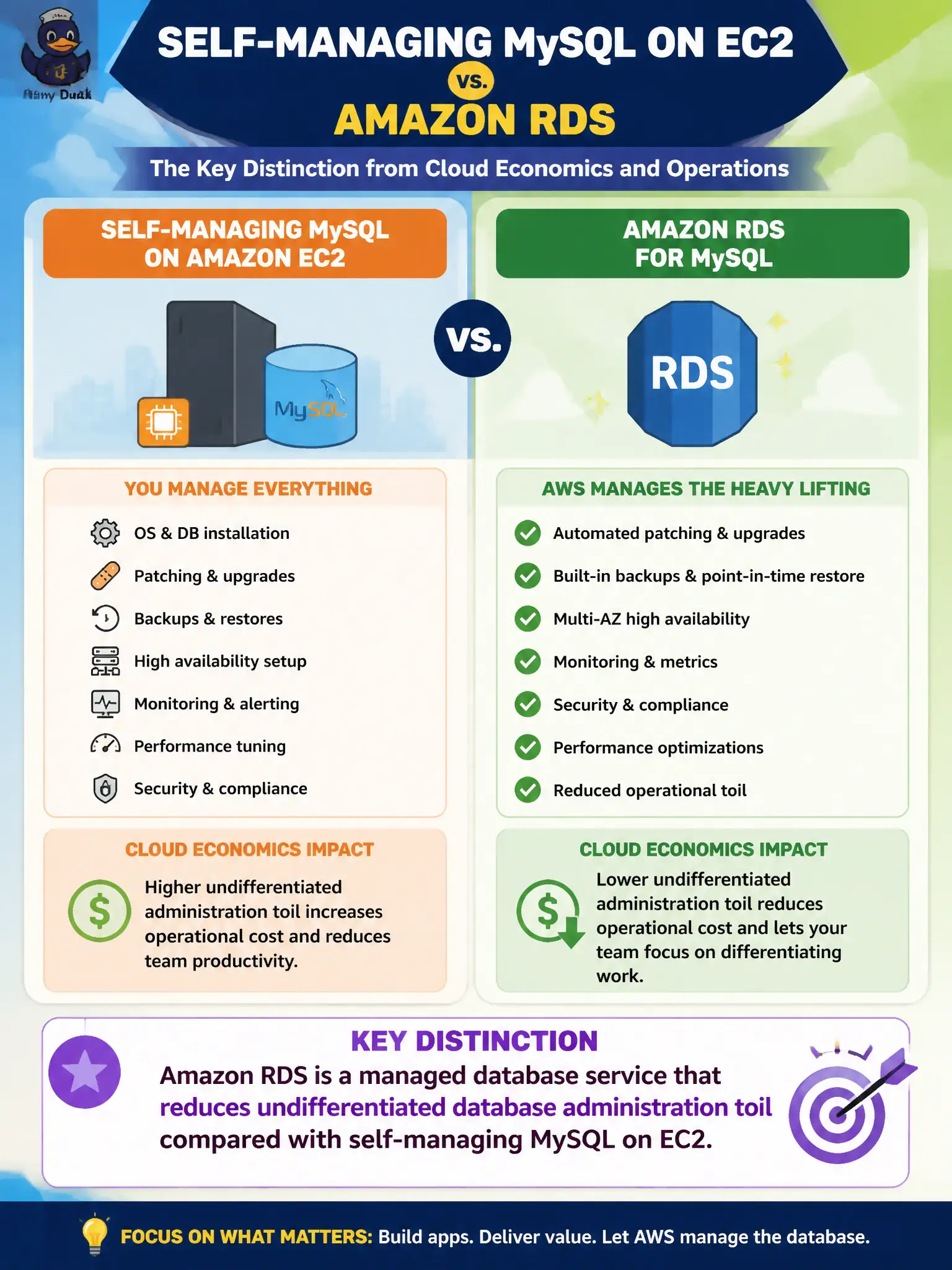
Amazon RDS is a managed database service that reduces undifferentiated database administration toil compared with self-managing MySQL on EC2. For a municipal DBA team, that distinction matters economically and operationally: RDS shifts much of patching, backup automation, and engine platform care toward the managed service, so scarce city DBAs spend more time on schema, performance, and data quality for citizen systems.
Claiming RDS and self-managed MySQL on EC2 place identical administrative burden for engine patching and backups erases the managed-service value. Self-managing on EC2 never eliminates all database responsibilities—it increases them relative to RDS. Saying RDS can only store log files and cannot run relational engines is factually wrong.
Exam caveat: Managed versus self-managed is a recurring CLF economics/ops theme; shared responsibility still leaves data, IAM, and app security with the customer on RDS. Operational check: compare DBA hours spent on patching/backups for a pilot schema on RDS versus an EC2 MySQL build, document remaining customer duties, and choose based on toil versus control needs.
Municipal teams should keep a one-page decision record linking this Cloud Practitioner concept to resident outcomes, revisit it after major traffic or compliance changes, and ensure runbooks still match the chosen design.