
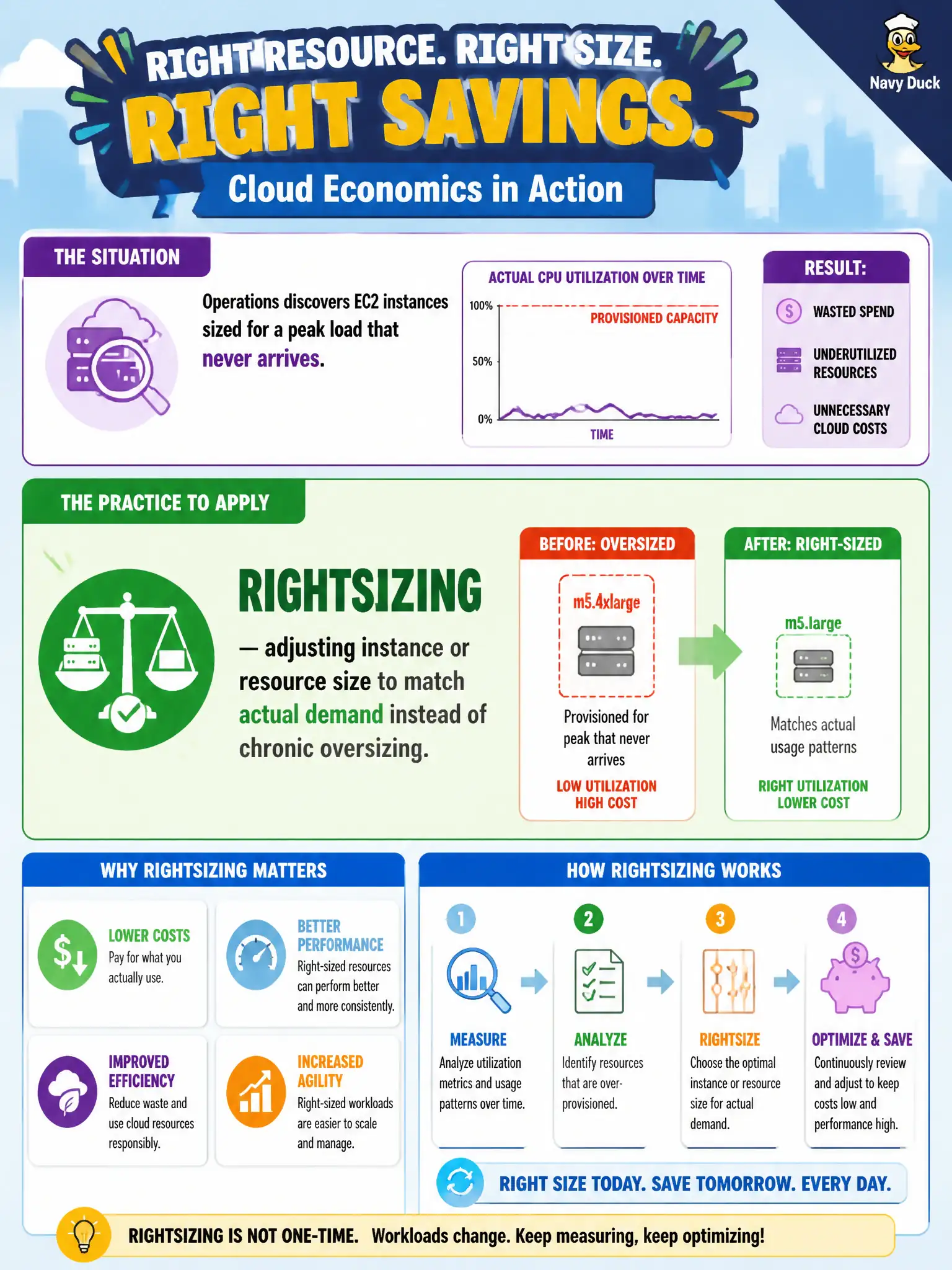
Operations discovers EC2 instances sized for a peak load that never arrives. Which cloud economics practice should the city apply?
Select an answer to reveal the explanation.
Short Explanation
An XL instance sitting idle is like renting a moving truck for a backpack. Rightsizing means match the truck to the load you actually have. Peak-that-never-comes sizing burns budget without buying better service.
Full Explanation
Rightsizing—adjusting instance or resource size to match actual demand instead of chronic oversizing—is the cloud economics practice operations should apply when EC2 instances are sized for a peak load that never arrives. Municipal FinOps depends on utilization feedback, not set-and-forget peak guesses.
Ignoring utilization metrics and renewing the largest size each year institutionalizes waste. Deleting Cost Explorer hides the problem. Moving oversized instances to a second unused Region without changing size doubles waste geography without fixing size.
Exam caveat: Rightsizing is a named cost practice; elasticity is related but the stem is chronic oversize vs actual demand. Operational check: review CPU/memory utilization for the fleet, downsize candidates in non-production first, enable recommendations where available, and report monthly savings.
Municipal teams should keep a one-page decision record linking this Cloud Practitioner concept to resident outcomes, revisit it after major traffic or compliance changes, and ensure runbooks still match the chosen design.
Municipal teams should keep a one-page decision record linking this Cloud Practitioner concept to resident outcomes, revisit it after major traffic or compliance changes, and ensure runbooks still match the chosen design.