
A city finance director contrasts buying servers owned for five years with paying monthly for variable AWS usage. What cost distinction is being described?
Select an answer to reveal the explanation.
Short Explanation
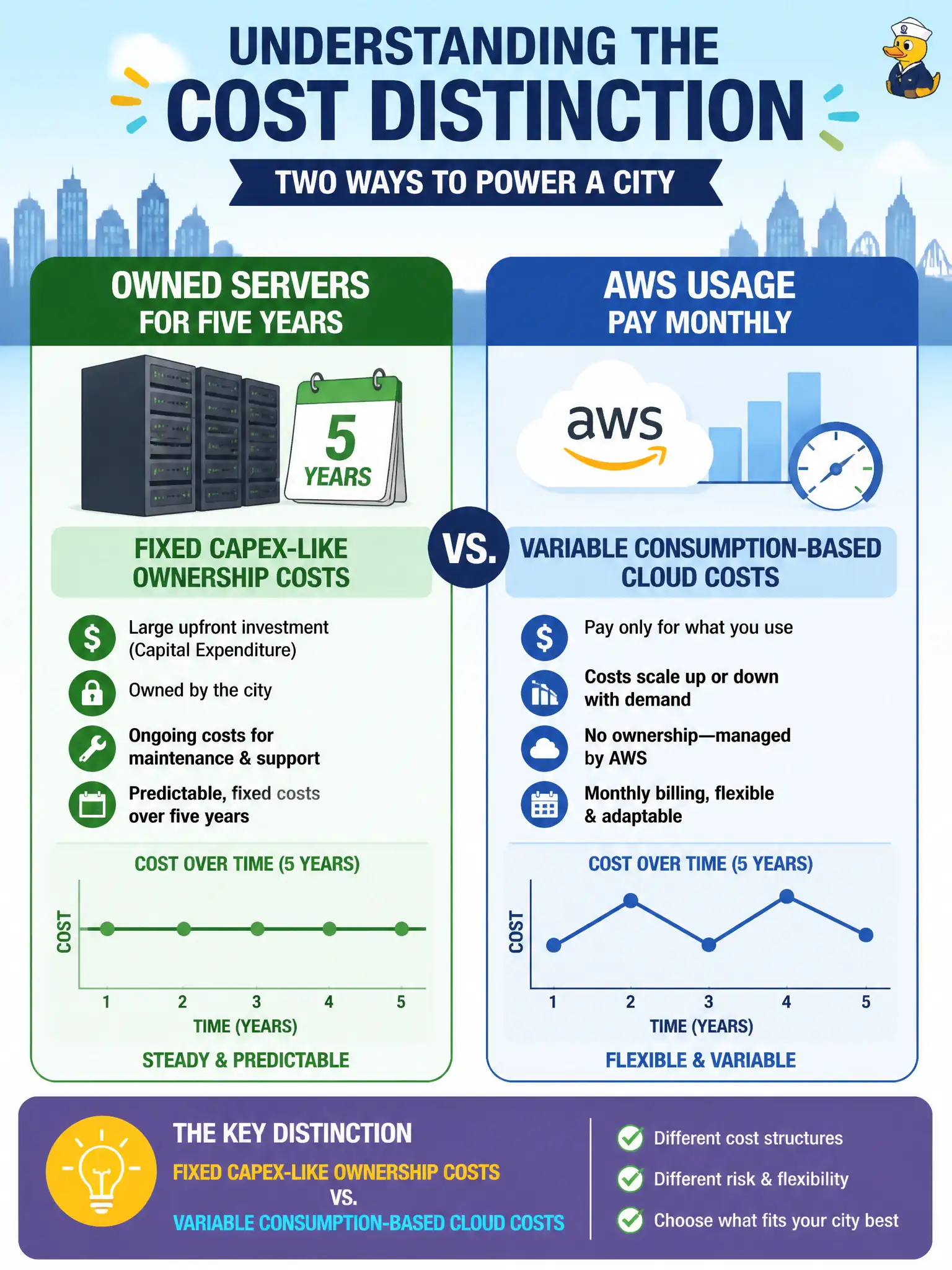
Owning servers for five years is like buying a bus fleet up front; paying monthly for usage is more like buying rides as ridership changes. That is fixed CapEx-style cost versus variable consumption cost. Cloud does not mean “never think about money” — it changes how spend tracks with demand.
Full Explanation
The finance director is describing fixed CapEx-like ownership costs versus variable consumption-based cloud costs. Buying servers owned for five years concentrates upfront capital and depreciation, while monthly variable AWS usage meters what the city consumes—foundational cloud economics for CLF-C02.
Variable costs existing only on premises with cloud always a single fixed invoice is backwards. Equating cloud usage fees to purchasing and depreciating hardware for a fixed five-year term erases the consumption model. Claiming monthly bills remove any need for cost models abandons FinOps discipline.
Exam caveat: CapEx/ownership vs OpEx/consumption is core CLF economics vocabulary. Operational check: present a side-by-side TCO for a municipal app (owned servers vs AWS usage), include power/cooling/refresh, and set budgets/forecasts for the variable model.
Municipal teams should keep a one-page decision record linking this Cloud Practitioner concept to resident outcomes, revisit it after major traffic or compliance changes, and ensure runbooks still match the chosen design.
Municipal teams should keep a one-page decision record linking this Cloud Practitioner concept to resident outcomes, revisit it after major traffic or compliance changes, and ensure runbooks still match the chosen design.