
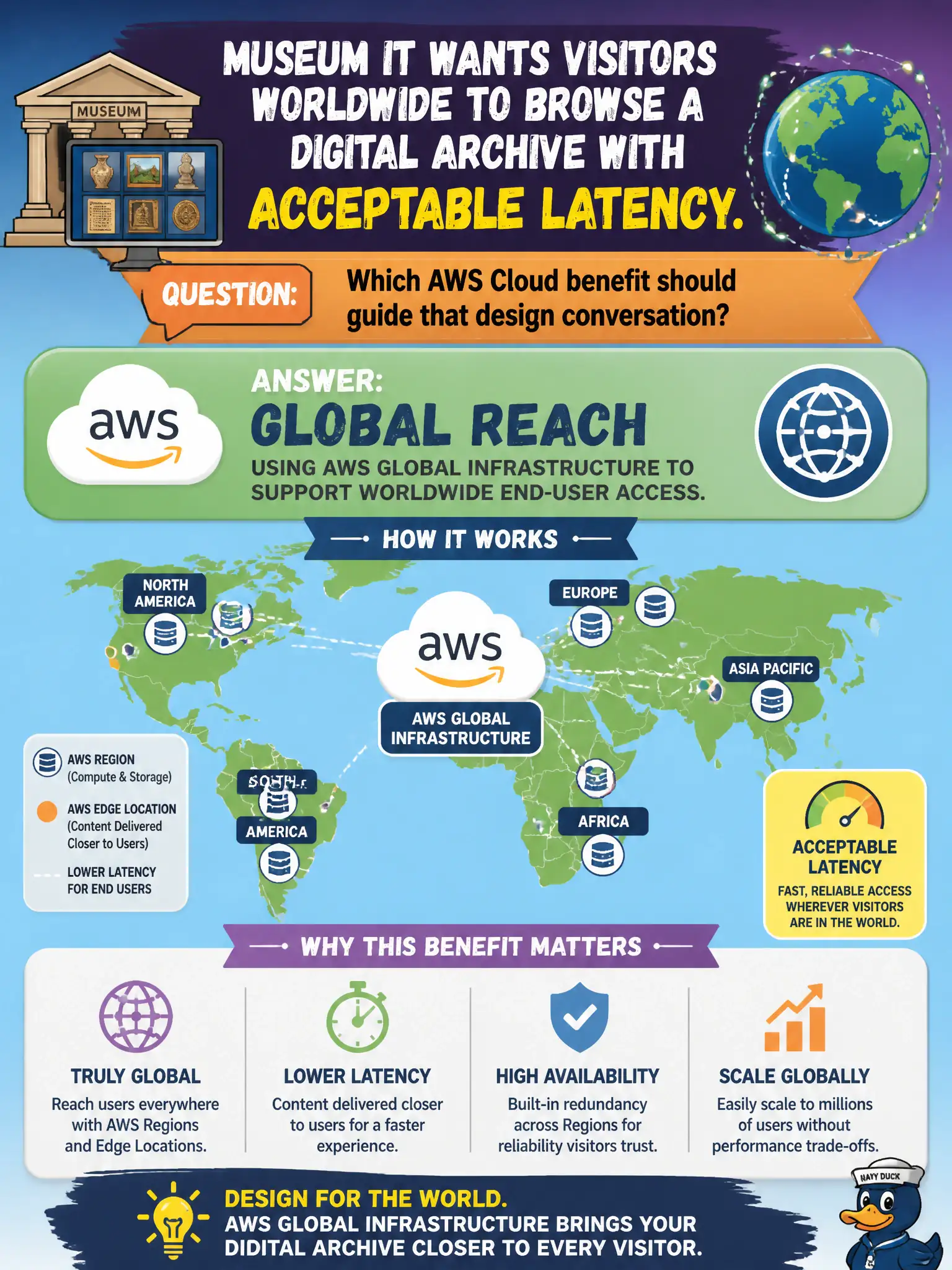
Museum IT wants visitors worldwide to browse a digital archive with acceptable latency. Which AWS Cloud benefit should guide that design conversation?
Select an answer to reveal the explanation.
Short Explanation
A worldwide audience should not all crawl to one museum basement hop. Global reach means leaning on AWS infrastructure so visitors farther away still get a workable experience. That is the benefit—not a lonely on-campus box.
Full Explanation
Global reach using AWS global infrastructure should guide museum IT’s design conversation when visitors worldwide need acceptable latency browsing a digital archive. Regions, edge locations, and related global services help place or cache content closer to distant visitors instead of forcing every request across the world to one campus basement.
Hosting only on one on-campus server so every visitor shares one building’s latency guarantees poor experience for remote patrons. Blocking all non-local IP addresses to keep the archive municipal-only contradicts the worldwide access goal. Defining global reach as a single UPS battery in the museum basement confuses facilities power continuity with geographic user reach.
Exam caveat: Global reach is about serving geographically dispersed users; UPS and single-building hosting are not substitutes. Operational check: measure archive page latency from clients in at least two distant countries or regions, enable an appropriate CDN or multi-Region content strategy for static assets, and verify public access works without requiring museum LAN presence.
Municipal teams should keep a one-page decision record linking this Cloud Practitioner concept to resident outcomes, revisit it after major traffic or compliance changes, and ensure runbooks still match the chosen design.