
A health department clinic portal must handle a sudden vaccination-registration surge. Which AWS Cloud advantage best matches that need?
Select an answer to reveal the explanation.
Short Explanation
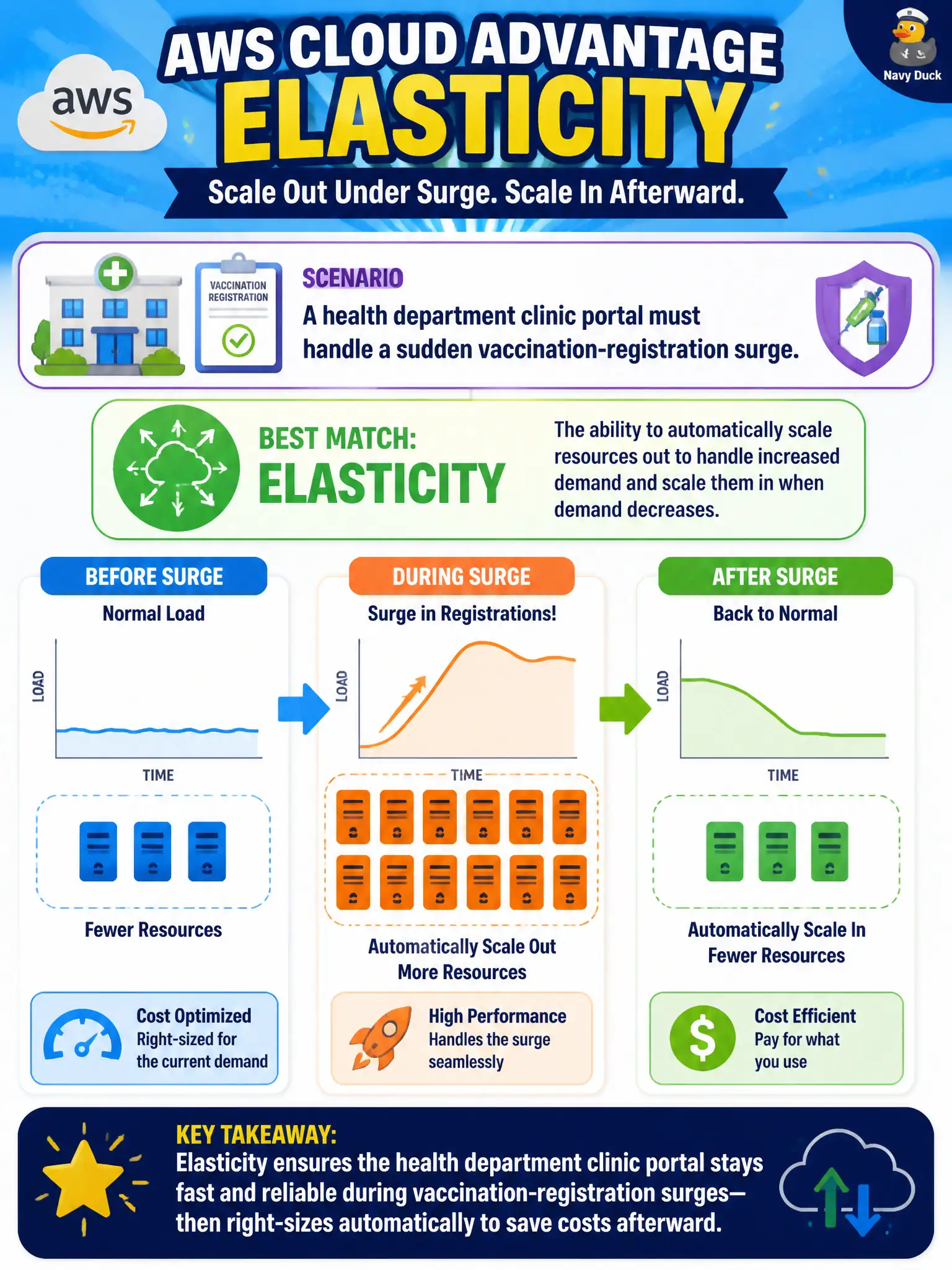
Vaccine sign-ups can slam a portal overnight. Elasticity means you scale out for the surge and scale back when the rush fades—no year-round mega-farm sitting idle. Match capacity to the moment, and the clinic portal stays usable.
Full Explanation
Elasticity best matches a health department clinic portal that must absorb a sudden vaccination-registration surge. Capacity scales out while registrations spike and scales in afterward, aligning resources—and cost—with the actual public-health demand curve rather than with a permanent peak-sized farm.
Buying a fixed server farm sized for the surge and leaving it idle all year locks CapEx into unused capacity after the campaign ends. Turning off capacity growth so the portal fails gracefully at the first spike abandons resident access precisely when clinics need the system most. Economies of scale that only reduce the price of unused basement hardware confuse unit-cost advantages with the ability to grow and shrink live capacity under surge.
Exam caveat: Surge stems almost always point to elasticity; economies of scale and HA are common distractors. Operational check: load-test the registration portal with a synthetic surge profile, verify Auto Scaling (or equivalent) adds capacity before error rates climb, then confirm scale-in after the surge and that Cost Explorer shows the transient cost bump rather than a year-round peak fleet.
Municipal teams should keep a one-page decision record linking this Cloud Practitioner concept to resident outcomes, revisit it after major traffic or compliance changes, and ensure runbooks still match the chosen design.