
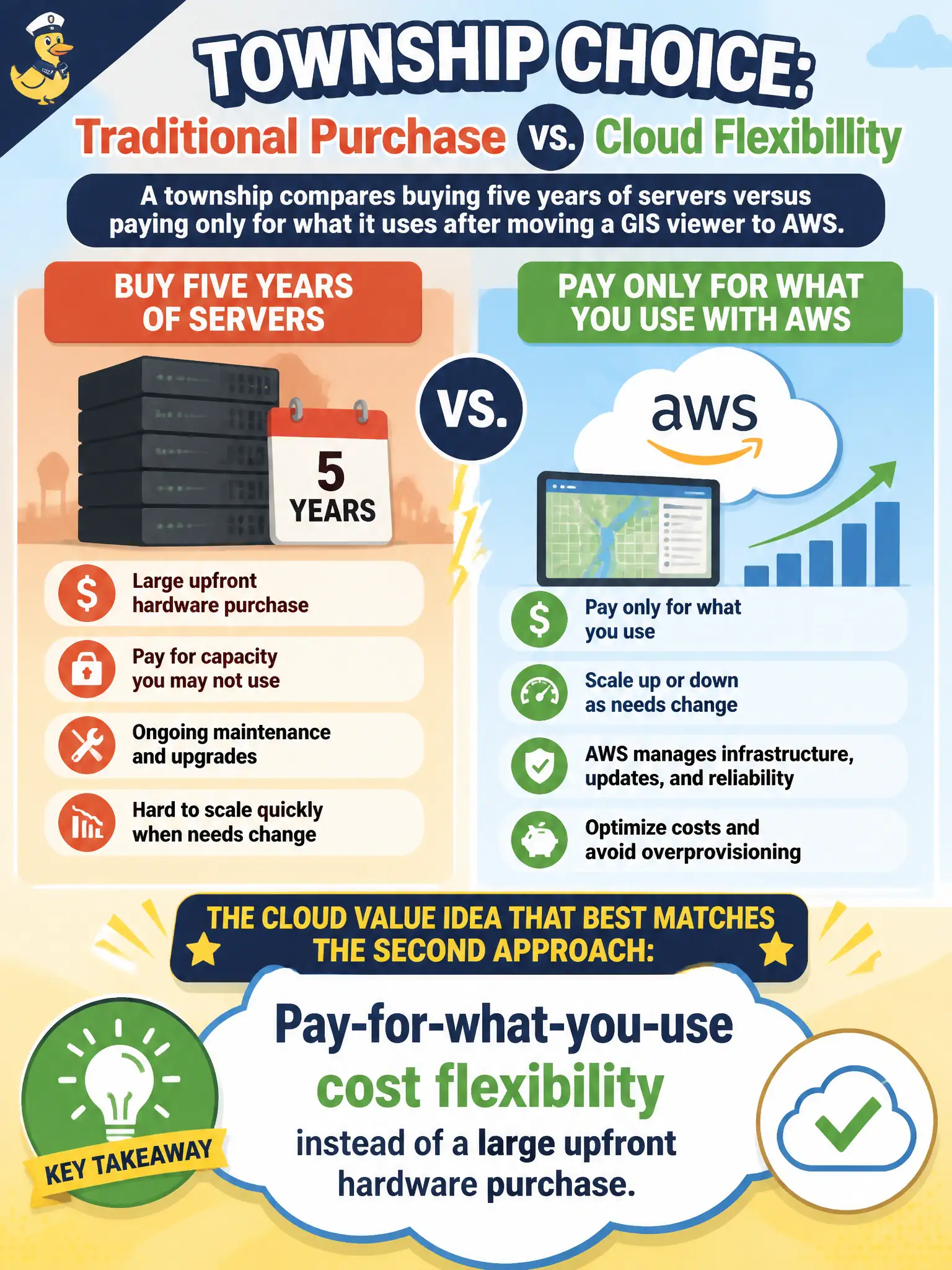
A township compares buying five years of servers versus paying only for what it uses after moving a GIS viewer to AWS. Which cloud value idea best matches the second approach?
Select an answer to reveal the explanation.
Short Explanation
Buying five years of iron for a GIS viewer is like stocking a warehouse for a weekend festival. Paying for what you use means the meter runs when maps are served and idle time does not burn a giant capital check. That cost flexibility is a core cloud value.
Full Explanation
Pay-for-what-you-use cost flexibility is the cloud value idea that matches moving a township GIS viewer to AWS instead of buying five years of servers. The municipality shifts from a large upfront hardware purchase toward paying for consumed resources, so idle nights and off-season weeks do not burn capital sitting in a closet.
Always oversizing on-premises servers so utilization stays near zero maximizes waste and is the opposite of consumption-based flexibility. Requiring CapEx approval for every hour of GIS map rendering invents a bureaucratic extreme that neither on-premises nor cloud models literally require and misses the point of metered OpEx. Owning every physical disk so variable cloud billing never applies deliberately rejects the consumption model the township is evaluating.
Exam caveat: Pay-as-you-go / pay-for-what-you-use is a foundational value proposition; Reserved Instances and Savings Plans are optional commitment discounts, not prerequisites to using the cloud. Operational check: run the GIS viewer under representative map-tile load for a pilot month, export Cost Explorer by service and tag, and compare that variable bill to the five-year hardware bid including power, cooling, and refresh—not just sticker price.