
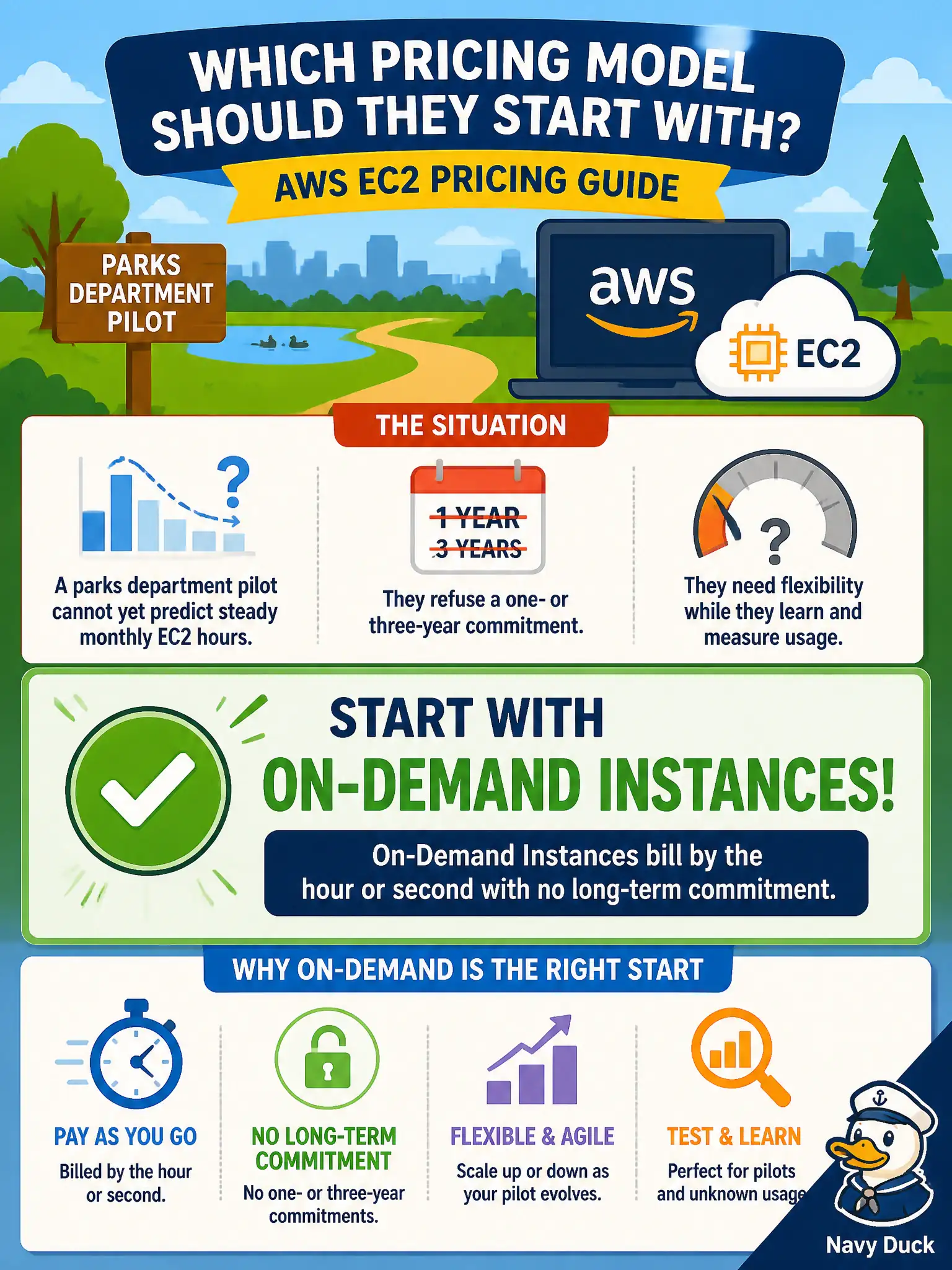
A parks department pilot cannot yet predict steady monthly EC2 hours and refuses a one- or three-year commitment. Which pricing model should they start with?
Select an answer to reveal the explanation.
Short Explanation
When usage is a guess and nobody will sign a multi-year deal, start On-Demand. Pay for what you run, then move to Reserved Instances or Savings Plans once the pattern is steady.
Full Explanation
A parks department pilot that cannot yet predict steady monthly EC2 hours and refuses a one- or three-year commitment should start with On-Demand Instances, which bill by the hour or second with no long-term commitment. Pilots exist to discover usage patterns; locking into All Upfront RIs before knowing demand strands municipal budget if the pilot shrinks or changes instance families. On-Demand preserves flexibility while the team learns.
A three-year All Upfront Reserved Instance purchased before any usage pattern is known is premature optimization. Dedicated Hosts are not required for every pilot merely to pin physical servers. AWS Snowball Edge is a data-transfer/edge appliance model, not the default EC2 pricing model for every pilot. Commitment and appliance distractors miss the no-commitment pricing need.
Exam caveat: Start uncertain workloads On-Demand; move steady state to RI/Savings Plans after metrics exist; use Spot only if interruption is acceptable. Pilots almost always begin On-Demand.
Operational check for parks: tag pilot resources, set a modest AWS Budget with alerts, calendar a review after 30–60 days of metrics, shut down idle instances nightly, and only then evaluate Savings Plans or RIs if the workload becomes steady and politically funded for the term.