
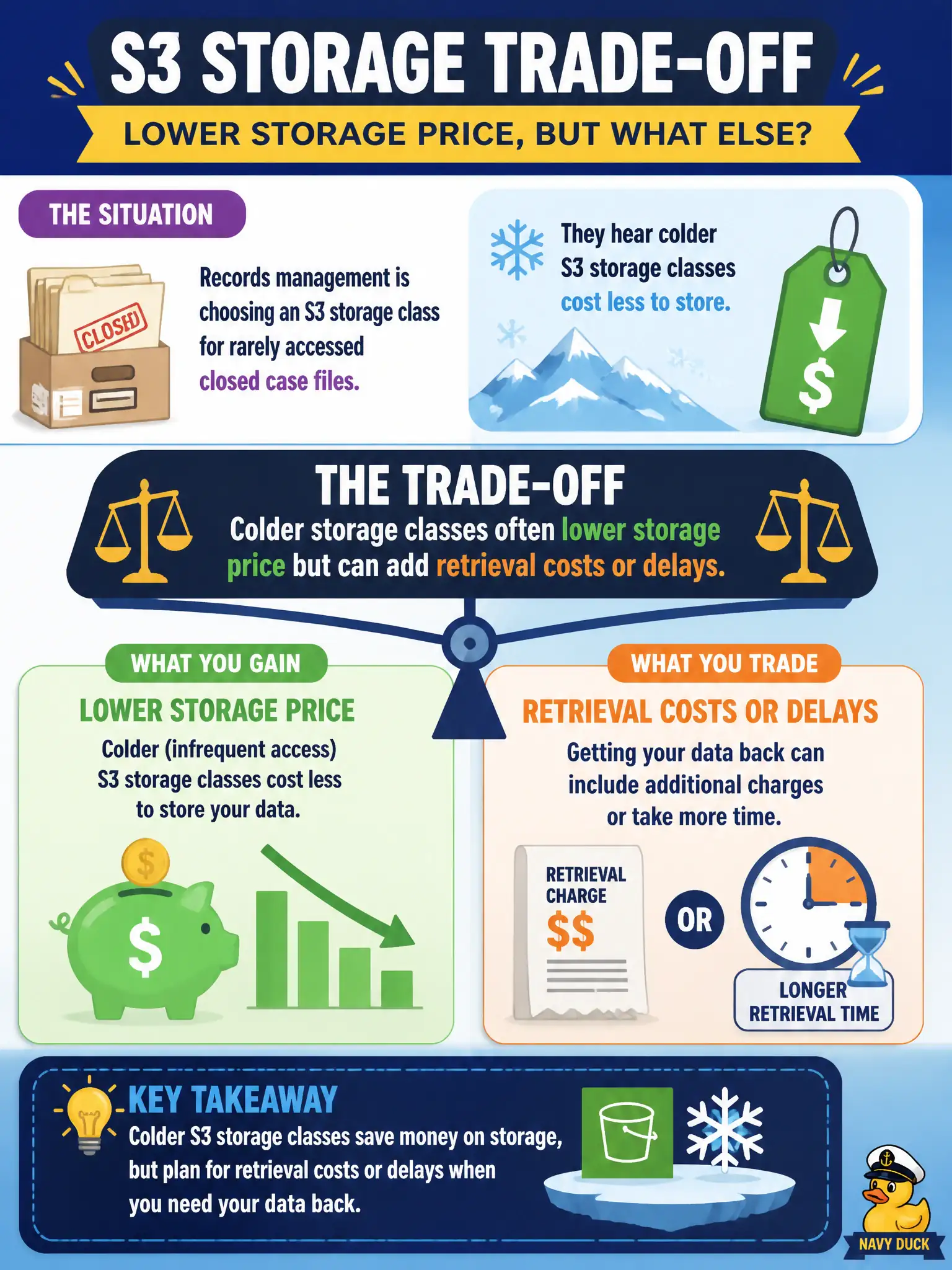
Records management is choosing an S3 storage class for rarely accessed closed case files and hears colder classes cost less to store. What trade-off should they also expect?
Select an answer to reveal the explanation.
Short Explanation
Colder S3 classes are like deep basement storage — cheaper monthly rent for boxes you almost never open, but expect a retrieval fee or wait when you do. They do not magically erase every access charge, and Standard is not automatically cheaper for untouched archives.
Full Explanation
Records management choosing an S3 storage class for rarely accessed closed case files should expect that colder storage classes often lower storage price but can add retrieval costs or delays. The municipal trade-off is explicit: pay less to keep boxes on cold shelves, then pay time and sometimes fees when a file must be fetched for discovery, audit, or public-records response. That balanced expectation prevents nasty surprises when a cold class looks cheapest on paper.
Colder classes do not always eliminate all retrieval fees and API charges forever. Standard storage is not always cheaper than Glacier-class options for untouched archives—the opposite is usually why archives exist. Storage class choice does affect pricing; object name length is not the pricing driver. Distractors either deny retrieval trade-offs or invent absurd pricing bases.
Exam caveat: Pair this with lifecycle policies. Know directional economics without memorizing every SKU. Instant Retrieval versus Deep Archive illustrate warmer versus colder archival points on the spectrum.
Operational check for closed cases: classify access frequency, pick classes matching SLA for legal retrieval, document restore runbooks and expected delays for attorneys, budget for bulk restores during litigation holds, and avoid placing actively consulted case files on the coldest class solely to minimize storage line items.