
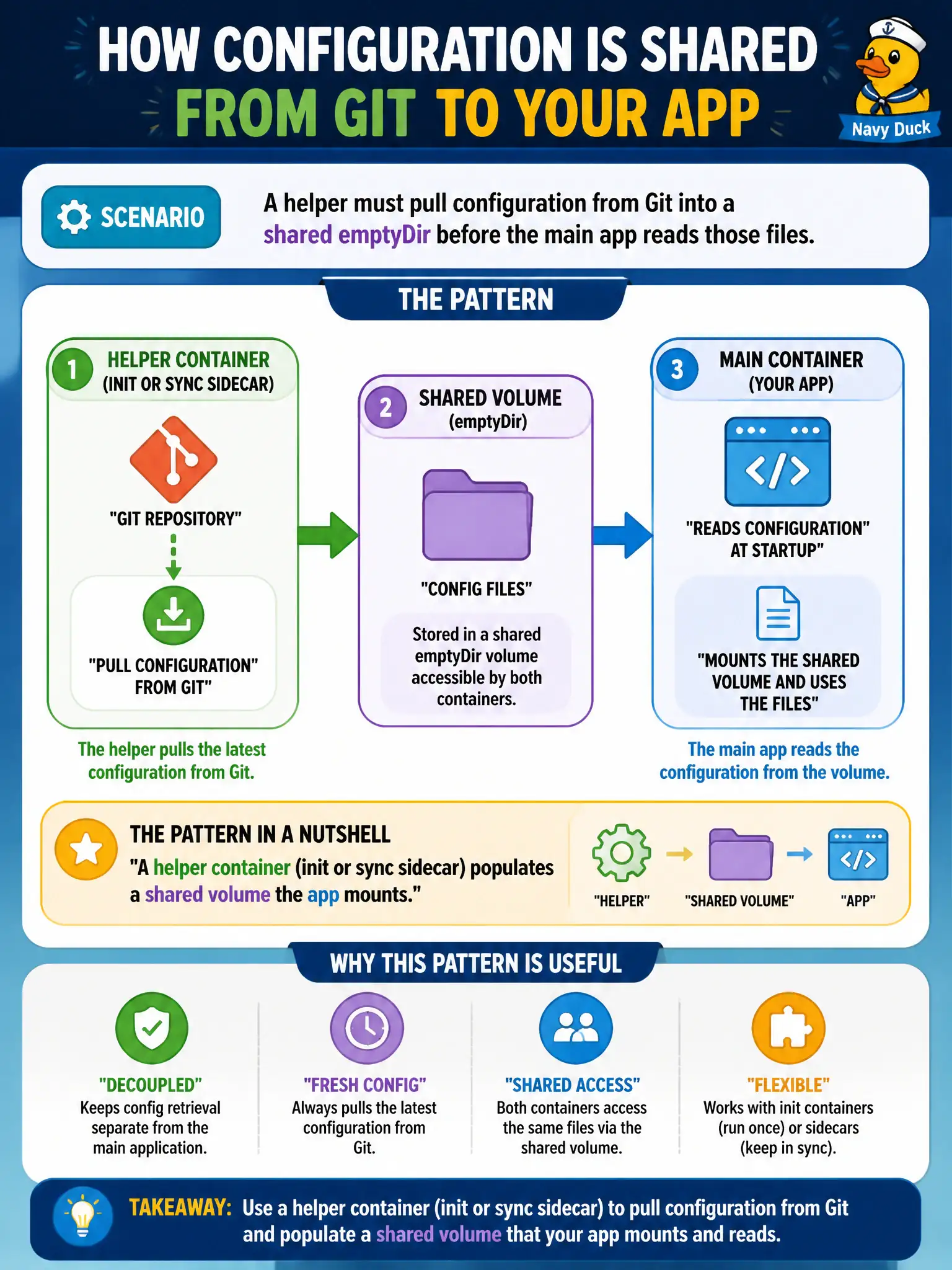
A helper must pull configuration from Git into a shared emptyDir before the main app reads those files. Which statement best describes the pattern?
Select an answer to reveal the explanation.
Short Explanation
It’s like a stagehand setting props on a shared table before the actor walks out—or refreshing them during the show. The helper fills emptyDir; the app just reads the files.
Full Explanation
A helper that must pull configuration from Git into a shared emptyDir before the main app reads those files is best described as a helper container—init for one-shot sync, or a sync sidecar for ongoing refresh—that populates a shared volume the application mounts. That pattern keeps Git credentials and sync tooling out of the main municipal app image while staging files locally inside the Pod for fast reads.
The claim that only a PersistentVolumeClaim can ever stage files for an application container is false; emptyDir is ideal for Pod-local staging. Requiring the app to download Git content through an Ingress controller inside the container couples the business logic to Git and exposes unnecessary network paths. Saying Git configuration can only be applied with a cluster-admin CRD ignores ordinary application helper containers.
Exam caveat: Init sync fits immutable configuration at start; a sync sidecar fits continuous pull. When content fits, prefer ConfigMaps and Secrets as the Kubernetes-native alternative to Git sync.
Operational check: kubectl logs -c git-sync; kubectl exec -c app -- ls on the mount path; with init sync, confirm the app starts only after init completes; with a sidecar, watch file updates over time.