
A Kustomize configMapGenerator builds a ConfigMap from local files and appends a content hash to the name. Why does that hash suffix matter for Deployments that reference the generated ConfigMap?
Select an answer to reveal the explanation.
Short Explanation
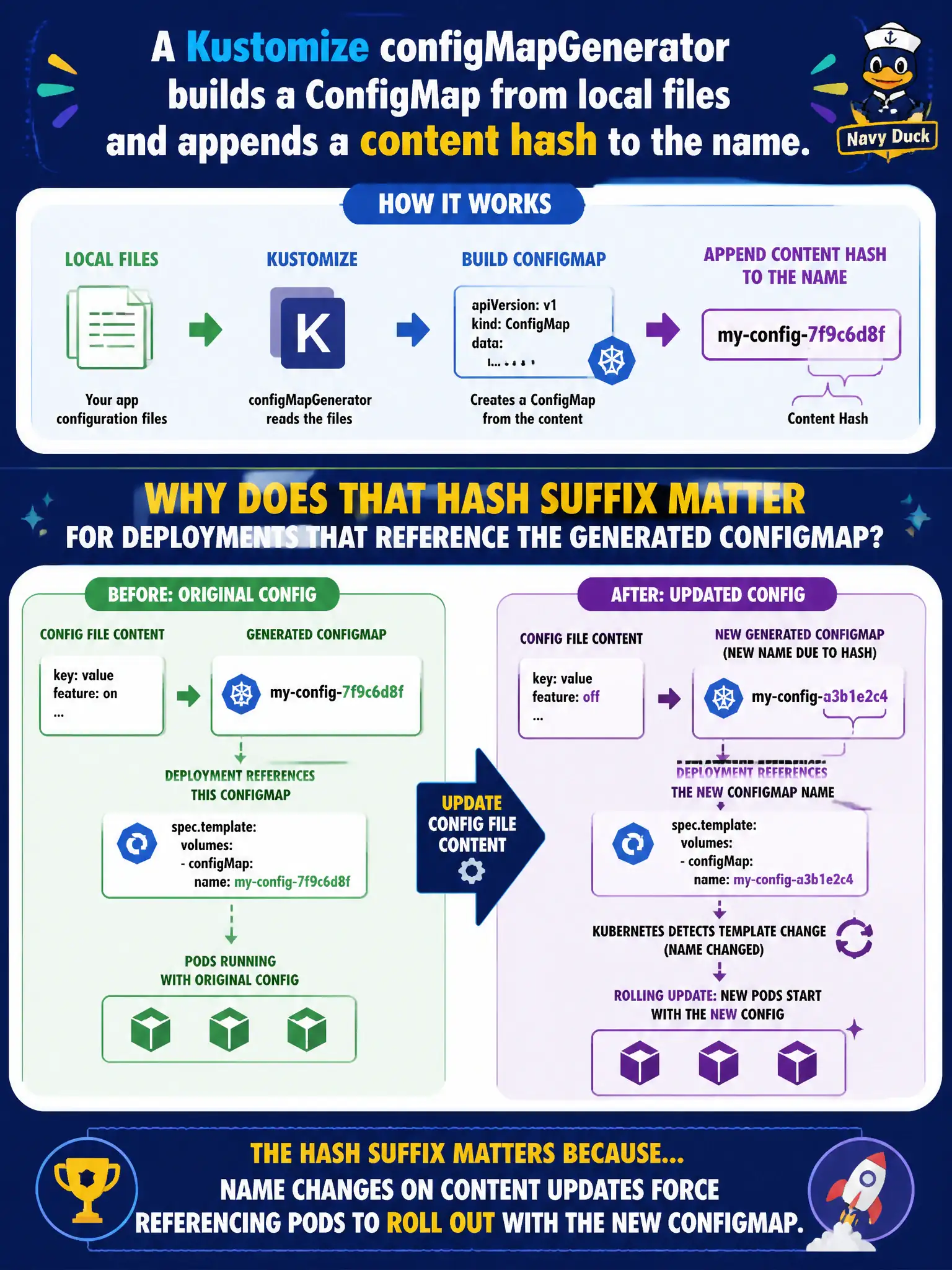
The hash suffix is a burglar alarm on the config package: change the files, get a new name, and anything pointing at the old name must update—usually kicking a rollout so Pods actually see the new settings.
Full Explanation
A Kustomize configMapGenerator that builds a ConfigMap from local files and appends a content hash to the name matters because name changes on content updates force referencing Pods to roll out with the new ConfigMap. The hash-suffixed name breaks the stale-mount problem: when municipal config files change, the generated object name changes, references update, and Deployments roll so city apps actually observe new configuration instead of silently keeping old mounted data.
Why the other options fail by concept: The hash does not disable all volume mounts until an administrator clears etcd. It does not convert the ConfigMap into a Secret automatically. It does not freeze the Deployment replica count at zero forever.
Exam caveat: Deployments must reference the generated ConfigMap through Kustomize name reference rewriting (usually automatic when volumes/envFrom are declared in resources Kustomize manages) or they will keep pointing at an old name. disableNameSuffixHash turns hashing off when a stable name is deliberately required. Large config updates still need readiness-safe rolling settings so resident traffic survives the forced rollout.
Operational check: Change a sourced config file, run kubectl kustomize and observe a new ConfigMap name suffix, apply -k, and watch the Deployment roll. kubectl describe pod should show the new ConfigMap name mounted; confirm the app serves the updated civic configuration.