
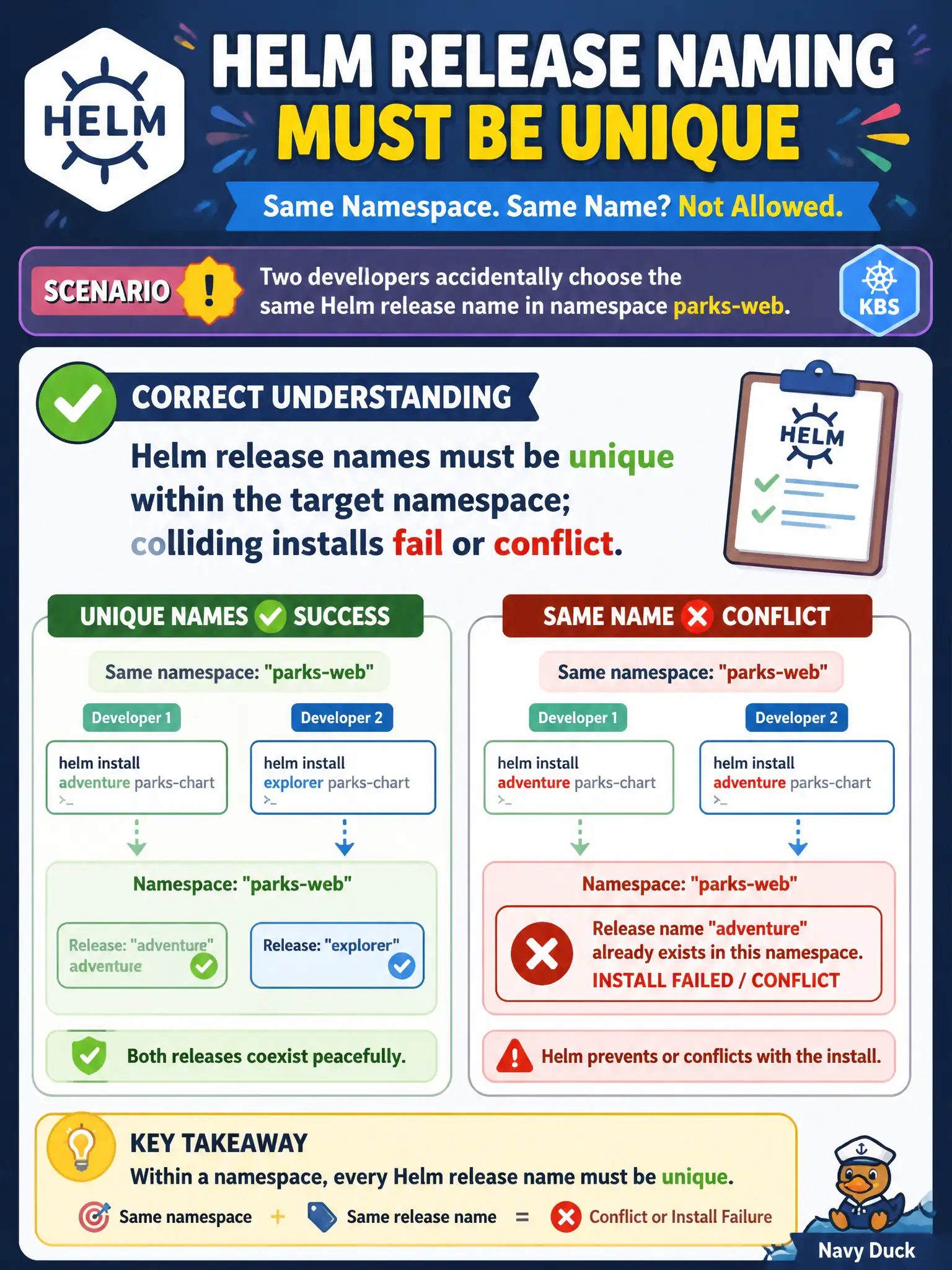
Two developers accidentally choose the same Helm release name in namespace parks-web. What is the correct understanding of Helm release naming?
Select an answer to reveal the explanation.
Short Explanation
Two storefronts can’t hang the same licensed sign on one street. In a namespace, Helm release names need to be unique—pick distinct names per install.
Full Explanation
Helm release names must be unique within the target namespace. When two developers accidentally choose the same release name in parks-web, the second install fails or conflicts rather than coexisting safely. The release name is the namespace-scoped identity Helm uses for upgrades, rollbacks, and status—like two storefronts that cannot hang the same licensed sign on one municipal street. Clear naming ownership prevents crossed upgrades on city apps.
Why the other options fail by concept: Release names are not merely cosmetic labels that may always collide safely inside one namespace. They also need not be globally unique across every Kubernetes cluster worldwide; uniqueness is scoped to the namespace (and Helm storage), not an Earth-wide constraint. Kubernetes does not automatically rename colliding Helm releases by appending the node name or any other suffix.
Exam caveat: Different namespaces may reuse the same release name without conflict. Helm’s storage Secrets/ConfigMaps encode the release name—collisions create confusing ownership during incident response. Establish naming conventions such as <team>-<app>-<env> on shared city clusters to make accidents rare and ownership obvious in helm list output.
Operational check: Before install, run helm list -n parks-web and search for the intended name. If it is taken, either choose a new release name or deliberately adopt the existing release with helm upgrade after confirming ownership. Record release names in the team service catalog so the next developer does not guess.