
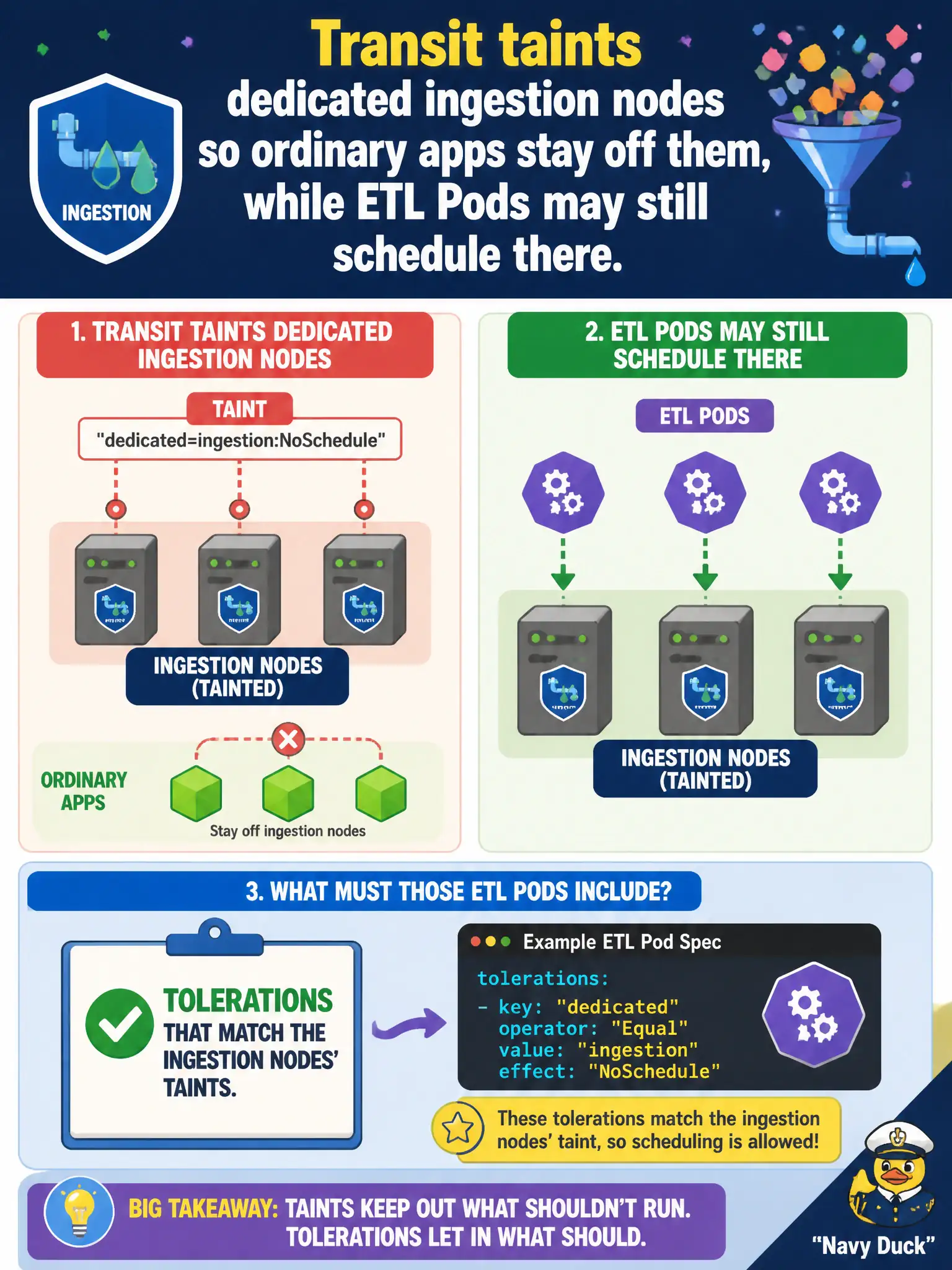
Transit taints dedicated ingestion nodes so ordinary apps stay off them, while ETL Pods may still schedule there. What must those ETL Pods include?
Select an answer to reveal the explanation.
Short Explanation
Taints are keep-out signs; tolerations are the matching backstage pass. ETL Pods need tolerations for those ingestion taints or the scheduler will not put them there.
Full Explanation
When transit taints dedicated ingestion nodes so ordinary apps stay off them, while ETL Pods may still schedule there, those ETL Pods must include tolerations that match the ingestion nodes' taints. Taints repel Pods without matching tolerations; tolerations are the opt-in that lets ETL land on dedicated ingestion hardware while ordinary apps remain excluded from those nodes in the municipal data platform.
A longer terminationGracePeriodSeconds than any other workload only affects shutdown wait time. A NodePort Service pointing at the tainted nodes' host IPs does not grant toleration to schedule on those nodes. hostPID set to true shares process namespaces; it does not tolerate taints for scheduling purposes.
Exam caveat: match toleration key, value, effect, and operator to the taint; NoSchedule versus NoExecute differ in whether running Pods are evicted. Operational check: taint ingestion nodes, add matching tolerations and usually nodeSelector or affinity on ETL Pods, and confirm only ETL schedules there. This distinction matters on the CKA because distractors often mix adjacent objects that sound related but solve a different control-plane problem. This distinction matters on the CKA because distractors often mix adjacent objects that sound related but solve a different control-plane problem.