
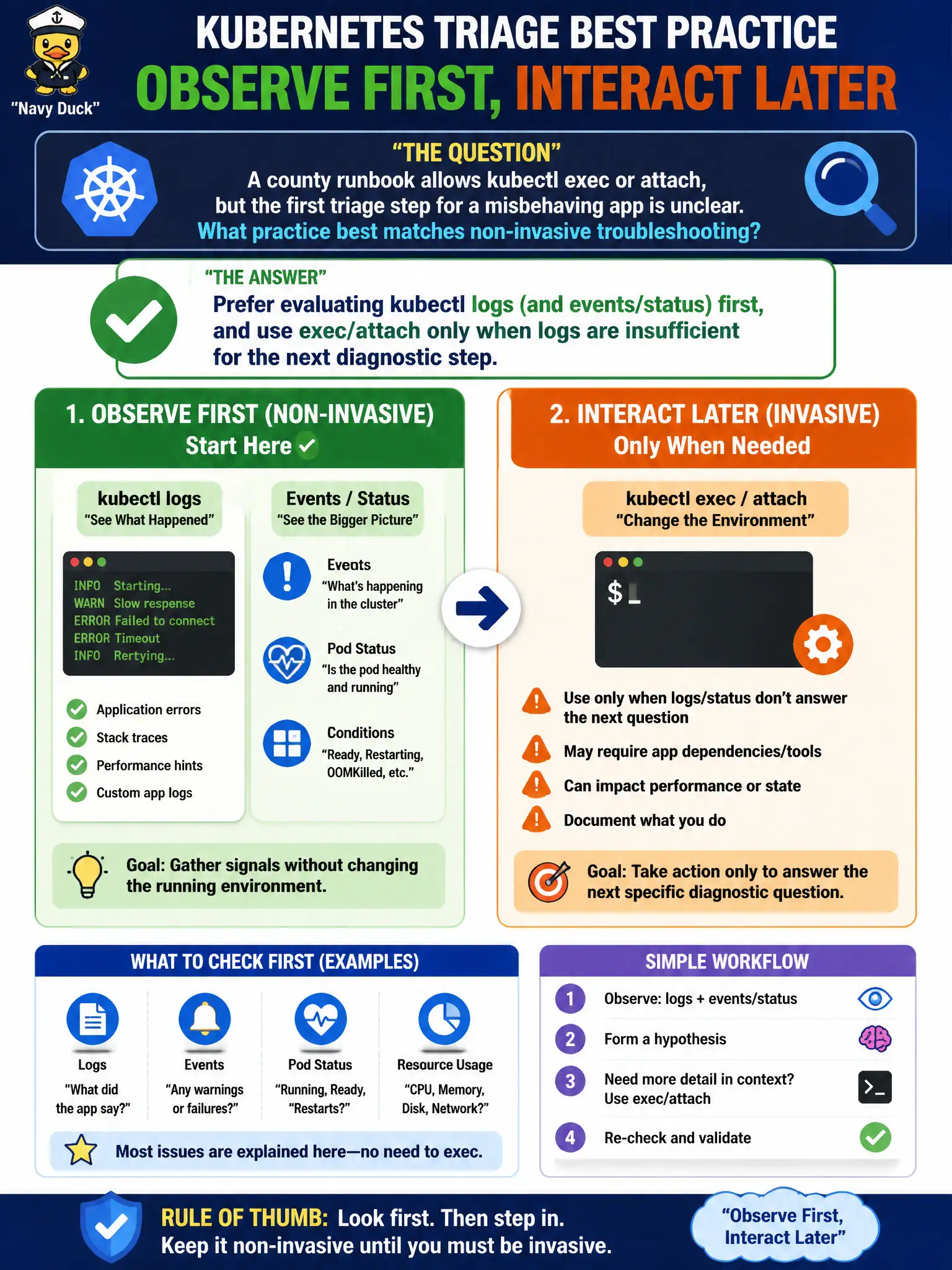
A county runbook allows kubectl exec or attach, but the first triage step for a misbehaving app is unclear. What practice best matches non-invasive troubleshooting?
Select an answer to reveal the explanation.
Short Explanation
Peek at the diary before kicking the door in—logs and events are the polite first look. Save exec and attach for when the pages aren’t enough.
Full Explanation
When a county runbook allows kubectl exec or attach, the best non-invasive first triage practice is still to prefer evaluating kubectl logs (and events/status) first, and use exec/attach only when logs are insufficient for the next diagnostic step. Peek at the diary before kicking the door in. Always starting with kubectl exec -it and a package install before reading any logs is invasive, slow, and often unnecessary. Disabling the container's stdout so operators must exec for every investigation destroys the preferred signal and is poor platform practice. Deleting the Pod immediately because recreating is always safer than reading logs discards evidence and can mask reproducible bugs. Exam caveat: Many clusters restrict exec via RBAC or PodSecurity; logs remain the universal first stop. On CKA, choose the least invasive accurate step. Operational check: Gather logs and describe Events, form a hypothesis, only then exec if you must inspect process state, and record both paths in the county ticket. In municipal production practice, record the finding in the incident ticket with command output snippets, confirm the fix under change control, and re-validate the user-facing civic service before closing the change window.