
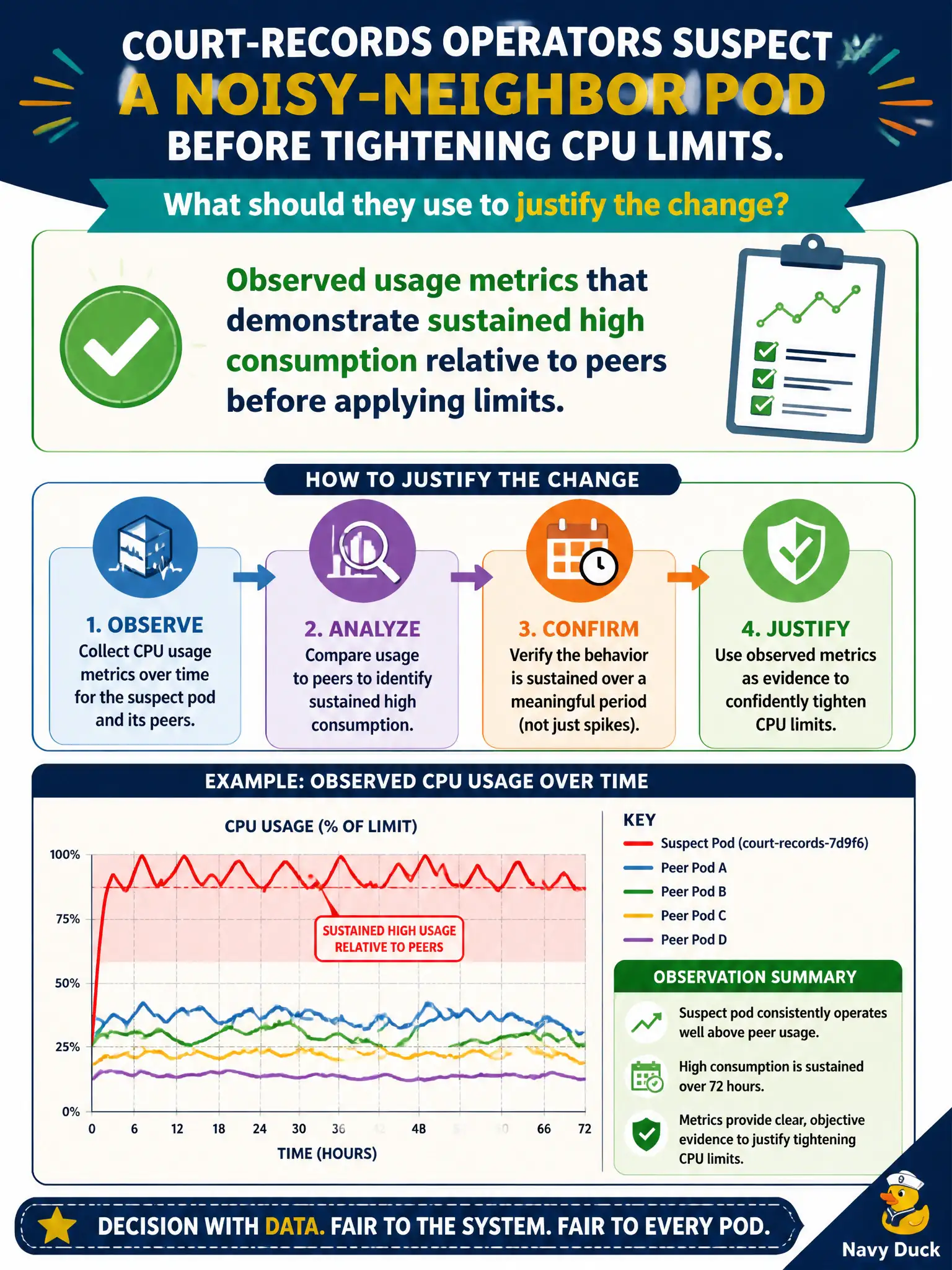
Court-records operators suspect a noisy-neighbor pod before tightening CPU limits. What should they use to justify the change?
Select an answer to reveal the explanation.
Short Explanation
Don't clamp limits on vibes—show the graphs. Prove the noisy neighbor with real usage, then set requests and limits that match the evidence.
Full Explanation
Before tightening CPU limits on a suspected noisy-neighbor pod in court-records, operators should justify the change with observed usage metrics that demonstrate sustained high consumption relative to peers. Evidence-first limiting protects neighboring tenants on the shared cluster without clamping resources based on vibes or the Deployment’s display name alone. Guesswork based solely on the Deployment name is not adequate justification for production limit changes that can throttle a municipal service. Deleting the metrics-server so top stops showing contention removes visibility, worsens operations, and does nothing to prove or remediate a noisy neighbor. Raising PriorityClass on every pod in the namespace without data may scramble preemption behavior blindly and still fails to calibrate CPU limit values from measurements. Exam caveat: CPU limits cause throttling and can raise latency; derive them from usage percentiles plus headroom, and keep requests truthful so scheduling remains accurate. Operational check: Collect kubectl top or metrics-backend graphs comparing the suspect to peers, document the hotspot, apply a calibrated limit, and re-measure court API latency and neighbor CPU after the change.