
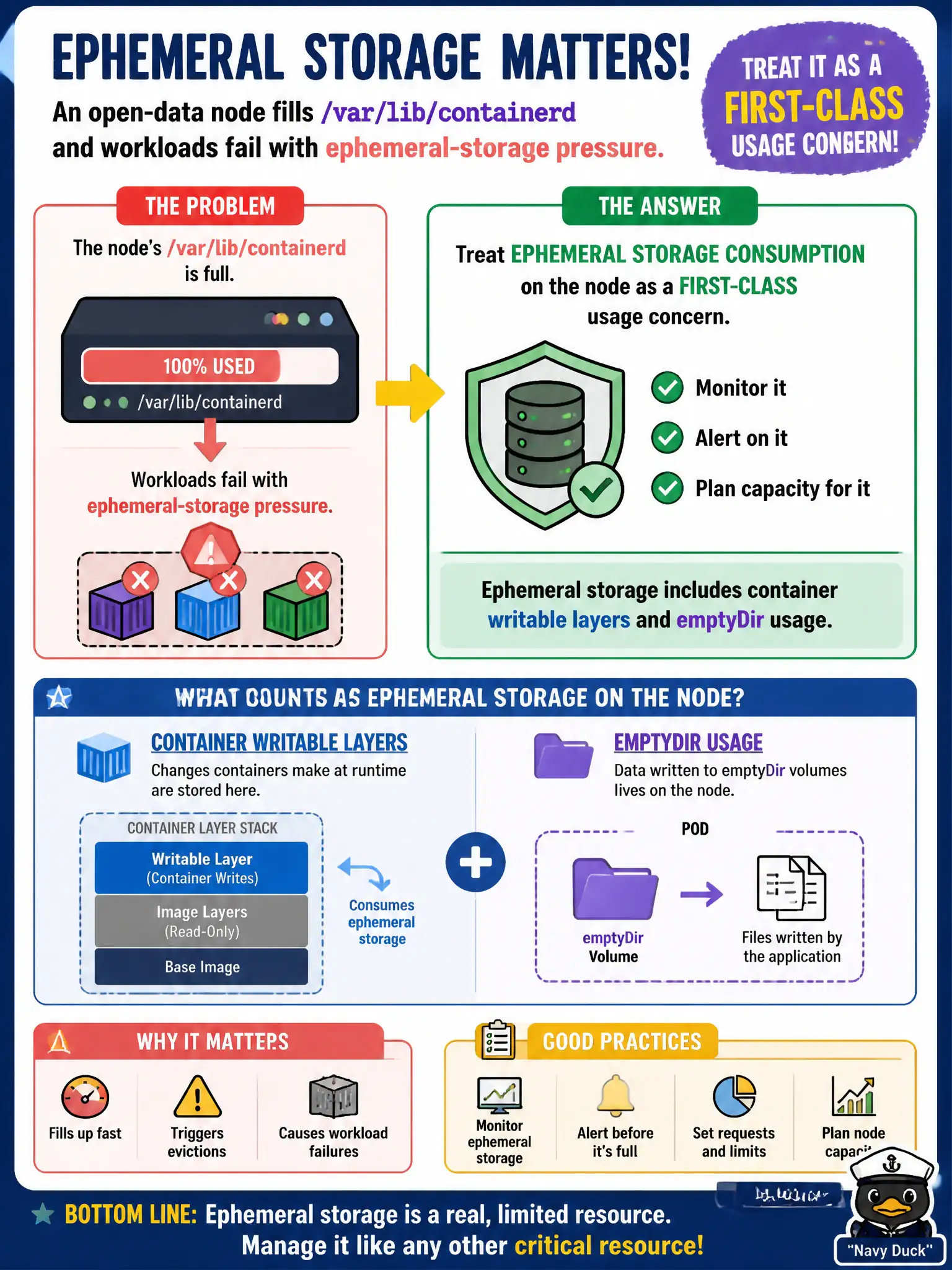
An open-data node fills /var/lib/containerd and workloads fail with ephemeral-storage pressure. What should the administrator treat as a first-class usage concern?
Select an answer to reveal the explanation.
Short Explanation
Disk is a resource too—writable layers and emptyDirs pile up under the runtime until the node wheezes. Watch ephemeral storage like you watch CPU and memory.
Full Explanation
Ephemeral storage on a node includes container writable layers, emptyDir volumes, container logs, and image layers under the runtime root such as containerd’s data directory. When an open-data node fills /var/lib/containerd and workloads fail with ephemeral-storage pressure, administrators must treat ephemeral storage consumption as a first-class usage concern alongside CPU and memory rather than as an afterthought. Focusing only on etcd key count growth on the control plane misses the worker’s local disk exhaustion that is actively failing open-data workloads. Service ClusterIP exhaustion in the service CIDR is a different failure mode—inability to allocate new Service IPs—and does not explain a filled containerd graph directory. Ingress TLS certificate notAfter dates matter for HTTPS certificate expiry planning, not for ephemeral-storage pressure on a worker’s runtime disk. Exam caveat: Pods may also declare ephemeral-storage requests and limits; kubelet eviction may target heavy consumers when DiskPressure is true. Hunt unbounded emptyDirs and image sprawl in municipal apps. Operational check: Inspect node conditions for DiskPressure, measure disk use under the runtime root, clear unused images and caches safely, set ephemeral-storage requests where appropriate, and alert before the volume fills again.