
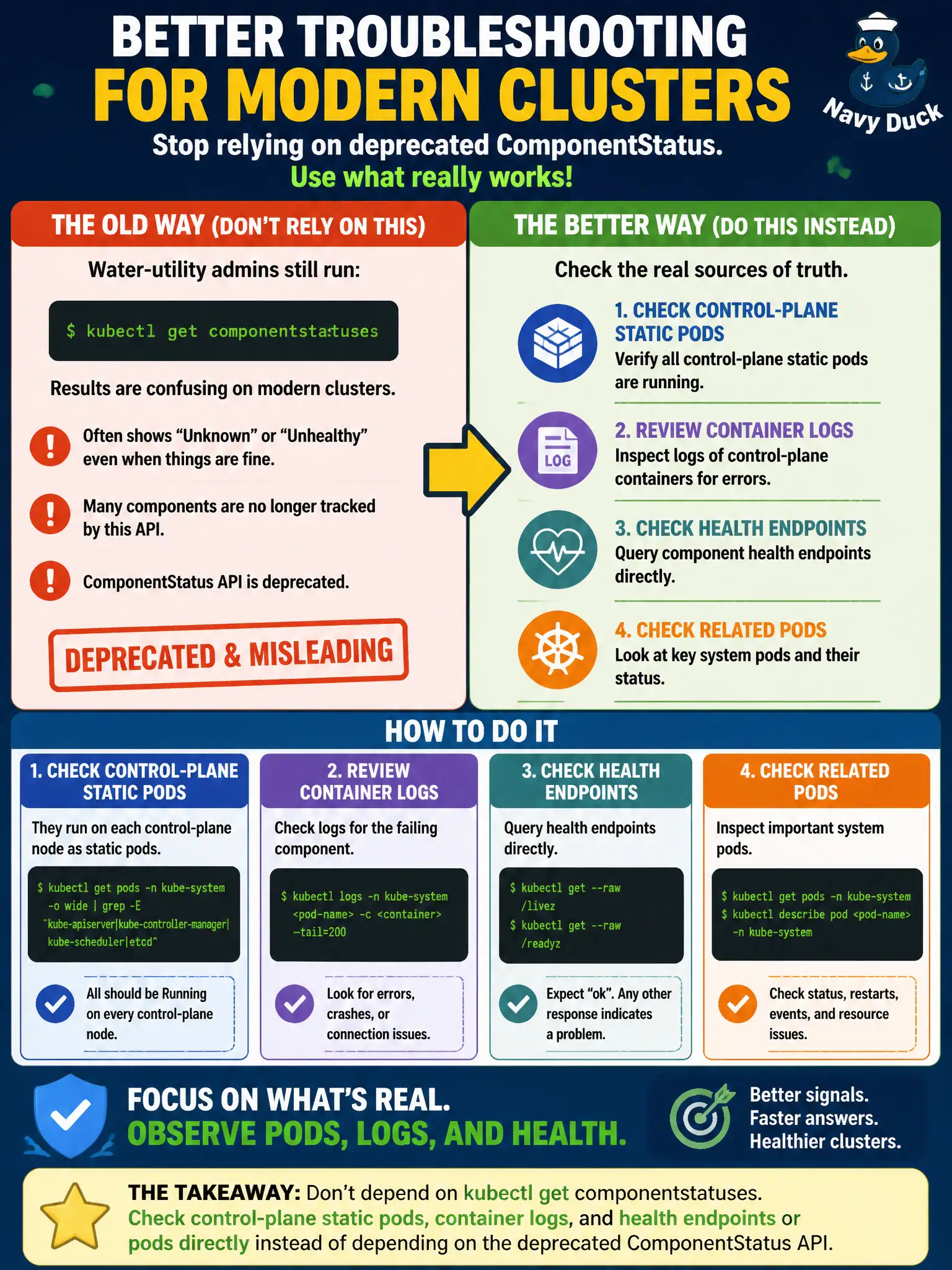
Water-utility admins still rely on kubectl get componentstatuses during outages, but results are confusing on modern clusters. What is the better troubleshooting approach?
Select an answer to reveal the explanation.
Short Explanation
componentstatuses is yesterday's clipboard. On modern clusters, look at the actual control-plane pods, their logs, and health endpoints—the live scene—not the legacy summary card.
Full Explanation
kubectl get componentstatuses is deprecated and often confusing on modern clusters; it should not be the primary health signal for water-utility admins. Prefer checking control-plane static pods, container logs, and health endpoints or pods directly instead of depending on the legacy ComponentStatus API summary. Treating ComponentStatus as the only supported health signal on current Kubernetes versions is outdated and can hide real failures. Ignoring pod logs while trusting only kubectl get cs output misses apiserver crash loops, etcd errors, and certificate problems that appear in static pod logs during outages. Replacing all health checks with a single Ingress readiness probe for etcd is not a valid design; etcd and apiserver health are not driven by Ingress objects. Exam caveat: Older study notes still mention componentstatuses; CKA-style troubleshooting emphasizes live static pods, container runtime tools, authenticated healthz/readyz where appropriate, and etcdctl endpoint health. Operational check: On control-plane nodes verify manifests and static pods, read kube-apiserver and etcd logs, probe health endpoints per your hardened setup, and update the municipal runbook so on-call staff do not rely on deprecated cs output.