
A transit node enters PIDPressure after a process fork storm. What should an administrator recognize?
Select an answer to reveal the explanation.
Short Explanation
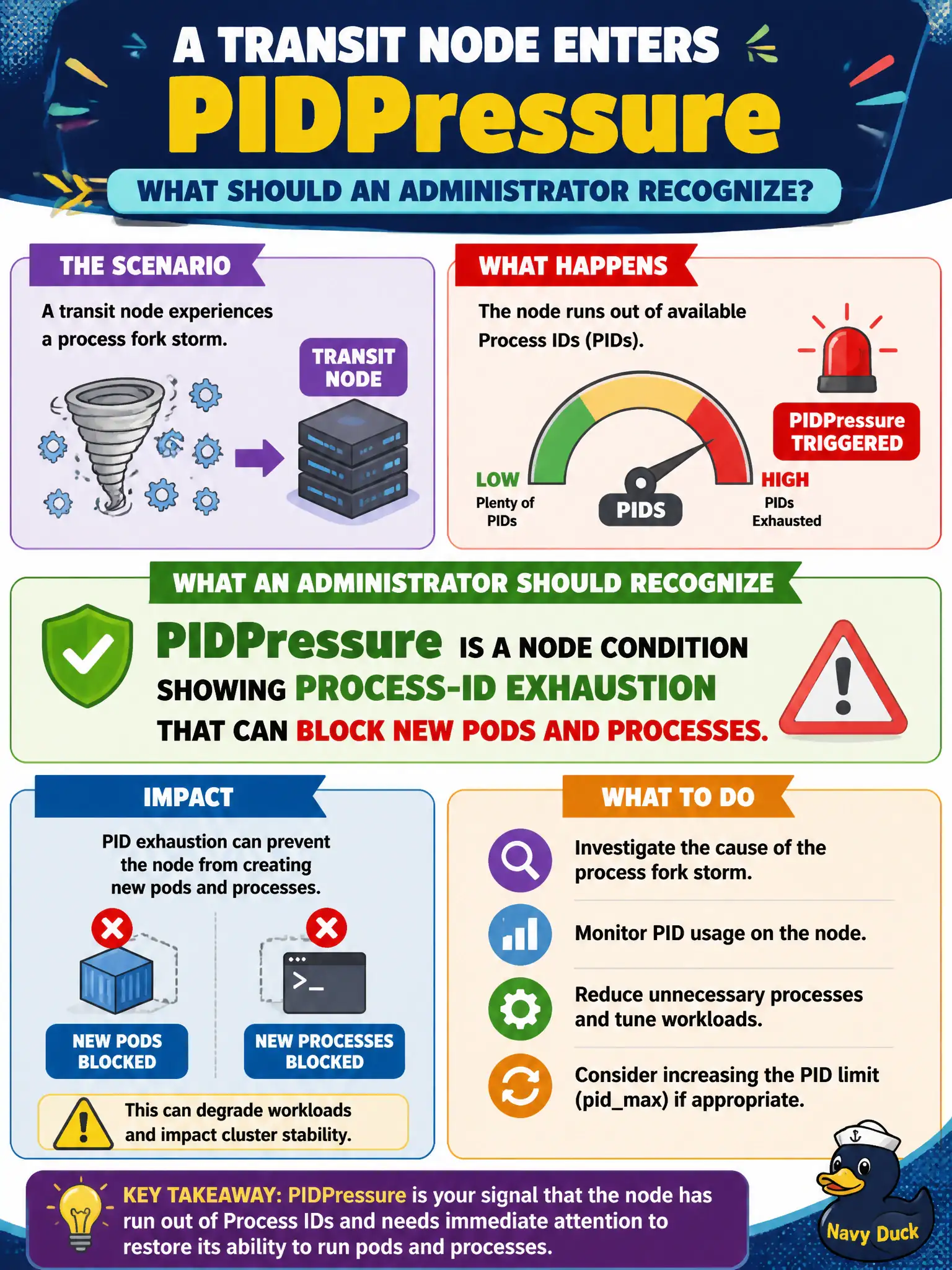
PIDPressure is “out of process slots.” New forks and new pods can stall until the runaway processes are cleaned up.
Full Explanation
When a transit node enters PIDPressure after a process fork storm, administrators should recognize PIDPressure as a node condition showing process-ID exhaustion that can block new Pods and processes. It is “out of process slots”—new forks and new Pods can stall until runaway processes are cleaned up on that municipal worker.
PIDPressure does not mean only that the Service CIDR must be expanded. It does not mean Ingress controllers must switch to NodePort. It is not a PVC bind error when accessModes mismatch.
Exam caveat: check for fork bombs, excessive sidecar process counts, or misconfigured pid limits. The node may also show related eviction behavior or NotReady under severe pressure. Correlate with host-level df/ps and kubelet eviction signals.
Operational check: describe the node for PIDPressure, inspect process counts on the host, stop the runaway workloads, confirm PIDs free up, and watch new transit Pods schedule again before declaring the fork storm resolved. Keep civic change tickets precise: record object names, namespaces, and before/after observations so the next on-call engineer can replay the fix without guesswork. Prefer reversible steps and verify Ready or Bound state before closing the incident.