
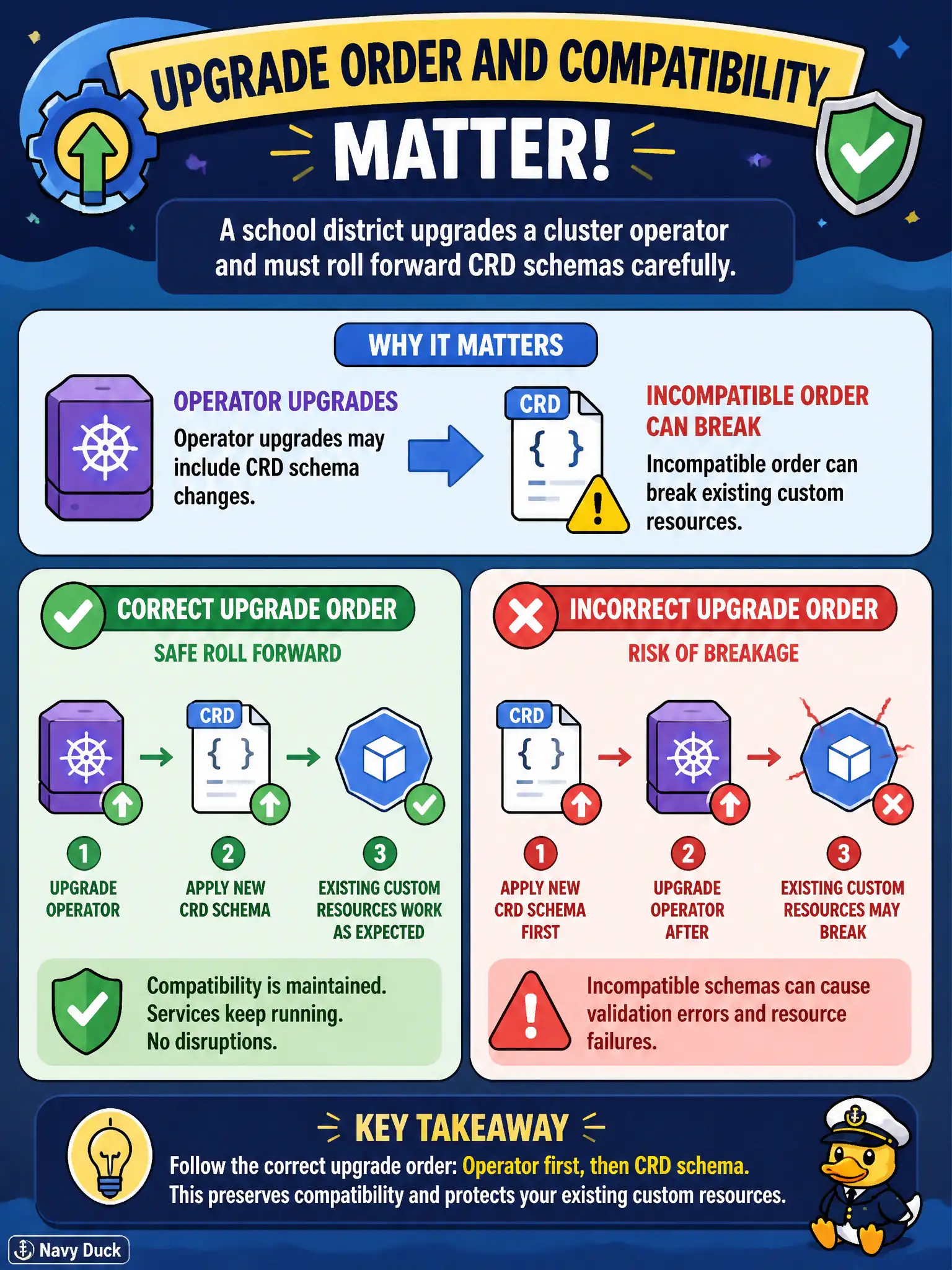
A school district upgrades a cluster operator and must roll forward CRD schemas carefully. Why does upgrade order and compatibility matter?
Select an answer to reveal the explanation.
Short Explanation
Upgrading the operator is like revising the permit form while old permits are still on file—schema changes need a careful sequence. Apply compatible CRD updates with the controller version so existing CRs do not strand. Blind deletes of etcd are not the upgrade plan.
Full Explanation
A school district upgrading a cluster operator must roll CRD schemas carefully because operator upgrades may include CRD schema changes; incompatible order can break existing custom resources. Revising the permit form while old permits are on file needs a compatible sequence of CRD and controller versions. CRDs do change across operator versions; upgrade order is relevant. Operator upgrades do not always delete etcd automatically resetting all CRDs. kubeadm upgrade does not apply arbitrary operator CRD schema changes before any operator chart exists as a general rule. Exam caveat: Follow the operator’s upgrade notes for CRD versus controller ordering. Operational check: Read release notes, apply CRD updates in the documented order, upgrade the controller image/chart, and validate existing CRs still reconcile in district namespaces. In municipal platform operations, record the rationale in the change ticket so future on-call staff know which control was chosen and which failure modes the rejected options would create for city services. Re-validate after the next maintenance window that the same control still holds under the cluster’s current minor version and addon revisions used by the civic platform team.