
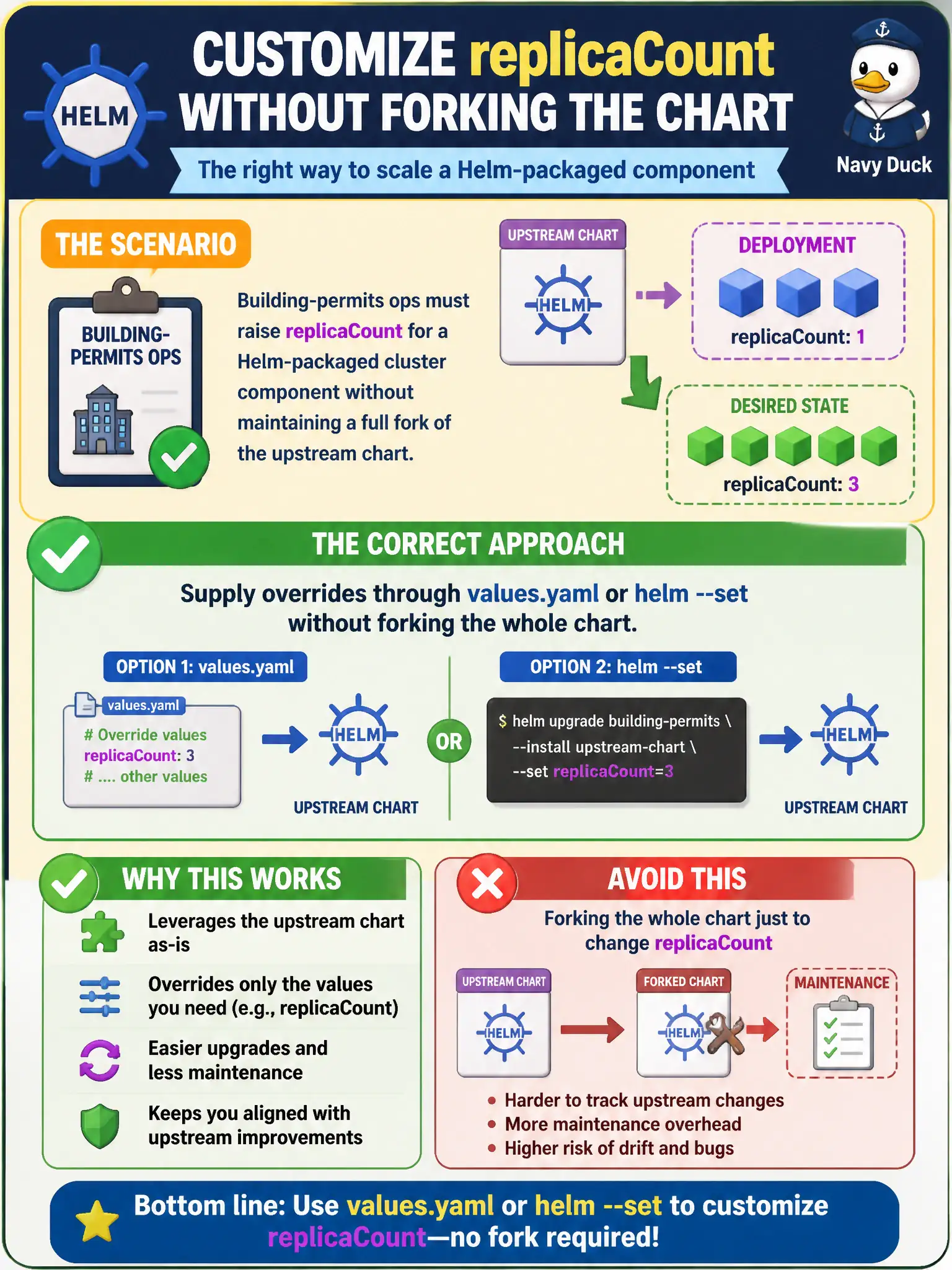
Building-permits ops must raise replicaCount for a Helm-packaged cluster component without maintaining a full fork of the upstream chart. Which approach customizes that setting correctly?
Select an answer to reveal the explanation.
Short Explanation
You would not photocopy an entire building-code manual just to change one occupancy number. Helm lets you pass replicaCount (and friends) via values.yaml or --set while keeping the upstream chart. Forking or poking containerd stores is overkill for a values tweak.
Full Explanation
Building-permits ops raising replicaCount for a Helm-packaged component should supply overrides through values.yaml or helm --set without forking the whole upstream chart. You would not photocopy an entire building-code manual to change one occupancy number—pass values instead. Patching chart files inside every node’s containerd content store by hand is unsupported and ephemeral. Disabling the Helm release secret so values can never be overridden breaks Helm’s customization model. Replacing the chart with a Deployment hard-coded only via kubelet flags abandons Helm release management. Exam caveat: Values overrides are the Helm customization path; full forks are last resort. Operational check: helm upgrade -f values.yaml or --set replicaCount=N, helm get values, and verify replicas on the civic component Deployment. In municipal platform operations, record the rationale in the change ticket so future on-call staff know which control was chosen and which failure modes the rejected options would create for city services. Re-validate after the next maintenance window that the same control still holds under the cluster’s current minor version and addon revisions used by the civic platform team.