
After finishing a kubeadm upgrade, budget analytics operators must confirm components moved forward. Which verification approach best matches admin practice?
Select an answer to reveal the explanation.
Short Explanation
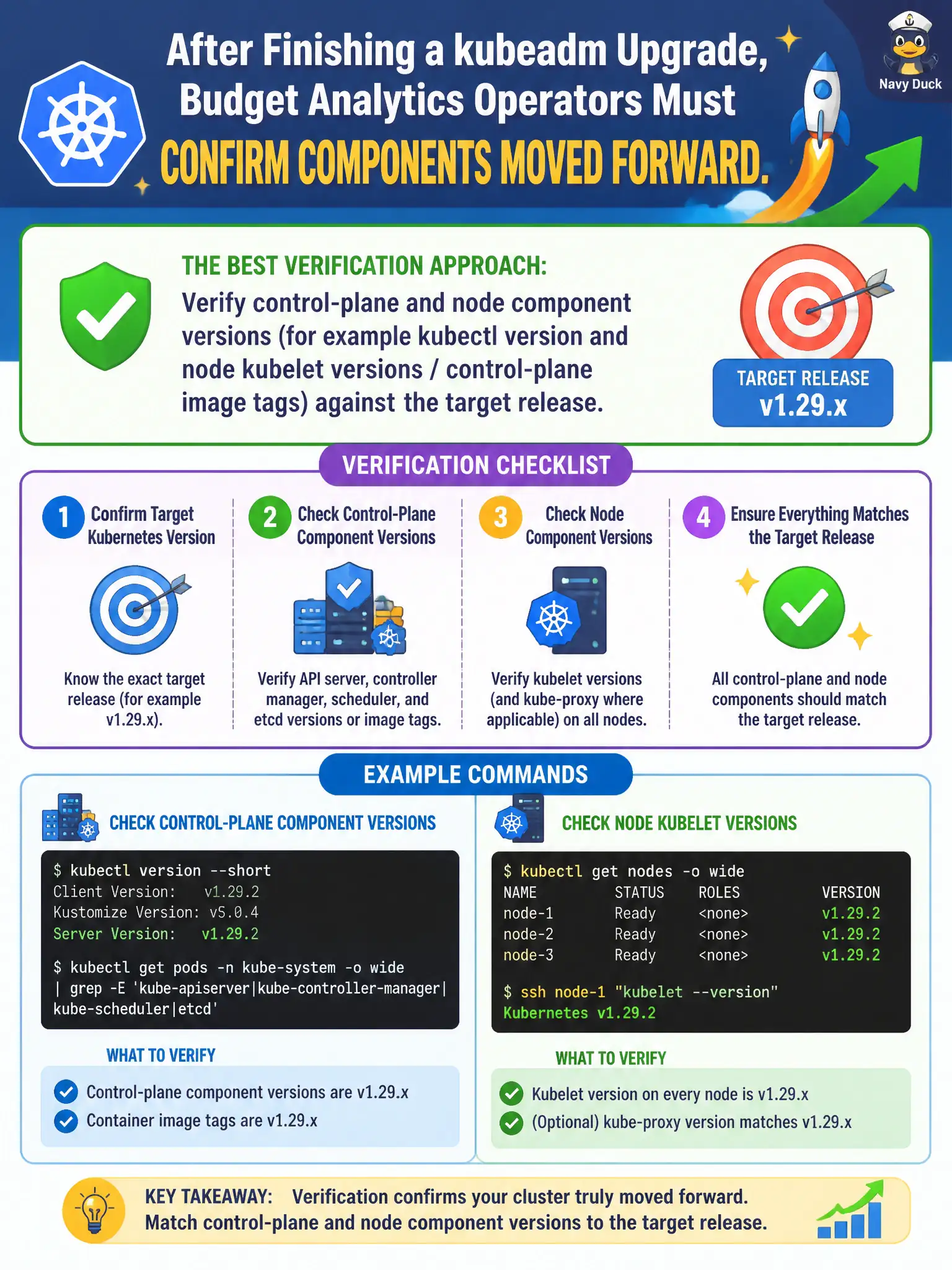
When the upgrade party ends, you still check name tags—are apiserver, kubelet, and friends actually on the version you paid for? kubectl version and a glance at node/control-plane versions tell you if something got stuck mid-flight. “No crashing Pods” is nice, but it’s not a version audit.
Full Explanation
After finishing a kubeadm upgrade, budget analytics operators should verify control-plane and node component versions—kubectl version, node kubelet versions, and control-plane image tags—against the target release. When the upgrade party ends, check name tags so nothing stuck mid-flight at an old minor. Relying solely on absence of CrashLoopBackOff does not prove components reached the intended versions. Checking only the workstation kubectl binary ignores node and control-plane versions that matter for skew. Comparing only application chart Git SHAs skips cluster component verification entirely. Exam caveat: Mixed minors can look “healthy” while violating skew—always audit versions post-upgrade. Operational check: kubectl version, kubectl get nodes -o wide, describe control-plane static pod images, and sign off only when versions match the municipal upgrade plan. In municipal platform operations, record the rationale in the change ticket so future on-call staff know which control was chosen and which failure modes the rejected options would create for city services. Re-validate after the next maintenance window that the same control still holds under the cluster’s current minor version and addon revisions used by the civic platform team.