
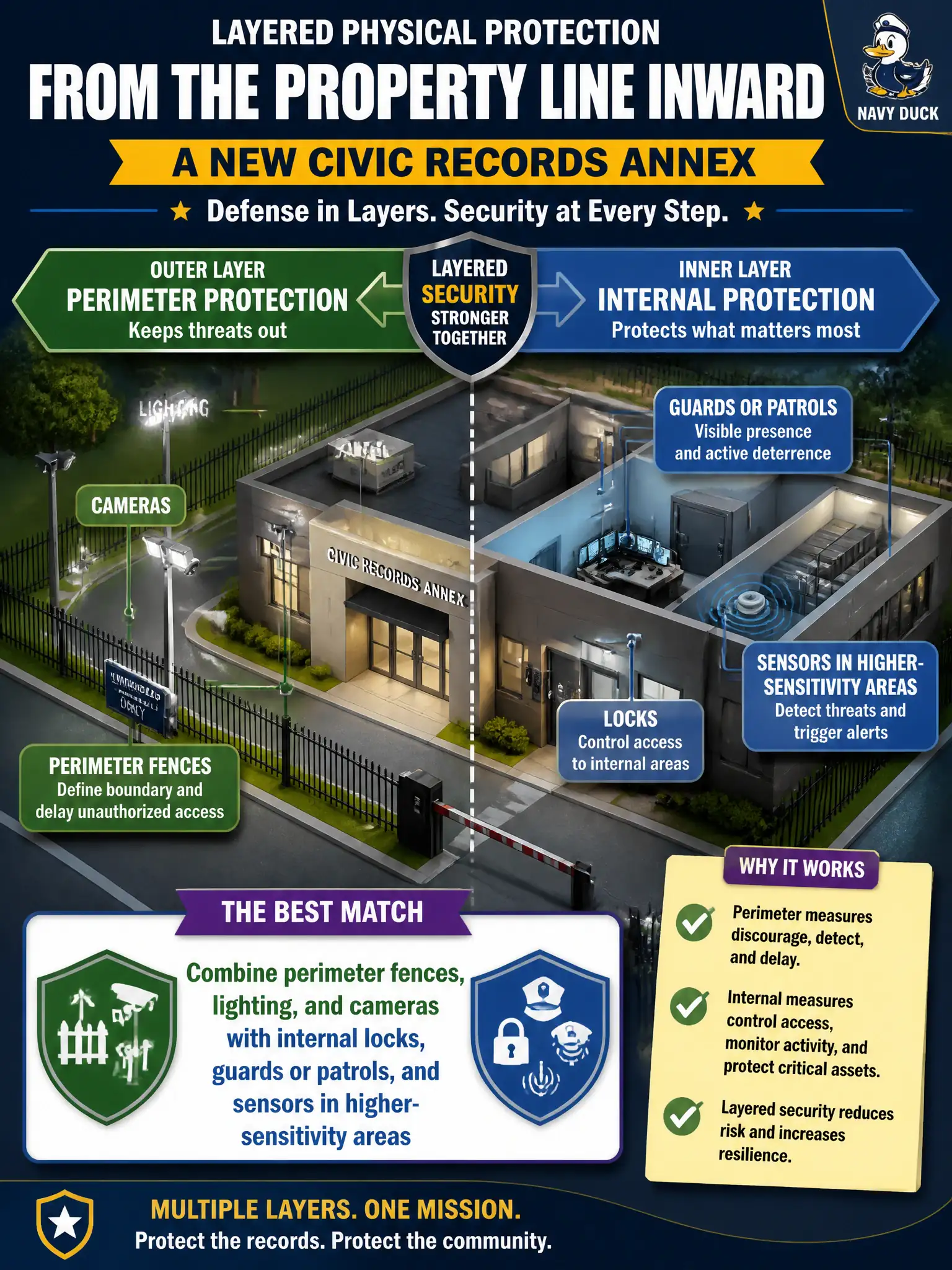
A new civic records annex needs layered physical protection from the property line inward. Which control pairing best matches perimeter versus internal needs?
Select an answer to reveal the explanation.
Short Explanation
Yard first, then rooms. Fences, lights, and cameras watch the edge; locks, guards, and sensors harden the inside. One fancy camera alone is not a layered civic facility.
Full Explanation
Layered physical security for a civic records annex applies complementary controls from the property line inward so no single failed measure exposes the facility. Perimeter defenses—fencing, lighting, and exterior cameras—deter unauthorized approach, improve detection at the boundary, and create delay before an intruder reaches the building. Internal controls—locks on sensitive rooms, guards or patrols, and sensors in higher-sensitivity areas such as vaults or evidence-adjacent storage—protect assets after someone is inside or after perimeter sensors fire. Combining outer and inner layers matches how municipal facilities manage public access, after-hours risk, and graded sensitivity of records.
Badge readers only at desks with an unmarked, unlit property line leave the approach corridor uncontrolled; desk authentication does not replace perimeter deterrence and detection. A single exterior camera with no interior locks or sensors creates a monitoring illusion while sensitive rooms remain open once someone is past the lens. Interior motion sensors alone without fencing, lighting, and exterior cameras mean the organization only learns about an intrusion after the boundary is already crossed, and night-time approach may go unseen.
Exam caveat: physical security is commonly taught as concentric layers (perimeter, building exterior, interior zones, and object/asset controls). Cameras are detective/deterrent aids, not substitutes for barriers and access control. Match control strength to asset sensitivity rather than applying one gadget everywhere.
Operational check: walk the annex from street to records vault and list which deterrent, delay, detect, and respond controls exist at each ring; verify lighting and camera coverage at the fence line and that high-value rooms have independent locks, logging, and sensor alerting beyond the lobby badge.