
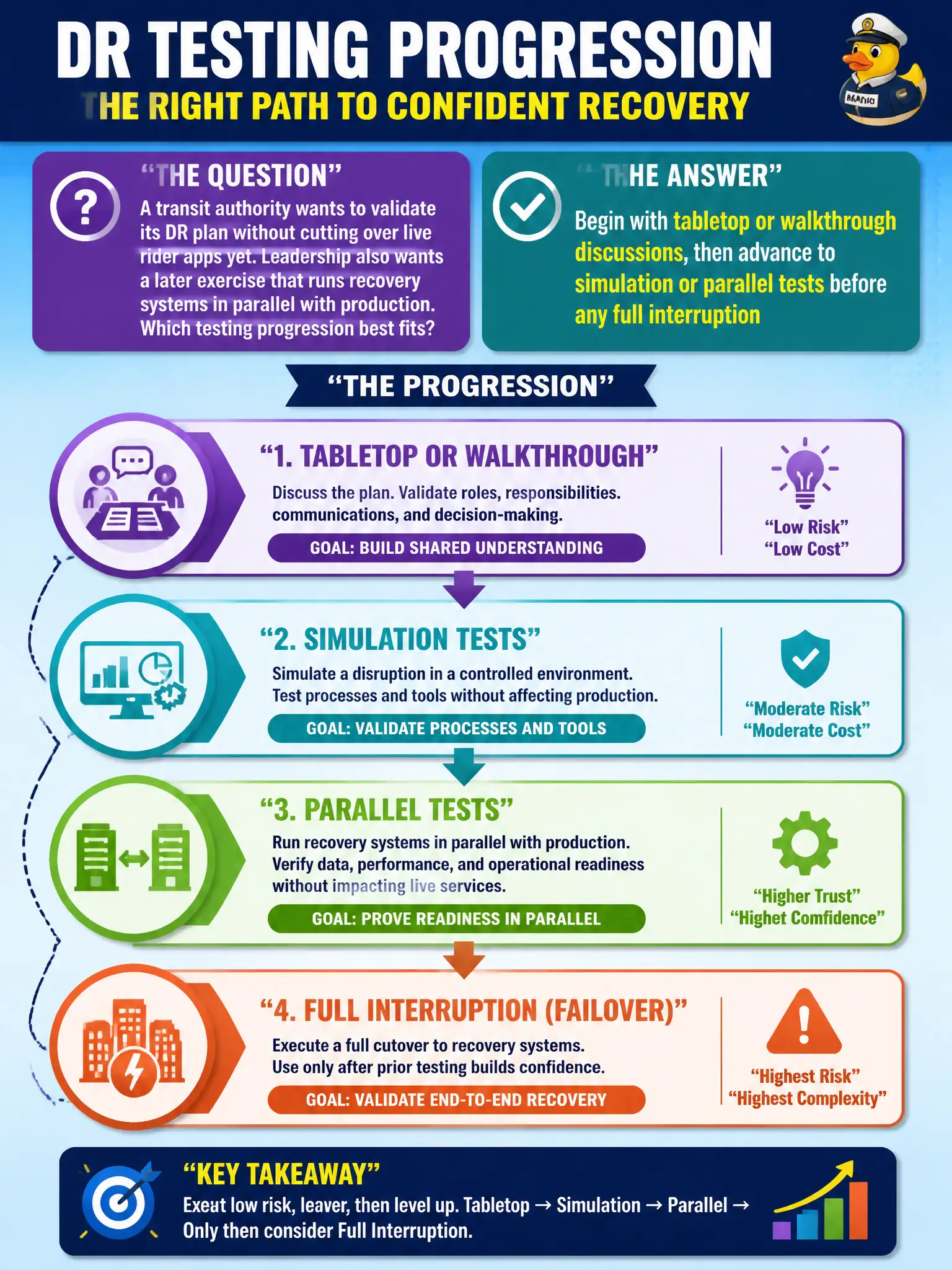
A transit authority wants to validate its DR plan without cutting over live rider apps yet. Leadership also wants a later exercise that runs recovery systems in parallel with production. Which testing progression best fits?
Select an answer to reveal the explanation.
Short Explanation
Crawl, then walk, then jog. Talk through the plan (tabletop/walkthrough), practice under simulation or parallel load, and only later risk a full cutover. Jumping straight to yanking production is how you strand riders.
Full Explanation
Disaster-recovery testing should progress in risk order so a transit authority can learn without stranding riders. Discussion-based tabletop and walkthrough exercises let stakeholders rehearse decisions, dependencies, and communication paths with minimal production impact. Simulation and parallel tests then exercise recovery environments—standing up alternate systems beside live fare and rider apps—to validate technical readiness while production continues. Only after those stages mature should leadership authorize a full interruption test that deliberately cuts over or stops primary systems. That crawl–walk–run progression matches how municipal agencies protect continuous public services while still proving the plan works.
Starting with a full interruption on the fare system and never communicating results maximizes rider harm and wastes organizational learning; interruption tests are high-risk and findings must reach stakeholders. Running only parallel tests forever because tabletops “never find gaps” ignores that discussion exercises uniquely surface role confusion, policy conflicts, and missing contacts that technology-only tests miss. Using full interruption exclusively to save calendar time trades short-term scheduling convenience for unnecessary service risk and regulatory exposure when a cutover fails.
Exam caveat: know the DRP test types—tabletop/walkthrough, simulation, parallel, and full interruption—and that communication of results is part of a proper test program. Parallel tests exercise recovery alongside production; interruption tests stop or fail over production. “More aggressive” is not automatically “better” if business impact is unacceptable.
Operational check: publish a multi-year exercise calendar that sequences tabletops before parallel tests, defines success criteria and rollback for any interruption-class drill, and requires documented stakeholder briefings after each event so fare, ops, and executive leaders share the same findings.