
County security leads want audits to stop becoming last-minute fire drills. What practice best prepares teams for efficient facilitation?
Select an answer to reveal the explanation.
Short Explanation
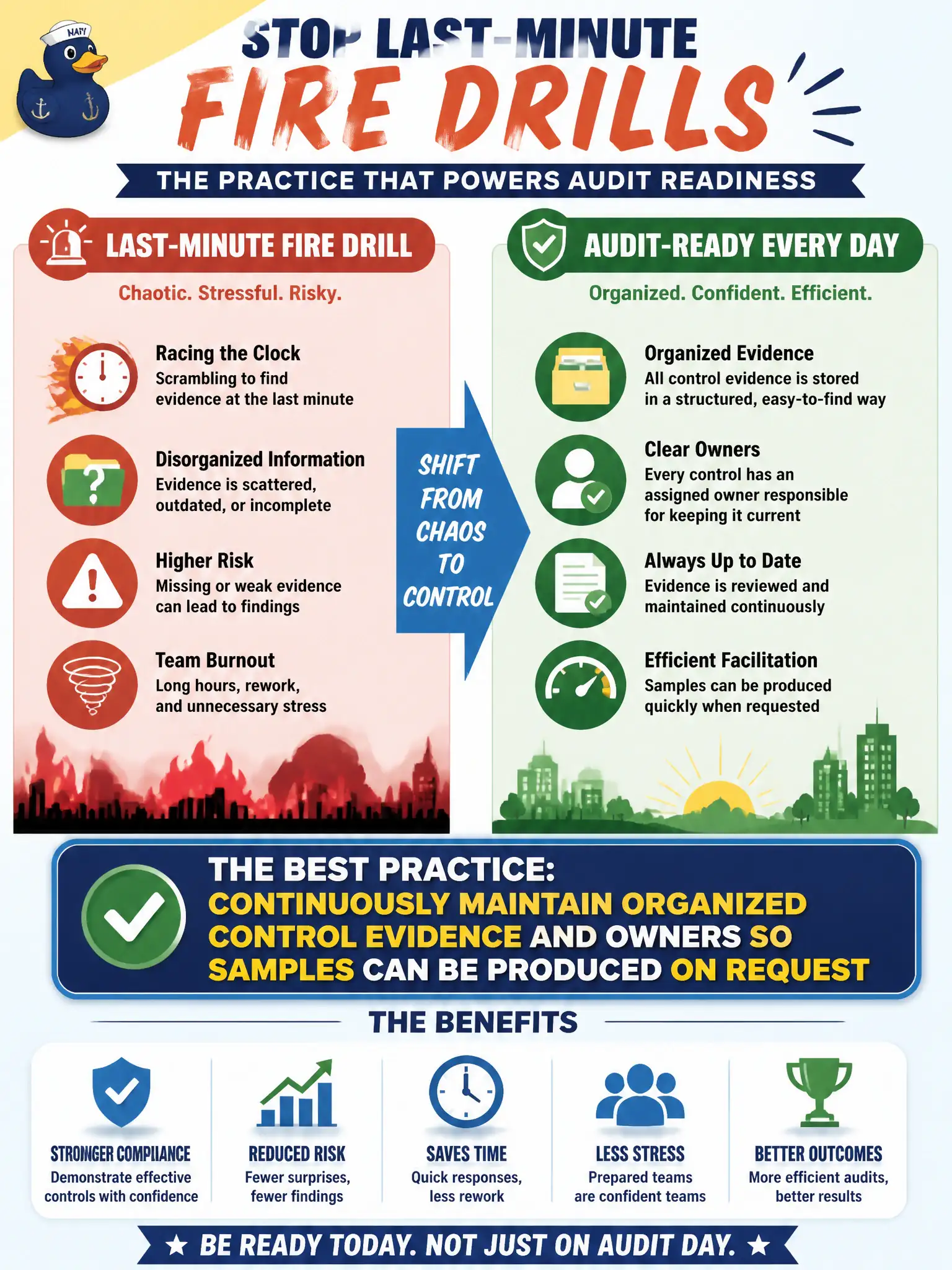
If the proof folder is always tidy, audit week feels like a walk-through instead of a scramble. Keep evidence current with clear owners so samples are ready. Inbox archaeology and midnight memory dumps are how fire drills start.
Full Explanation
Audit readiness for a municipal control environment is a continuous discipline, not a week-before scramble. Organized evidence with named owners—access reviews completed on schedule, change tickets with approvals and test results, operations runbooks and job logs, exception registers with compensating controls—allows the city to produce samples on request without reconstructing history from memory. Continuous maintenance also surfaces gaps early: missing reviews, orphaned privileged accounts, or unapproved changes become remediation items before an auditor’s letter, not surprises that delay year-end close or grant reporting. Central repositories with retention aligned to policy and regulatory needs reduce reliance on fragile personal mailboxes and tribal knowledge.
Storing evidence only in personal email inboxes that expire after thirty days virtually guarantees loss of the audit trail and creates privacy and continuity risk when staff leave. Recreating access reviews from memory the night before fieldwork invites inaccurate, incomplete, or unverifiable artifacts and signals that the control never truly operated. Forbidding auditors from seeing change tickets to protect staff morale obstructs the engagement and suggests management override of transparency expectations. Exam caveat: auditors test operating effectiveness over a period; evidence must cover that period with integrity, not a single polished day. Operationally, assign control owners, calendar evidence refresh cycles, and run a quarterly “sample pull” drill so the finance ERP ITGC packet can be assembled within hours, not days.