
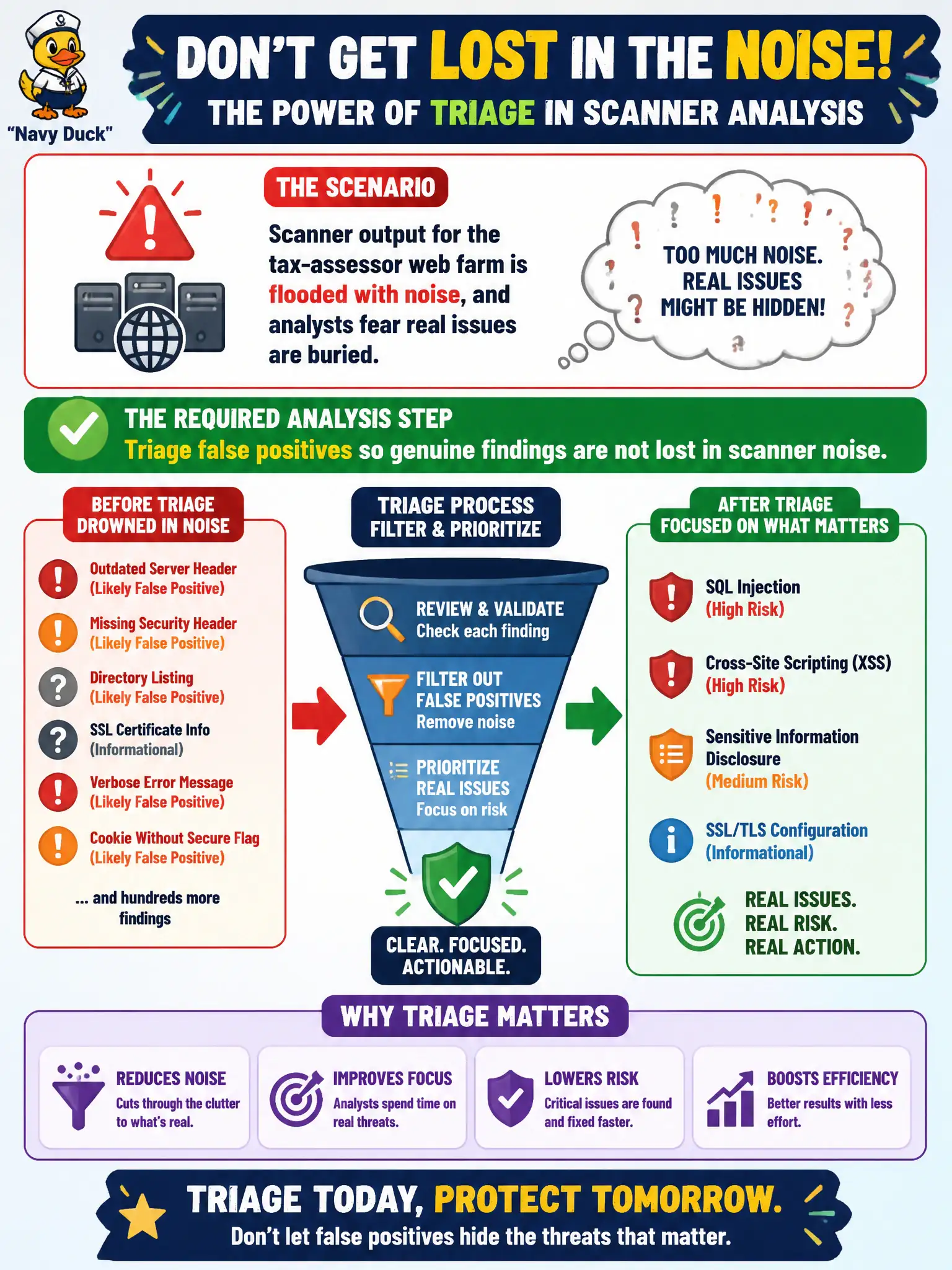
Scanner output for the tax-assessor web farm is flooded with noise, and analysts fear real issues are buried. What analysis step is required?
Select an answer to reveal the explanation.
Short Explanation
When the smoke alarm chirps for burnt toast and real fires, someone has to sort the noise. Triage false positives. Auto-closing everything, believing every beep, or unplugging the scanner buries truth.
Full Explanation
Analyzing test output quality includes identifying and reducing false positives so true positives remain visible and actionable. When scanner output for the tax-assessor web farm is flooded with noise, triage of false positives is required lest genuine findings drown. Analysts must validate, tune signatures, suppress known benign patterns carefully, and prioritize confirmed issues—preserving signal without pretending noise equals safety.
Auto-closing every finding older than one hour without review discards true positives along with noise and invents a false clean slate. Treating all alerts as confirmed exploits without validation wastes effort and may force unnecessary emergency changes. Disabling scanning permanently to eliminate false positives removes the detective control entirely.
Exam caveat: Output analysis includes false-positive management as a quality step—not abandonment of testing. Prefer triage over silence, blind auto-close, or ‘believe every alert.’
Operational check: Establish a triage queue for tax-assessor scan results, measure false-positive rate, tune or mark accepted risks with expiry, escalate validated highs quickly, and report both noise trends and true-positive backlog to management.