
After a tabletop on courthouse continuity, what process data most improves BC/DR maturity for the next cycle?
Select an answer to reveal the explanation.
Short Explanation
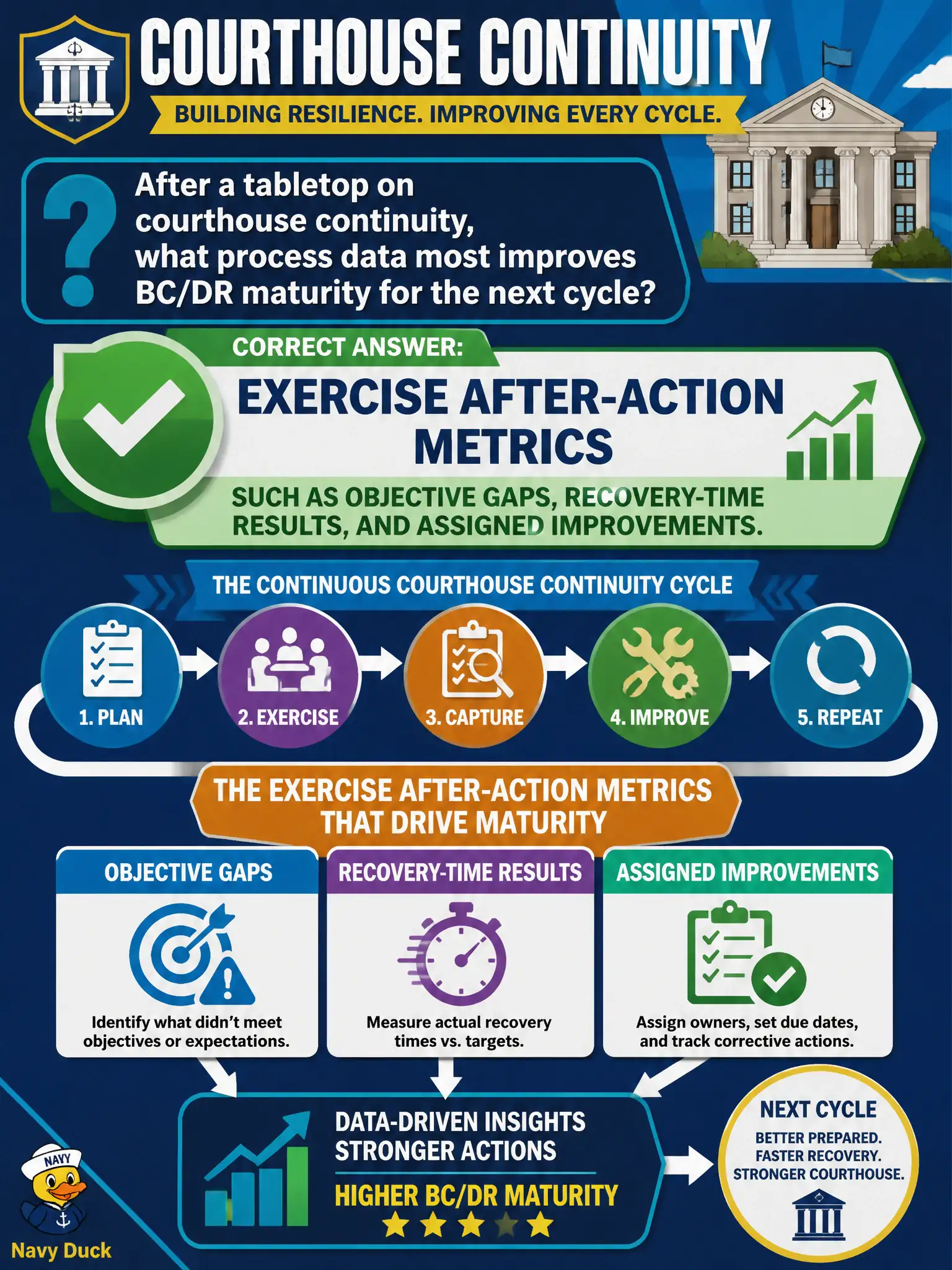
The real treasure from a drill is the after-action scorecard—what broke, how long recovery took, who owns the fix. Trashing the report, logging lunch, or equating attendance with maturity wastes the exercise.
Full Explanation
Collecting DR/BC process data from exercises—including gaps against objectives, measured recovery-time results, and assigned improvements—feeds program maturity for the next cycle. After a tabletop on courthouse continuity, after-action metrics turn discussion into actionable learning: what objectives were missed, how long recovery steps would take, and who owns each fix before the next exercise. That evidence is what Domain 6 expects when assessing business continuity and disaster recovery processes.
Discarding the after-action report to avoid awkward findings suppresses learning and leaves the same gaps unfixed. Recording only the lunch menu captures hospitality trivia, not continuity performance. Declaring the program mature because attendance was high confuses participation with demonstrated recovery capability.
Exam caveat: Exercise value lives in measured outcomes and tracked improvements, not attendance optics. Exam items often contrast after-action rigor with feel-good completion narratives.
Operational check: Publish a courthouse after-action with objective-by-objective results, RTO gaps, named owners and due dates, verify closure before the next tabletop, and present maturity trends to court administration and city emergency management.