
Water-quality lab instruments must reject lower-integrity telemetry that could corrupt validated sensor readings. Which classic model’s integrity focus best guides that design?
Select an answer to reveal the explanation.
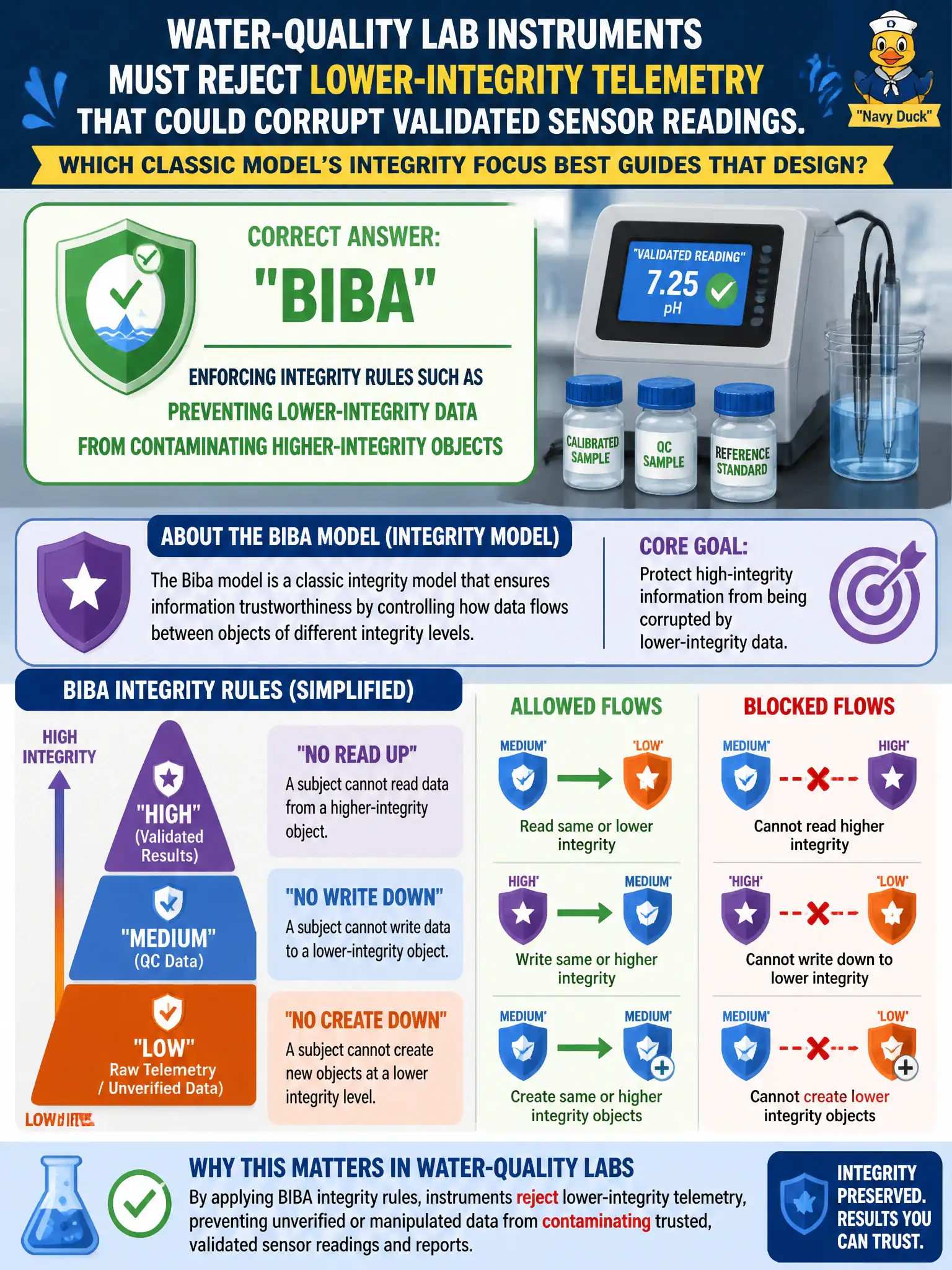
Short Explanation
Lab readings are only as good as what gets written into them. Biba is the integrity model that says dirty low-trust data does not get to paint over the clean high-trust instruments.
Full Explanation
Water-quality lab instruments that must reject lower-integrity telemetry threatening validated sensor readings need an integrity-centric access model. Biba supplies that focus: it prevents lower-integrity subjects or data from contaminating higher-integrity objects (commonly framed as no-write-up to higher integrity, with complementary read constraints), which maps cleanly to keeping dirty or untrusted telemetry from overwriting trusted lab measurements. Bell-LaPadula prioritizes confidentiality of classified documents and does not primarily encode integrity contamination rules for sensor trustworthiness. Take-Grant models how rights propagate between subjects; it is a rights-flow formalism, not an integrity policy for lab data quality. Graham-Denning enumerates administrative create/delete and rights-management operations; it does not define integrity levels for telemetry. Exam caveat: when the stem stresses corruption, contamination, or trustworthiness of data/processes, think Biba (or Clark-Wilson for commercial transaction integrity)—not Bell-LaPadula. Operational check: assign integrity labels or trust tiers to instrument feeds, block unvalidated field devices from writing into certified result stores, require signed or authenticated telemetry where feasible, and alert on attempts to inject lower-trust data into higher-trust historians.