
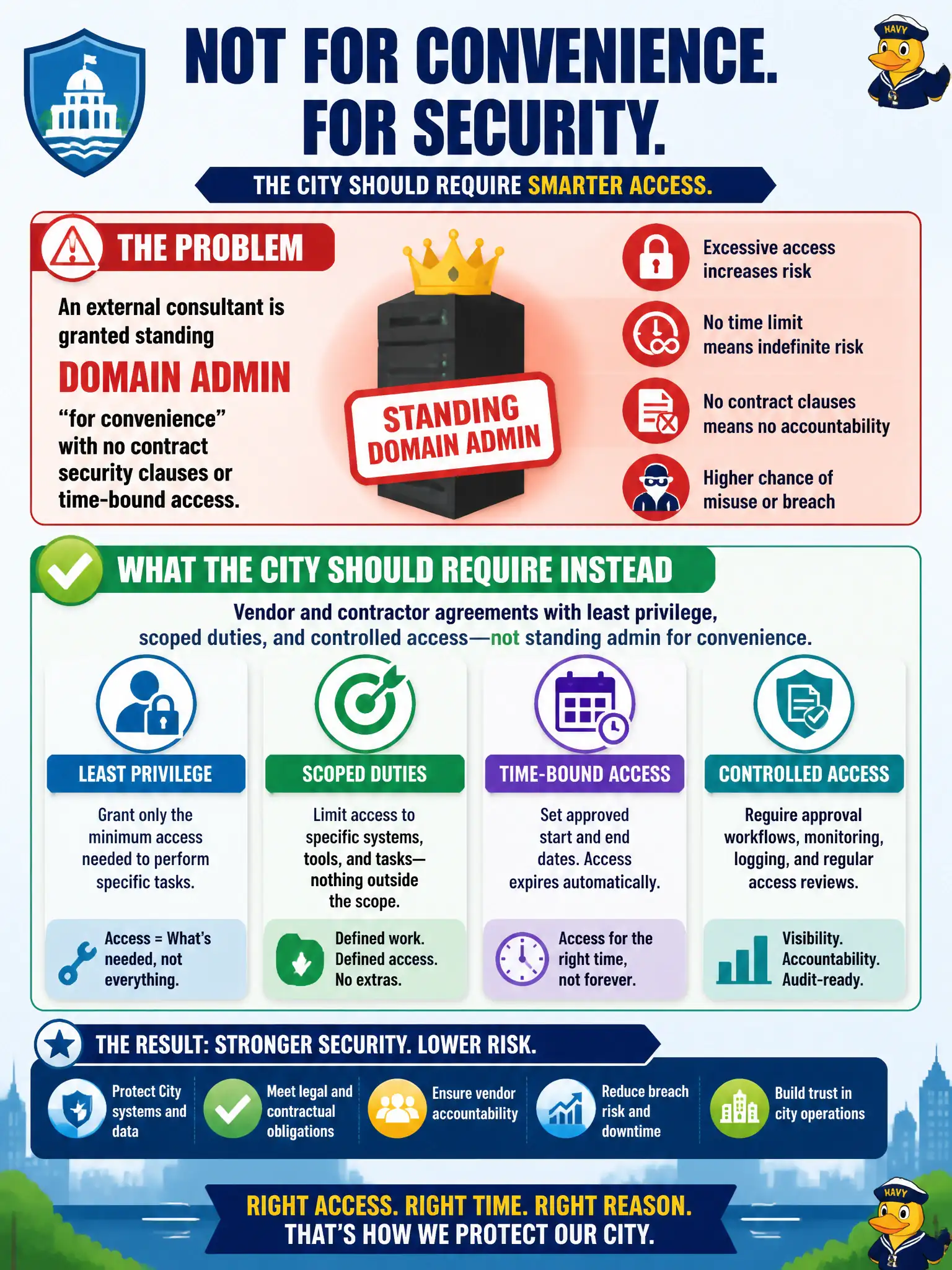
An external consultant is granted standing domain admin 'for convenience' with no contract security clauses or time-bound access. What should the city require instead?
Select an answer to reveal the explanation.
Short Explanation
Standing domain admin 'because it's easier' is how contractors become permanent kings of the kingdom. Put the deal in writing, shrink the privilege to the job, and expire it. Convenience is not a control objective.
Full Explanation
Third-party and consultant access should be governed by agreements that enforce least privilege, scoped duties, time bounds, and security obligations—not standing domain admin granted for convenience. Permanent or standing administrative rights without contract clauses expand blast radius if the consultant account is compromised or misused and leave the city without clear enforcement hooks. Publishing the consultant's home address or posting shared root passwords in a wiki increases exposure and violates least privilege and confidentiality. Exempting consultants from access reviews because they are not employees creates a blind spot precisely where external privileged access often concentrates risk. Municipal environments frequently rely on temporary expertise; that operational need does not justify unbounded admin. Exam caveat: CISSP vendor and contractor controls expect contractual security requirements, defined access scope, and ongoing review—convenience is not a control rationale. Operational check: issue time-limited, role-scoped accounts; put security, confidentiality, and audit clauses in the statement of work; require sponsorship and periodic recertification of entitlements; and remove admin the day the engagement ends. Prefer jump hosts or privileged access management with session logging over direct standing domain admin.