
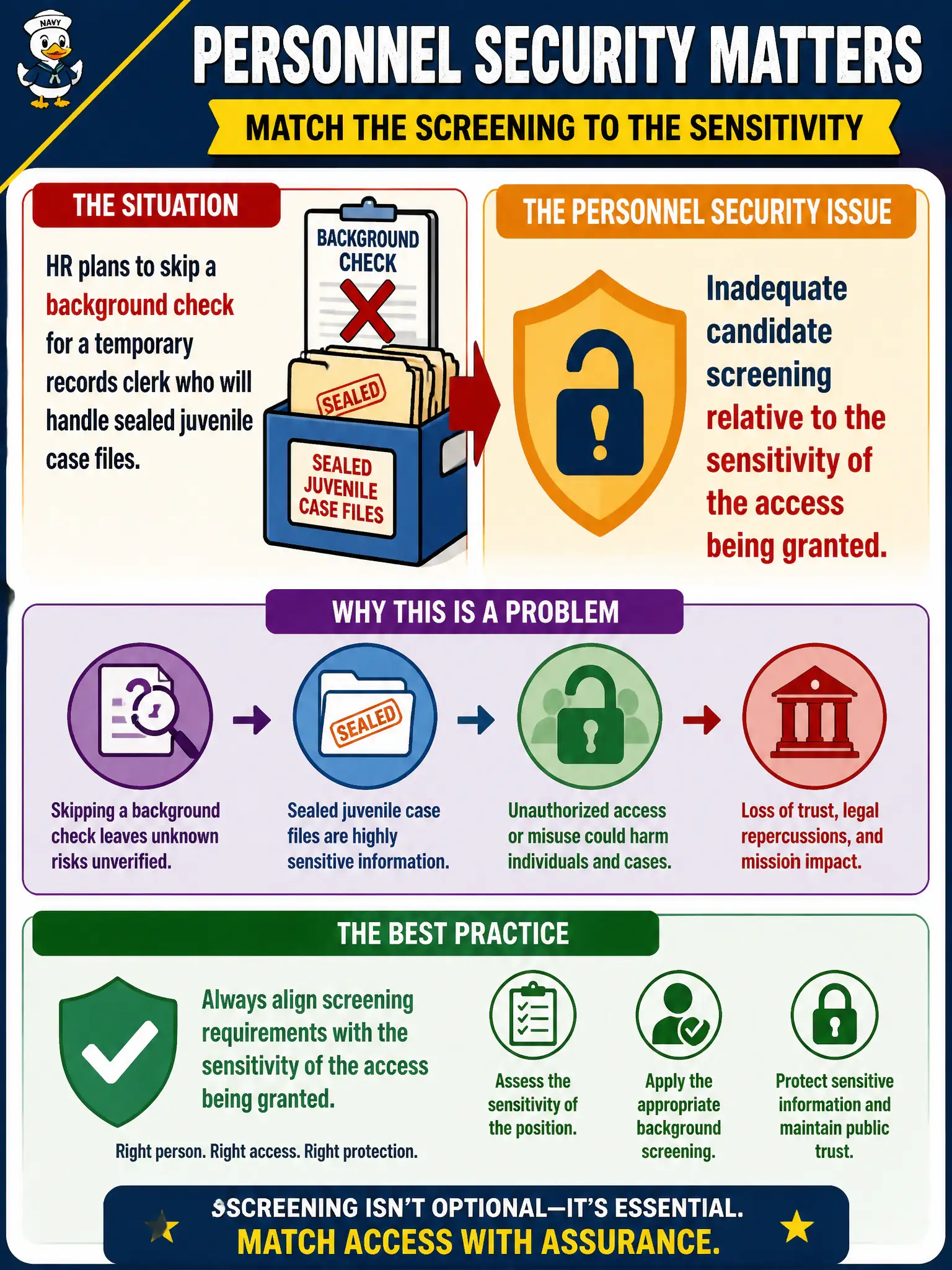
HR plans to skip a background check for a temporary records clerk who will handle sealed juvenile case files. What personnel security issue does this create?
Select an answer to reveal the explanation.
Short Explanation
Temp badge or not, sealed juvenile files are still sealed. Screening should scale with what someone can see and touch—not with how short the contract is. Skipping the check for convenience is how sensitive access walks in the front door.
Full Explanation
Personnel security screening must be proportionate to the sensitivity of data and privileges being granted, not to employment classification or contract length. A temporary records clerk handling sealed juvenile case files still receives access to highly confidential information; skipping a background check creates inadequate candidate screening relative to that exposure. Municipal charters and short tenure do not erase confidentiality duties or insider-risk pathways—wrongful disclosure, theft, or misuse of sealed records can occur in days, not only over multi-year careers. Framing the gap as merely missing privacy training understates the issue: training helps after hire, but vetting is a gate before sensitive access. Limiting screening to permanent cybersecurity roles ignores that clerks and other business users often touch the most sensitive case data. Relocating the clerk to a public lobby addresses physical placement, not fitness for access to sealed files. Exam caveat: CISSP personnel security includes hiring and screening practices scaled to role risk; temporary status is not an exemption. Operational check: define screening tiers by data classification and privilege, require completed checks before access to sealed or regulated records, and apply the same rule to temps, contractors, and permanent staff. Audit HR and access provisioning handoffs so badges and accounts cannot be issued ahead of required vetting for high-sensitivity roles.