
After completing a BIA, a county has budget to harden only a subset of processes before storm season. What is the most appropriate next step for continuity investment?
Select an answer to reveal the explanation.
Short Explanation
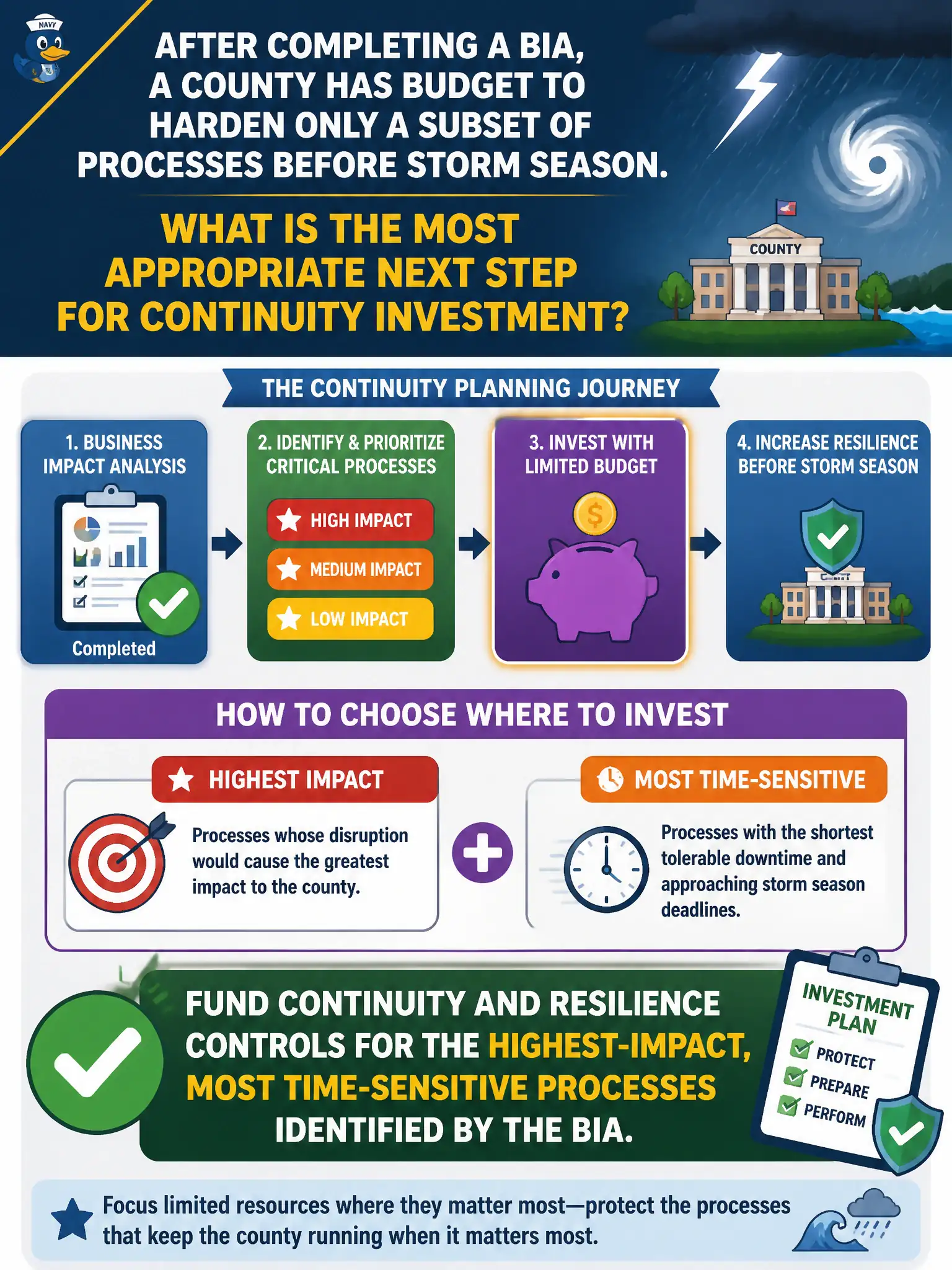
Limited dollars follow the BIA scoreboard, not equal slices of birthday cake. Harden the processes that would hurt residents and operations first if they went dark. Fairness in funding is not the same as equal priority for unequal impact.
Full Explanation
After a BIA identifies which processes produce the highest time-sensitive impact, limited continuity budgets should fund resilience for those functions first. Storm-season hardening is an investment sequencing problem: dollars applied to the steepest impact curves reduce organizational and public harm more than spreading money thinly for political fairness. Even allocation across departments treats unequal mission consequences as equal, which wastes scarce controls on low-impact offices while underprotecting emergency, utility, or other critical processes. Choosing the newest platforms because they feel modern confuses technology freshness with business criticality; legacy systems often underpin life-safety or revenue-critical operations. Deferring spend until every process shares identical recovery objectives ignores risk-based differentiation and can leave the city unprepared when weather hits. Exam caveat: assessing and prioritizing business continuity requirements means translating BIA results into sequenced controls—CISSP favors impact-driven investment over egalitarian funding theater. Operational check: map BIA rankings to a funded resilience backlog, secure executive agreement that unequal impact justifies unequal spend, and track residual risk for deferred items so council understands what remains accepted until the next budget cycle. Revisit priorities after major system changes or after exercises reveal wrong assumptions about which outages hurt residents first.