
Field crews need step-by-step wipe-and-return steps for retired tablets. Which document type should security publish?
Select an answer to reveal the explanation.
Short Explanation
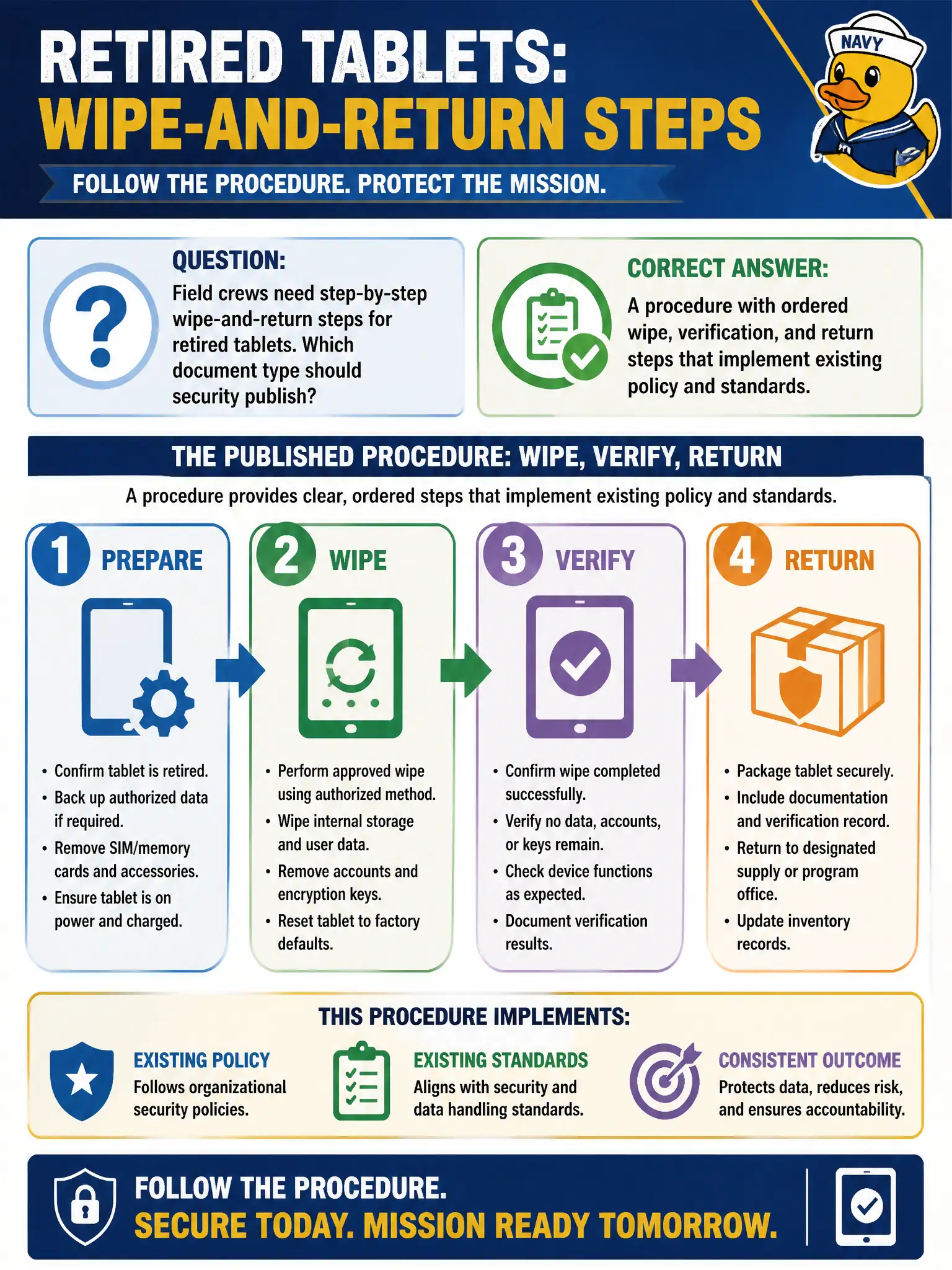
Crews in the field need a recipe, not a vision speech. Procedures are the numbered wipe-check-return steps that turn policy into muscle memory. Save the board policy for intent; give technicians the checklist.
Full Explanation
Procedures provide ordered, repeatable steps that implement existing policy and standards. Field crews retiring tablets need wipe, verification, and return steps—exactly the altitude of a procedure—not a new board vision statement. Publishing a procedure turns high-level sanitization requirements into muscle memory technicians can follow under time pressure, with clear sequence, ownership, and evidence of completion for each device returned to inventory or disposal.
A board-level policy that only states tablets are important sets intent but does not tell crews what to do at the bench. A strategic roadmap with multi-year funding themes and no steps is planning altitude, not operational instruction for tonight's turn-ins. A marketing guideline suggesting optional stickers on device boxes is neither mandatory nor a sanitization workflow and will not satisfy media-handling standards when residual data remains on flash storage.
Exam caveat: 'Step-by-step' in the stem is a strong procedure cue. Do not elevate field checklists into policies or dilute them into optional guidelines; match document type to the level of detail required for consistent execution.
Operational check: Issue a numbered wipe-verify-return procedure tied to the media sanitization standard, include verification evidence such as wipe logs or attestation fields, train depot and field staff, spot-check retired devices for residual data, and revise the procedure when tablet platforms or wipe tools change.