
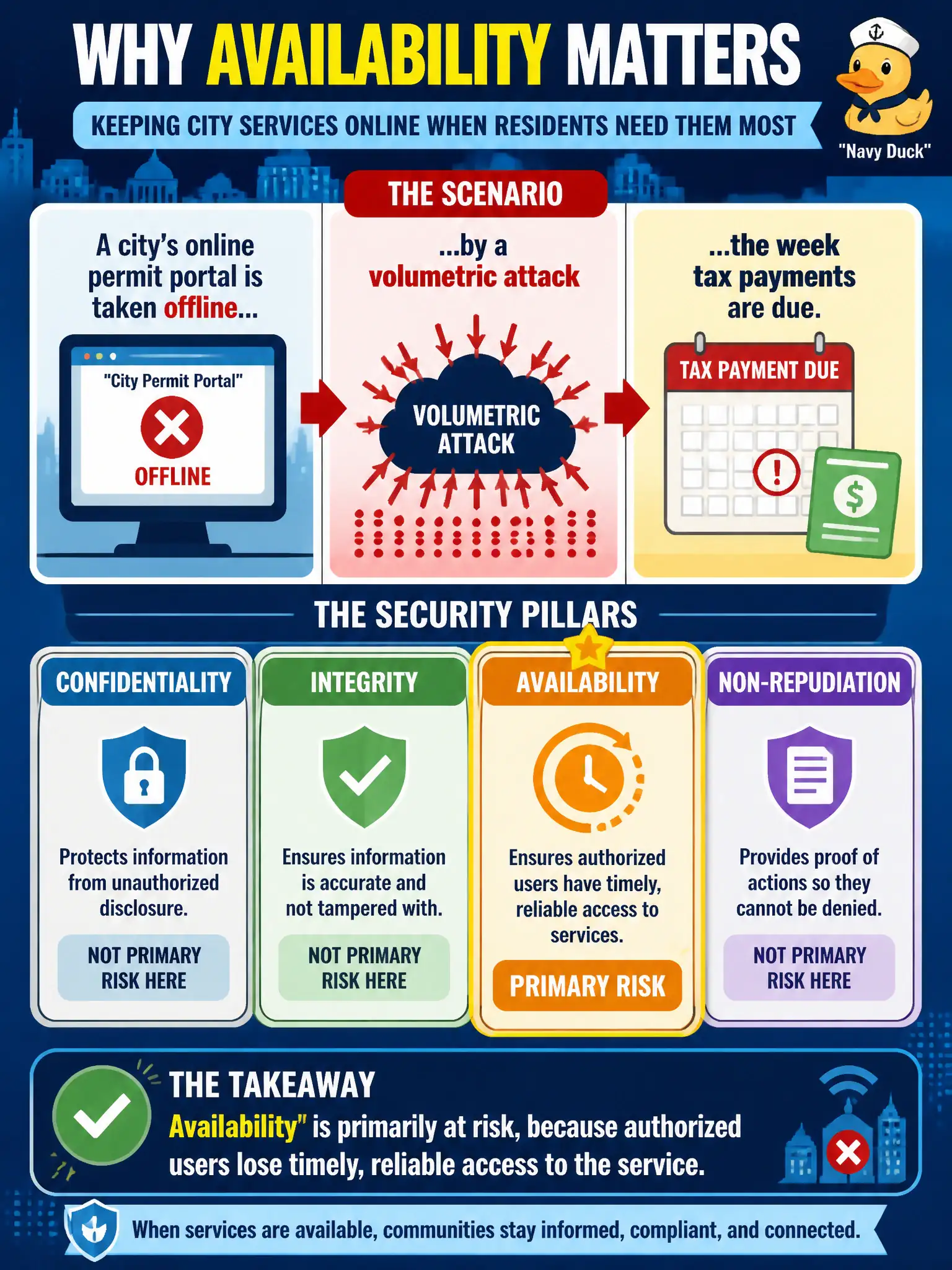
A city's online permit portal is taken offline by a volumetric attack the week tax payments are due. Which security pillar is primarily at risk for residents who cannot file?
Select an answer to reveal the explanation.
Short Explanation
When the permit site is knocked offline right before tax day, residents are locked out of a service they need — like a bridge closed during rush hour. The data may still be fine; people just cannot reach it. That is availability under fire.
Full Explanation
Availability ensures authorized users can access services and data when needed. A volumetric attack that takes a city's online permit portal offline during tax-payment week primarily threatens availability: residents and staff lose timely, reliable access even if stored records remain confidential and unmodified. Public-facing civic payment and permit systems are high-value availability targets precisely because delayed access creates citizen harm and operational backlog.
Confidentiality is not automatically broken by a volumetric flood; such attacks aim to exhaust capacity, not to expose tax amounts by default. Integrity is likewise not the primary effect—volumetric floods do not 'always rewrite payment ledgers.' Nonrepudiation (ability to prove or prevent denial of an action) is not the main resident impact when the service itself cannot be reached.
Exam caveat: DDoS and capacity-exhaustion vignettes map to availability. Candidates sometimes overfit confidentiality because 'attack' sounds like data theft; read for whether users can use the service.
Operational check: Place the portal behind DDoS-resistant capacity or scrubbing services, define peak-season surge plans before tax deadlines, monitor latency and error budgets, and publish alternate filing channels so availability failures do not strand residents.