
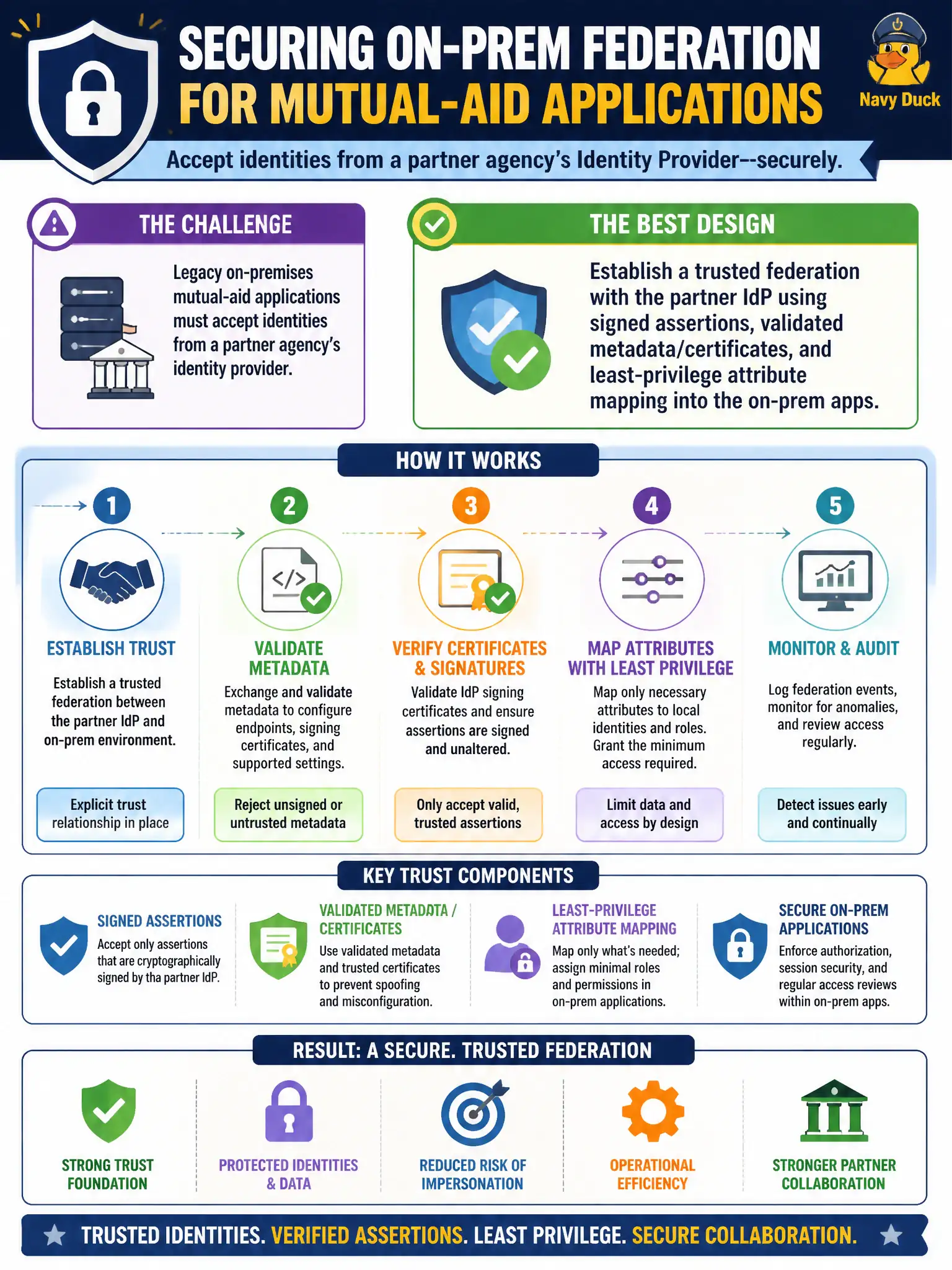
Legacy on-premises mutual-aid applications must accept identities from a partner agency’s identity provider. Which design best secures that on-prem federation?
Select an answer to reveal the explanation.
Short Explanation
Mutual-aid apps should trust a partner IdP the way agencies trust each other’s sealed credentials—signed assertions, checked certificates, and tight attribute maps—not password files taped into config. Anonymous seasonal exposure or cleartext IdP links drop the ball on on-prem federation security.
Full Explanation
Legacy on-premises mutual-aid applications that must accept partner-agency identities should establish a trusted federation with the partner identity provider. Use signed assertions, validated metadata and certificates, and least-privilege attribute mapping into the on-prem apps so cryptographic trust—not embedded foreign passwords—underpins cross-agency access. Validating issuer metadata and signatures prevents forged assertions; mapping only needed attributes limits how much partner identity data the legacy stack stores or acts on.
Hard-coding partner passwords into each legacy app’s config file and syncing nightly recreates shared-secret sprawl, bypasses federated authentication controls, and multiplies places those passwords can leak. Opening the apps anonymously on the Internet whenever mutual-aid season begins removes authentication during peak operational stress when adversaries also watch public safety systems. Disabling TLS between the IdP and apps to simplify packet inspection on the LAN exposes assertions and related material to interception and undermines the confidentiality federation depends on.
Exam caveat: on-prem federation still requires crypto trust validation and confidential assertion transport—legacy hosting does not excuse cleartext or password embedding. Operational check: configure SP trust to the partner IdP with signature and metadata validation, map minimal attributes into legacy authorization, keep TLS on IdP and assertion paths, remove embedded partner passwords, and forbid seasonal anonymous Internet exposure of mutual-aid apps.