
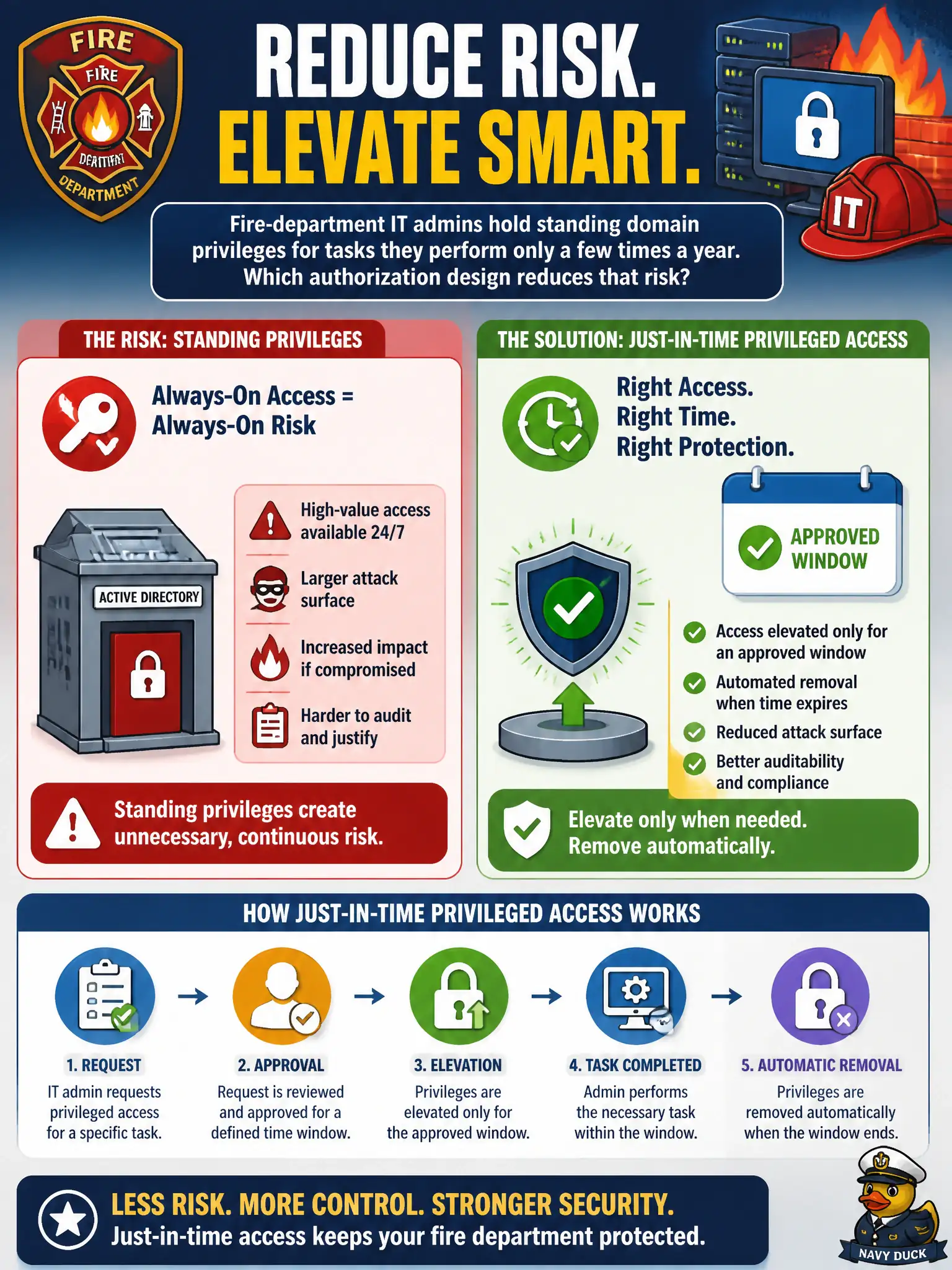
Fire-department IT admins hold standing domain privileges for tasks they perform only a few times a year. Which authorization design reduces that risk?
Select an answer to reveal the explanation.
Short Explanation
Year-round admin rights for a once-a-year job is leaving the fire axe on the coffee table. Use just-in-time elevation—approve, use, expire. More standing power, no break-glass plan, or one shared god login make the problem louder, not quieter.
Full Explanation
Just-in-time privileged access grants elevated rights only for an approved time window and then removes them automatically, shrinking the period during which stolen or misused admin credentials can harm the domain. Fire-department IT admins who perform privileged tasks only a few times a year should not retain standing domain privileges year-round; JIT with approval workflows and automatic expiry implements least privilege for rare work while keeping a controlled elevation path for planned maintenance and true emergencies.
Expanding standing privileges to every technician so coverage is simpler multiplies powerful accounts and increases blast radius without solving rarity of need. Disabling all privileged accounts permanently, including break-glass paths with no alternative, harms operations and pushes staff toward undocumented shadow admin practices. Sharing one always-privileged admin login among the entire IT roster destroys individual accountability, complicates investigation, and makes clean offboarding after turnover nearly impossible.
Exam caveat: standing admin for infrequent tasks is a classic least-privilege failure; JIT/PAM elevation is the expected remediation, with break-glass retained as a logged exception—not abolished. Operational check: inventory standing domain rights used rarely, convert them to JIT request/approve/expire workflows, keep a documented and monitored break-glass process, eliminate shared always-on admin logins, and review elevation logs after each privileged window.