
Badge readers on the police evidence room unlock automatically when power fails. What facility access design principle should the security architect enforce?
Select an answer to reveal the explanation.
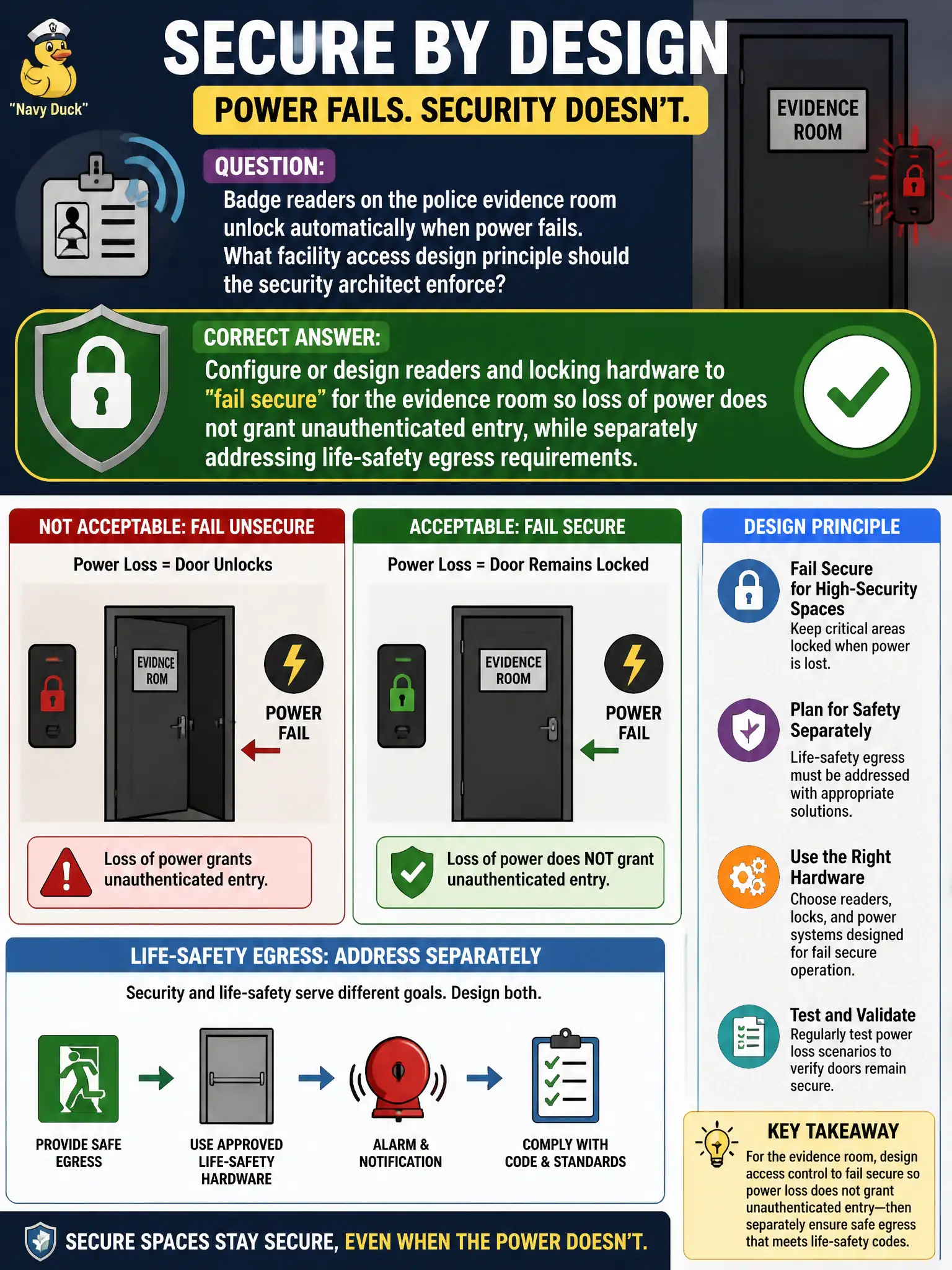
Short Explanation
Fail-open on an evidence vault is a free pass whenever the lights blink. Design those locks to fail secure so a power cut does not equal an unlocked door—and still plan lawful egress separately. Leaving the room unlocked or taping the latch open for convenience is not access control.
Full Explanation
Physical access hardware protecting high-value assets such as evidence rooms should fail secure: loss of power or reader failure must not grant unauthenticated entry that breaks chain of custody or evidence integrity. Life-safety egress remains mandatory and is engineered separately—panic hardware, free egress paths, and code-compliant exits—so security failure modes do not become permanent unlocks. Designing readers and locks to fail secure for the evidence room preserves custody during outages while safety design still allows lawful escape.
Accepting fail-open behavior for all high-value rooms merely to meet fire-code convenience without exception analysis converts every power event into an uncontrolled access window. Removing badge readers and leaving the evidence room unlocked during business hours abandons continuous protection when staff traffic is highest. Taping the door latch open so outages never delay investigators is the opposite of access control and invites both theft and integrity challenges in court.
Exam caveat: distinguish fail-secure vs fail-open by asset risk, and never use life-safety as an excuse for standing unlocked high-value spaces—solve egress with proper hardware, not propped doors. Operational check: document failure modes for evidence-room locks, confirm fail-secure entry with separate egress compliance, test outage behavior, and prohibit latch-propping or business-hours unlock policies for custody spaces.