
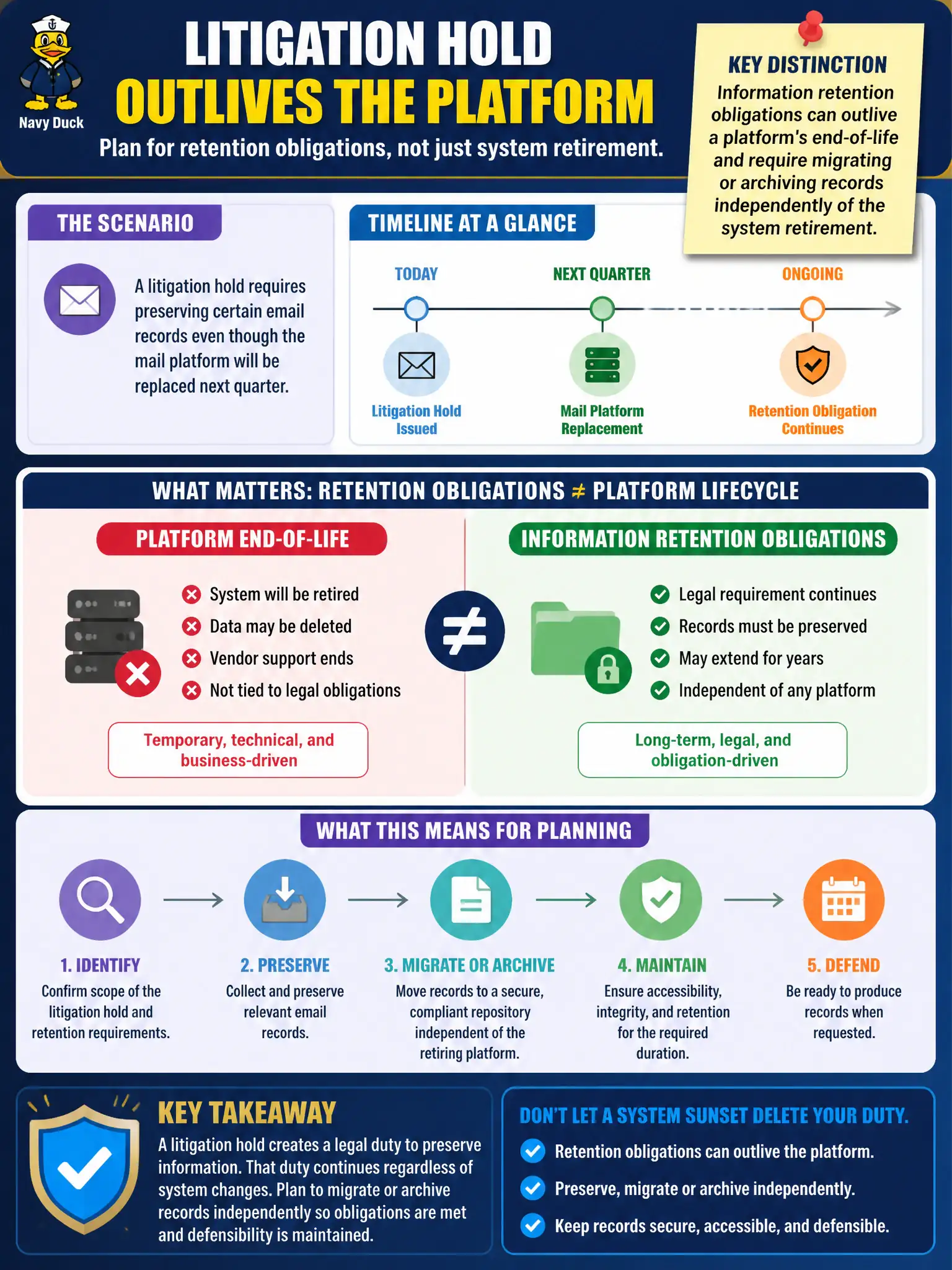
A litigation hold requires preserving certain email records even though the mail platform will be replaced next quarter. Which distinction should guide planning?
Select an answer to reveal the explanation.
Short Explanation
Turning off the old mail server does not erase a judge's hold order. The platform can retire; the records that matter still need a home. Separate "we are done with this software" from "we are allowed to destroy these messages."
Full Explanation
A litigation hold that preserves certain email records even while the mail platform is replaced teaches that information retention obligations can outlive a platform's end-of-life and require migrating or archiving records independently of system retirement. The software can retire; holds and retention duties remain binding on the city. Planning must separate "we are done with this platform" from "we are allowed to destroy these messages," or cutover becomes spoliation risk for municipal counsel.
Claiming platform EOL cancels all legal holds fails by concept: legal process obligations attach to records, not to vendor support calendars or power-off dates. Deleting email at cutover after a two-week user warning fails because warnings do not override holds or approved retention schedules. Preserving only messages newer than thirty days regardless of hold status fails as an arbitrary cutoff that can destroy responsive older records still under hold.
Exam caveat: retention and legal holds are independent of system lifecycle; migrations must carry obligated records forward intact. Operational check: identify held mailboxes and retention classes before cutover, archive or migrate them to an approved repository, and obtain legal confirmation before any destruction tied to platform shutdown.