
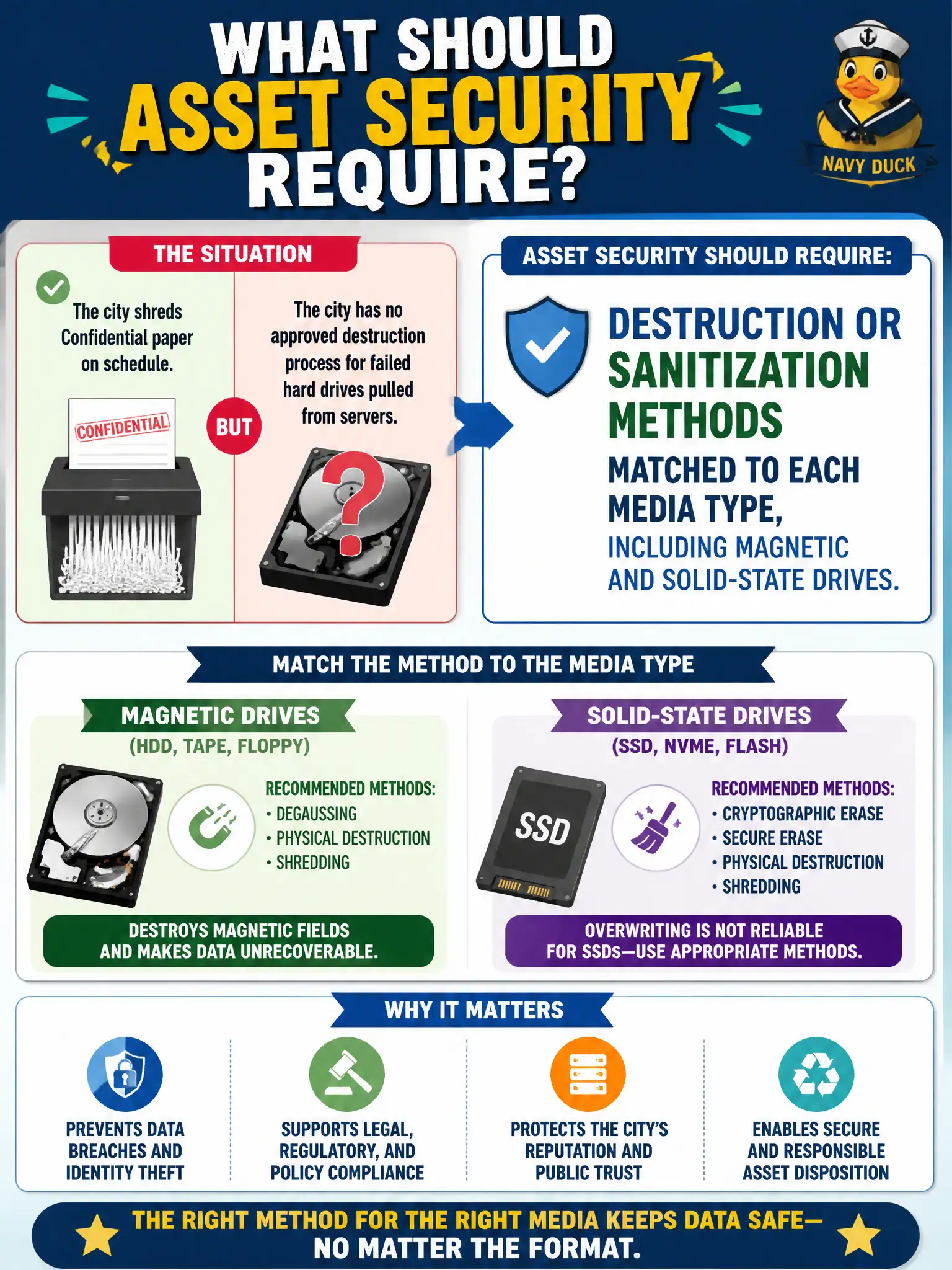
The city shreds Confidential paper on schedule but has no approved destruction process for failed hard drives pulled from servers. What should asset security require?
Select an answer to reveal the explanation.
Short Explanation
Paper shredders are great for paper and useless for platters. Failed disks need their own approved path—degauss, cryptographic erase, shred, or pulverize—whatever the media and classification call for. One policy for pulp and another for silicon keeps both out of dumpster diving hands.
Full Explanation
When Confidential paper is shredded on schedule but failed hard drives have no approved destruction path, asset security must require destruction or sanitization methods matched to each media type, including magnetic and solid-state drives. Paper shredders do not sanitize platters or NAND. Media-specific methods—degauss where appropriate, cryptographic erase, shred, pulverize, or certified destruction—keep failed disks out of dumpster-diving hands at the sensitivity the data once had.
Applying cross-cut paper shredder settings metaphorically to all digital media fails by concept: paper destruction settings are not digital sanitization. Open landfill disposal once labeled Broken fails because a CMDB status change does not remove remanent data. Parking failed drives in unlocked supply closets until a new paper shredder arrives fails as insecure storage and category error—paper equipment will not fix disk remanence.
Exam caveat: disposal controls must be media-appropriate; one policy for pulp and another for silicon. Operational check: publish a failed-drive chain of custody, select approved vendors/methods per media type, and forbid landfill or closet storage of unsanitized Confidential disks.