
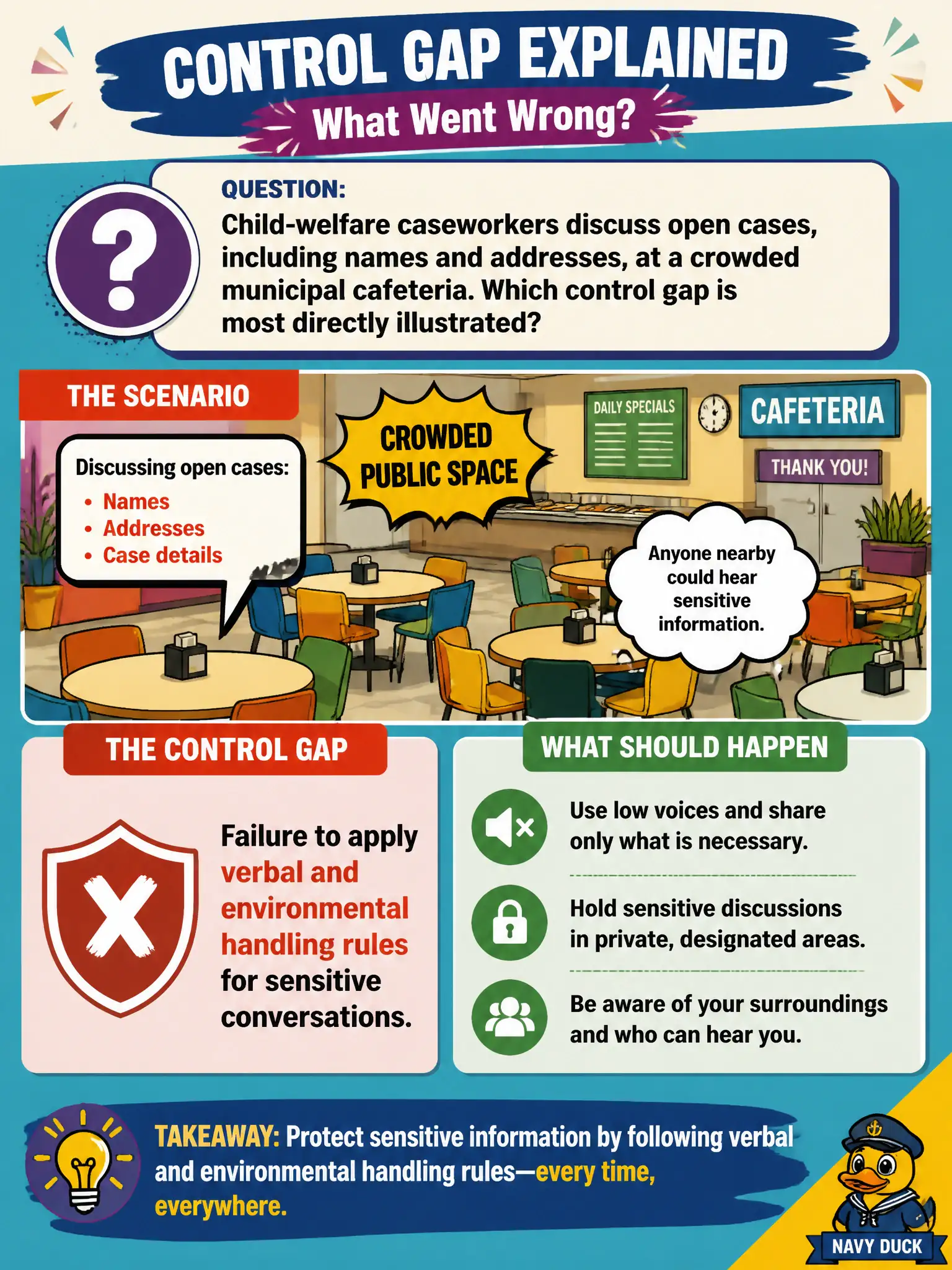
Child-welfare caseworkers discuss open cases, including names and addresses, at a crowded municipal cafeteria. Which control gap is most directly illustrated?
Select an answer to reveal the explanation.
Short Explanation
Classification is not only about files on disks—big ears in a lunch line count too. Sensitive case talk in a public cafeteria is the same leak as posting the file on a bulletin board. Handling rules cover where you speak, who can overhear, and when to move the conversation somewhere private.
Full Explanation
Child-welfare caseworkers discussing open cases—including names and addresses—in a crowded municipal cafeteria primarily illustrate failure to apply verbal and environmental handling rules for sensitive conversations. Classification and handling are not limited to files on disk; spoken disclosure in public spaces can leak the same Sensitive or Confidential content as posting a case file on a bulletin board. Environmental rules cover where staff may speak, who might overhear, and when to move discussions to private rooms.
Lack of disk encryption on cafeteria point-of-sale terminals fails by concept: the leak path described is human conversation, not POS storage. Missing end-of-life plans for cafeteria Wi-Fi access points fails because the scenario is overheard speech, not unsupported WLAN gear. Over-retention of cafeteria loyalty-card purchase histories fails as a records-retention distraction unrelated to caseworker verbal handling of child-welfare details.
Exam caveat: asset/information handling includes verbal and environmental controls; public-sector privacy scenarios often test hallway and cafeteria talk. Operational check: reinforce clean-desk and clean-conversation rules for caseworkers, provide private spaces for case discussion, and coach supervisors to interrupt cafeteria case talk immediately.