
A mining site shows two findings with the same critical label. One is a serial-only conveyor controller with no IP path. The other is a domain-joined HMI on the operations network. Which risk reading is sound?
Select an answer to reveal the explanation.
Short Explanation
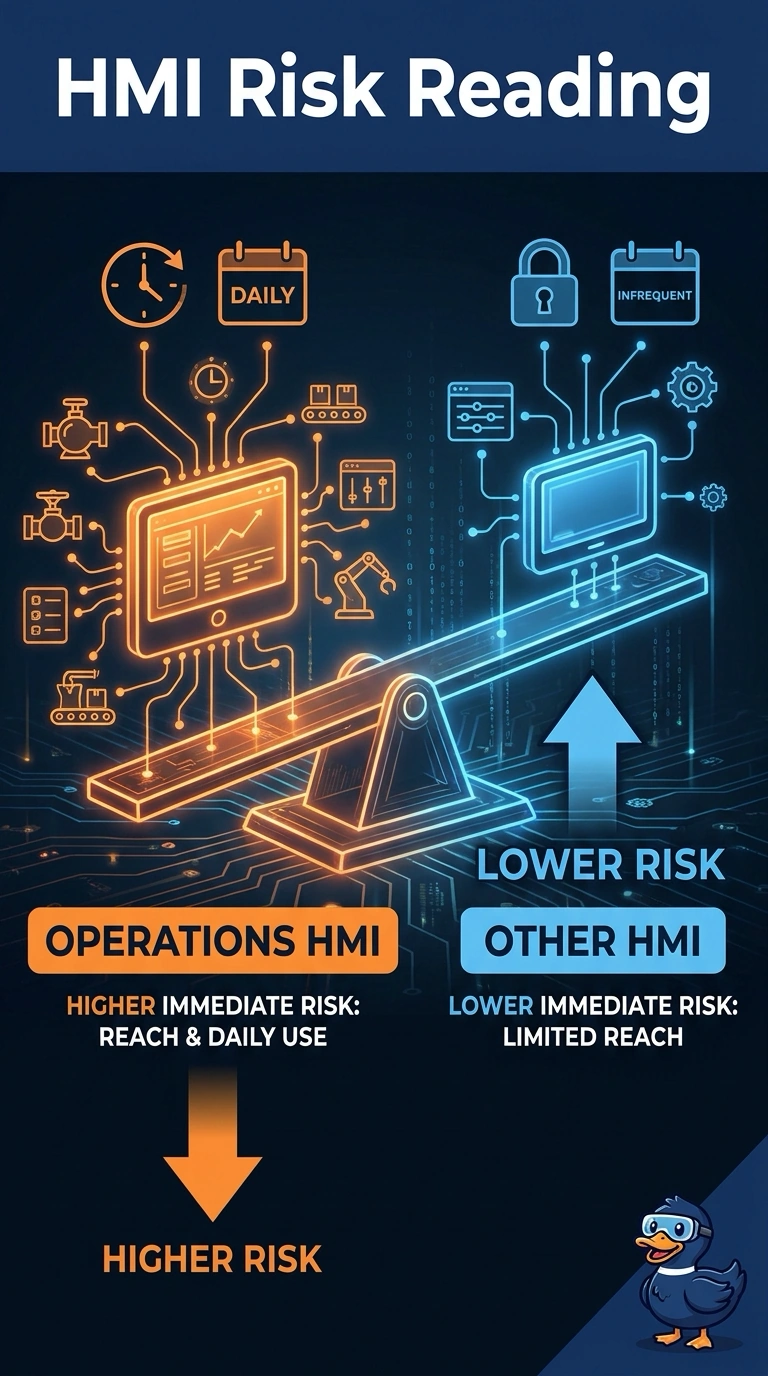
A spare radio in a locked drawer is not the radio the crew uses every hour on the open net. You rank the domain-joined HMI higher because operators and the network can already reach it. A matching label on a serial box with no path does not leapfrog that exposure.
Full Explanation
An asset reading combines the weakness with how the asset is reached and how it is used. The domain-joined HMI sits on the operations network and people use it every day, so a critical finding there is something an attacker, or a careless session, can already approach. The serial-only conveyor controller has the same label and no IP path. Its immediate network risk is lower because nothing routes to it. Standing beside the cabinet is physical access, which matters for locks and procedures, and it does not make the isolated controller the higher network risk. Treating the two findings as equal stops at the label and ignores exposure. Waiting for a captured exploit packet confuses a vulnerability reading with an incident. The risk order exists before that packet. Exam caveat: the serial controller is not deleted from the list. Its profile changes the day someone gives it an IP path, and physical access to the cabinet still needs an owner. Operational check: confirm the conveyor controller has no Ethernet uplink, then trace who can log on to the operations HMI and which controllers that HMI can reach.