
The same class of flaw is found on two systems. One is the broker in the industrial DMZ that every cell uses to reach the enterprise. The other is a skid with no uplink. Which one is the higher immediate risk?
Select an answer to reveal the explanation.
Short Explanation
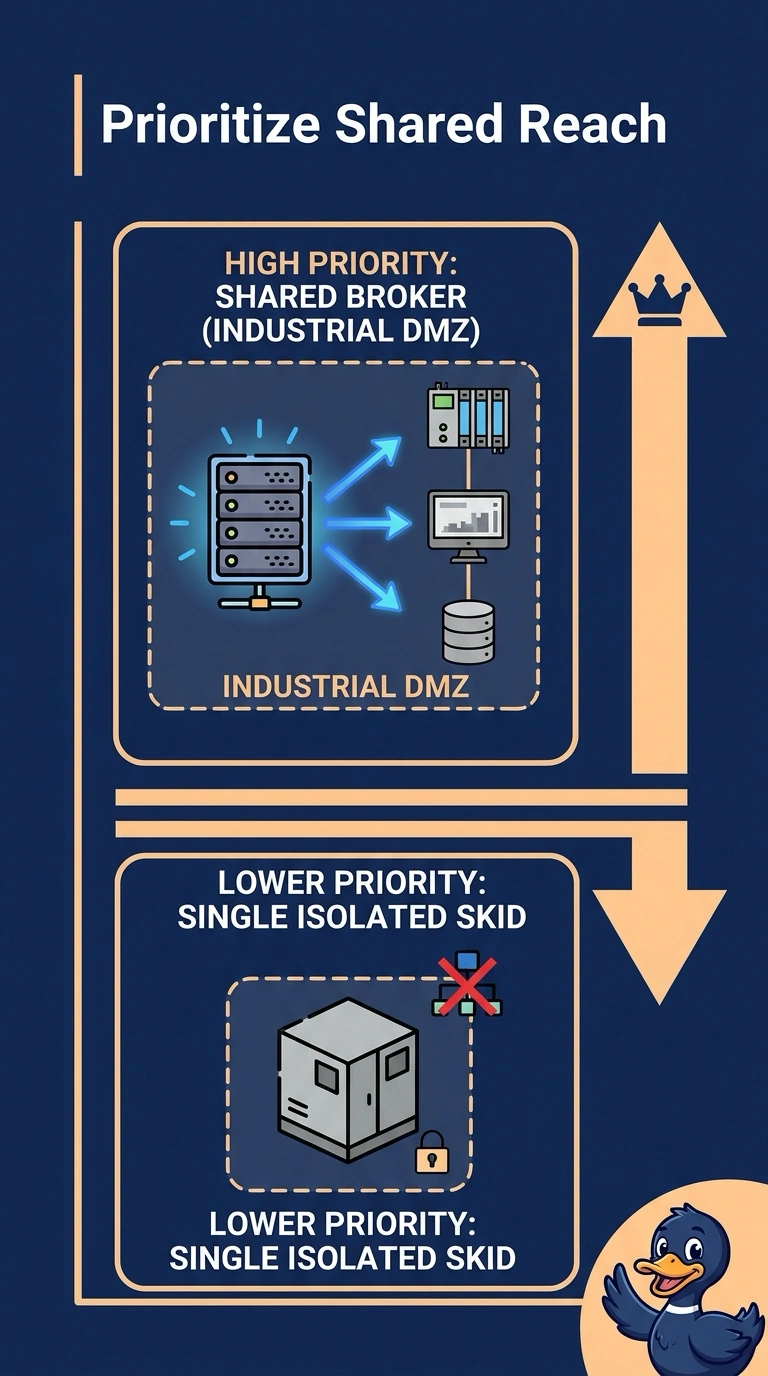
A hallway that every cell walks through matters more than a shed with no road. You rank the shared broker in the industrial DMZ first. The trap is treating a matching flaw name as a matching emergency.
Full Explanation
The broker is on the path every cell uses toward the enterprise, so a flaw there is shared exposure. The skid has no uplink, so the same class of flaw cannot currently be reached from outside that skid. A missing uplink is less exposure, not more. Equal treatment ignores the path. A skid is not automatically a safety controller, and this one is isolated. The caveat is that you still record the skid and fix it before someone connects it. The check is the connection list: many cells should appear on the broker, and none on the skid. Put the before-and-after evidence in the work order, including the interface or account you changed, the time, and the person who approved it. On the next shift, confirm the original symptom is gone and that the change did not open a second path while closing the first. If the process is still inside a live batch, leave the controller running and finish only the part of this work that does not restart it. That sequence keeps a correct fix from turning into an unplanned outage.