
A mill adds an approved drive and the visibility tool alerts on every conversation that drive starts. The conversations match the change ticket. Which step fits?
Select an answer to reveal the explanation.
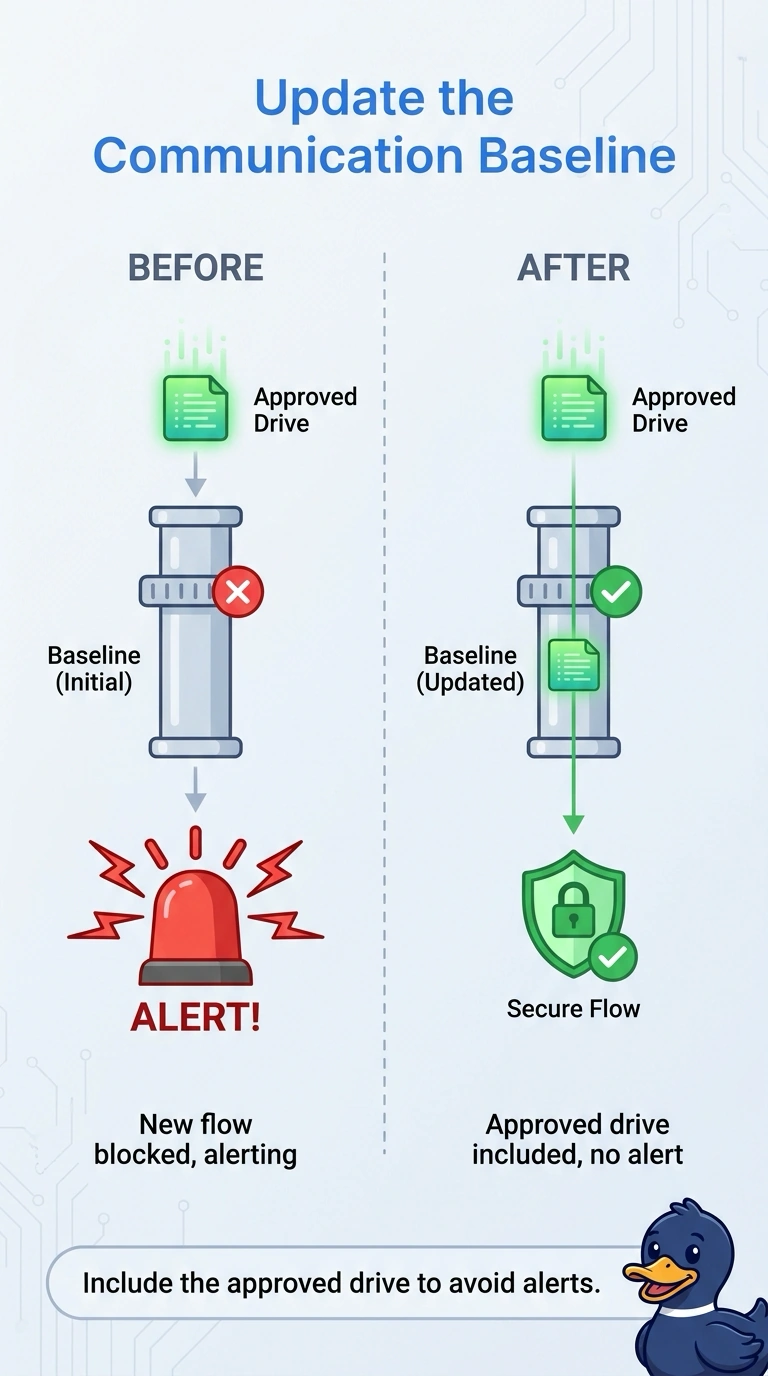
Short Explanation
The mill grew on purpose, and the sensor is still using yesterday's picture. You update the baseline so the new drive's approved conversations become normal, or you will chase them forever. Turning the sensor off, or waiting a month to call a ticketed drive an intrusion, wastes the tool.
Full Explanation
A communication baseline is a picture of approved behavior, not a permanent photograph of the plant on the day the sensor was installed. An approved drive will talk to its controller in ways the old baseline does not contain, and the tool should alert until someone updates that picture. Once the conversations match the change ticket, the step is to add them to the baseline so the next new flow is the one that stands out. Deleting the sensor stops the noise by stopping visibility, including for a later unapproved device. Holding the ticketed drive as an intrusion for a month ignores the change process that already authorized it. Pointing the sensor at the office LAN watches a different network and leaves the mill cell, including the new drive, unmonitored. Exam caveat: update the baseline from the ticket, not from every alert. An unticketed peer that appears in the same week stays an exception. Operational check: the baseline should list the new drive and its approved peer, a fresh alert should not fire for that pair, and a test host outside the ticket should still alert.