
A pharma plant has a vendor patch for a batch PLC that is running a qualified lot, and an identical spare sits powered up in the lab. Which approach fits OT change practice?
Select an answer to reveal the explanation.
Short Explanation
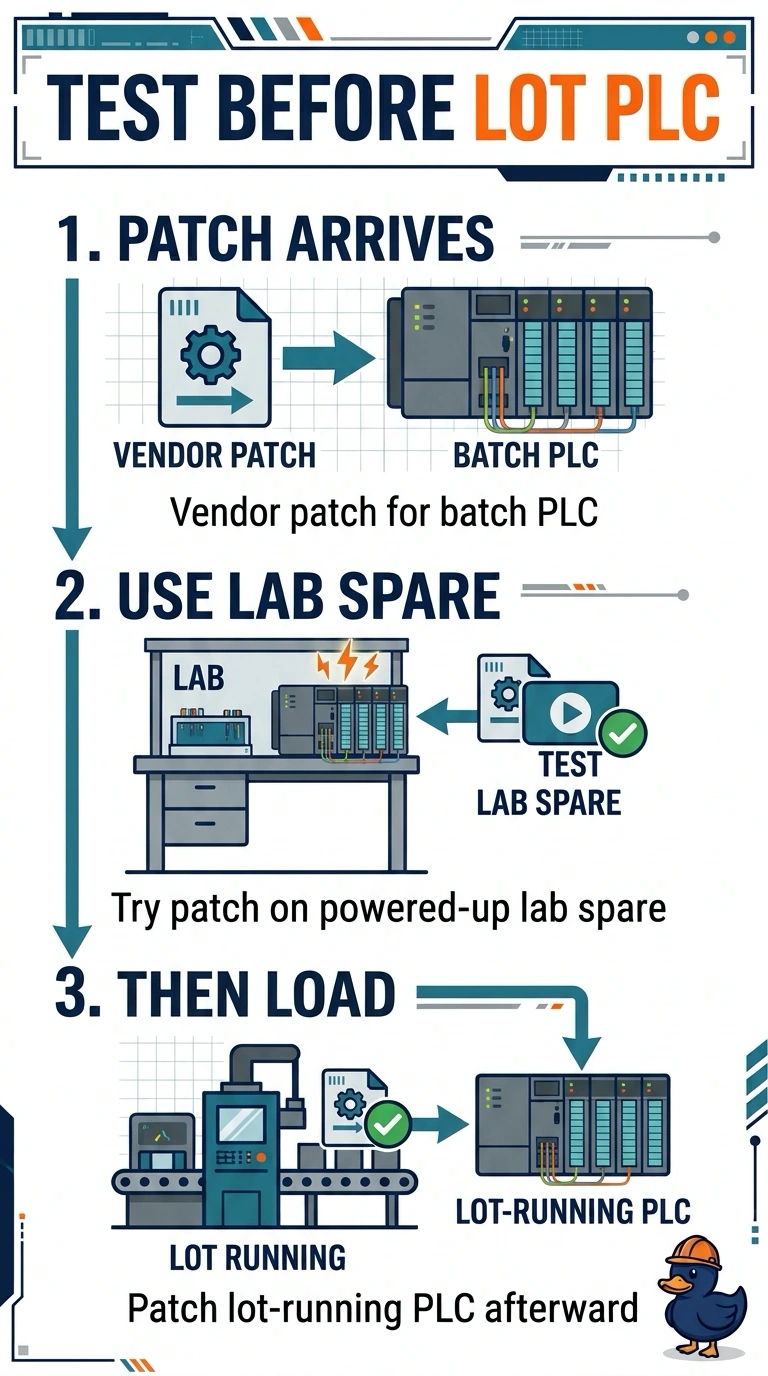
You do not stir a new ingredient into the batch that is already on the way to patients. The lab spare is where this PLC patch gets tried, while the qualified lot keeps the image it has. The running controller is the last place a first look should happen.
Full Explanation
OT change practice tests a controller patch somewhere that is not producing a qualified lot, then moves it to the running PLC only after that test. The lab spare is that place. The batch PLC keeps the image the lot was qualified on until the plant chooses a window. Loading the patch on the running PLC first makes the lot the experiment and only afterward copies the result to the spare, which reverses the order. Skipping the PLC patch because a spare exists confuses a test asset with a fix. The spare does not patch the controller that is actually running. Patching office laptops on an IT calendar exercises those laptops. It says nothing about whether this vendor image works on this PLC. Exam caveat: a spare that does not match the program, the firmware family, or the I/O the line uses is a weak stand-in. The practice is still to learn on a non-production copy before the qualified controller. The qualified lot keeps the image it already runs until the spare has shown that this patch is fit to move. Operational check: the lab record should show the patch tried on the spare, and the running PLC should still report its current image until a change window says otherwise.