
A pharmaceutical suite connects its batch server to a skid with OPC UA and sets SecurityMode to None. The connection uses OPC UA Secure Conversation over TCP without another encryption layer. Which exposure is inherent in that choice?
Select an answer to reveal the explanation.
Short Explanation
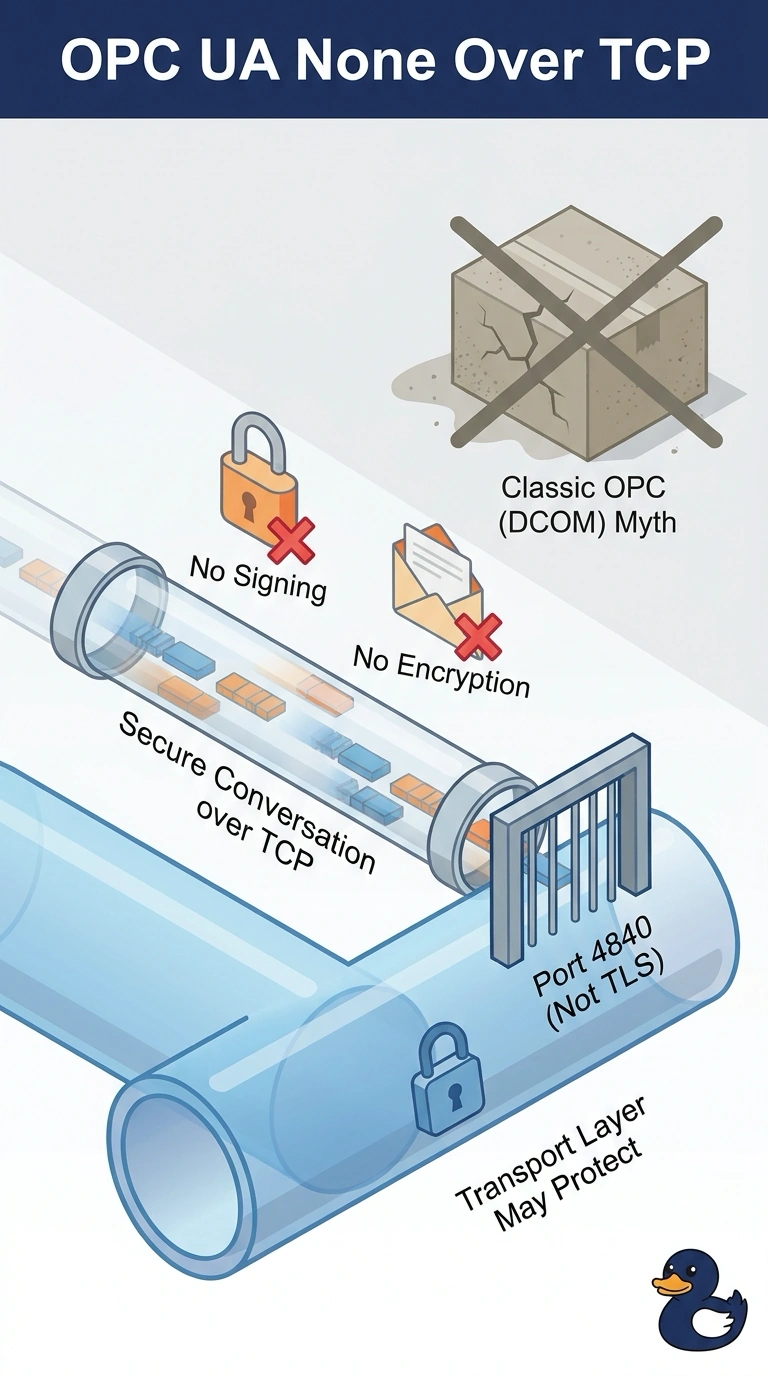
You’ve configured Secure Conversation over TCP without another encryption layer, so you get exactly what MessageSecurityMode None promises: no OPC UA message signing or encryption. Transport security can protect other OPC UA mappings, but you shouldn’t assume it protects this channel.
Full Explanation
MessageSecurityMode None provides no OPC UA message signing or encryption. With Secure Conversation over TCP and no other encryption layer, the batch server and skid exchange tags without integrity confirmation or confidentiality, so anyone able to reach the conversation can read or alter data in transit. The exposure comes from the configured mode, not from the OPC UA name. Transport security can protect other OPC UA mappings, but that does not change this channel, where the negotiated mode determines protection. OPC UA does not still depend on DCOM: that dependency belongs to classic OPC Data Access, so opening legacy DCOM ports would add obsolete attack surface without describing this session. TCP port 4840 is the usual binary port, but it does not wrap every session in TLS or override a None security mode. A framework profile is an organizational document, not a credential the skid requires in the handshake, and presenting one would not sign or encrypt messages. None is not the only defined mode; Sign or SignAndEncrypt would change the exposure. As an exam caveat, do not infer protection from the protocol name or port number. In practice, verify the negotiated security mode on both endpoints before treating the channel as protected.