
A parks wildlife unit used AI to draft automated tests for a volunteer signup app. Why should they still run human UAT?
Select an answer to reveal the explanation.
Short Explanation
AI can draft tests all day and still miss how a volunteer actually uses the signup flow on a phone in the rain. Keep human UAT—automated suites are not the same gate.
Full Explanation
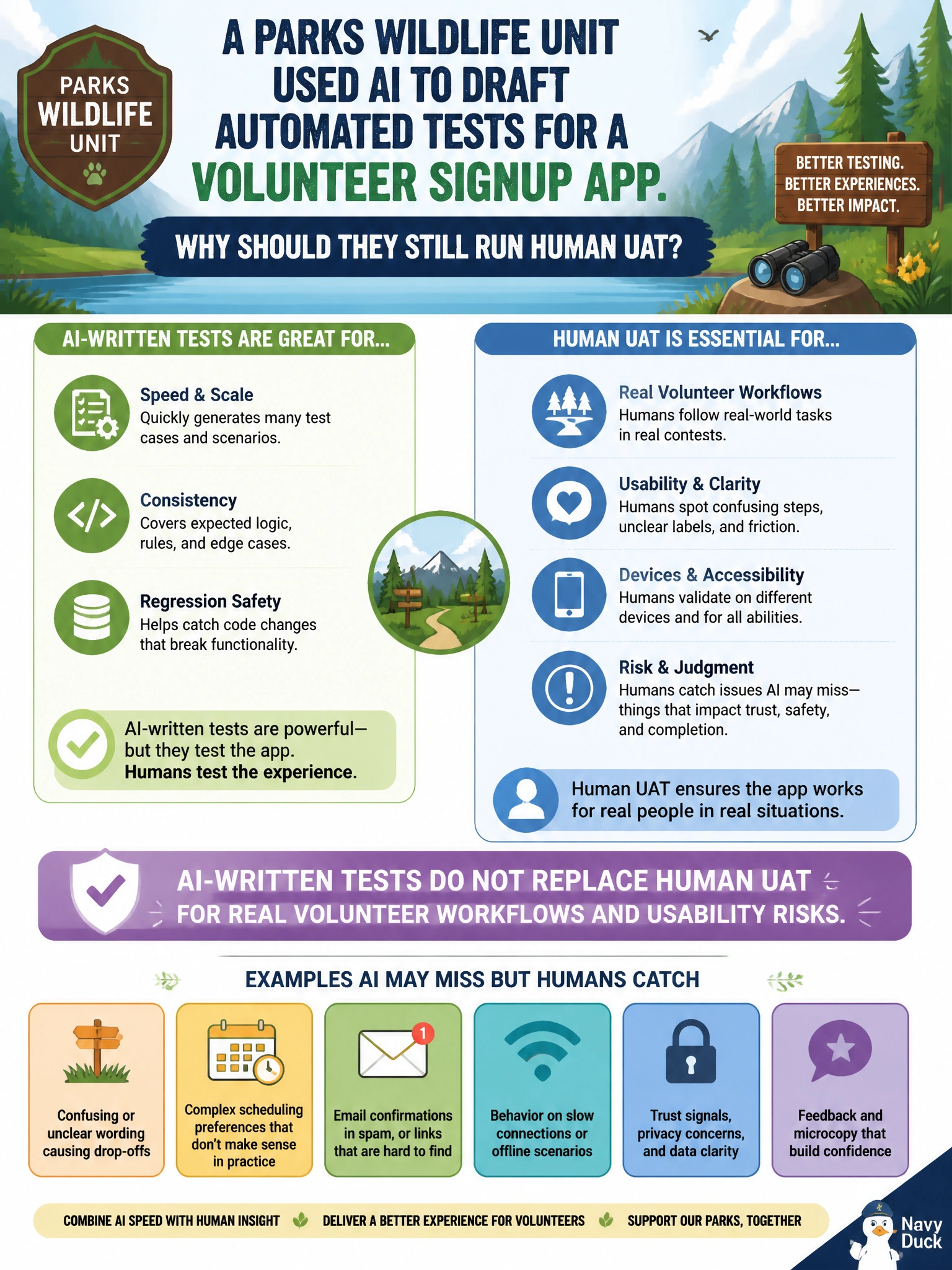
A parks wildlife unit that used AI to draft automated tests for a volunteer signup app should still run human UAT because AI-written tests do not replace validation of real volunteer workflows and usability risks. Automated suites excel at repeatable checks, but volunteers encounter confusing labels, mobile glare, accessibility barriers, and process surprises that scripted assertions may never encode. The correct quality gate keeps human UAT as a distinct assurance activity alongside—not instead of—AI-assisted automated testing.
Treating human UAT as obsolete once any AI-written tests exist fails because coverage of code paths is not the same as fitness for volunteer use in the field. Claiming UAT only matters for hardware devices, never web apps, fails by concept: web and mobile civic apps are classic UAT targets for task completion, clarity, and accessibility. Forbidding volunteers from touching pre-release software under any policy fails when appropriately scoped, consented UAT is the safest way to find workflow defects before public launch—blanket bans remove a critical feedback channel.
Exam caveat: UAT participants must use representative devices and scenarios (phone signup at a trailhead, account recovery, minors vs adults) or the session will rubber-stamp desktop-happy-path flows. Also separate defect triage from “volunteers liked the branding” feedback.
Operational check: keep the AI-drafted automated suite, schedule structured UAT with volunteer personas, capture usability and accessibility findings, and block release on critical workflow failures even if automated tests are green.