
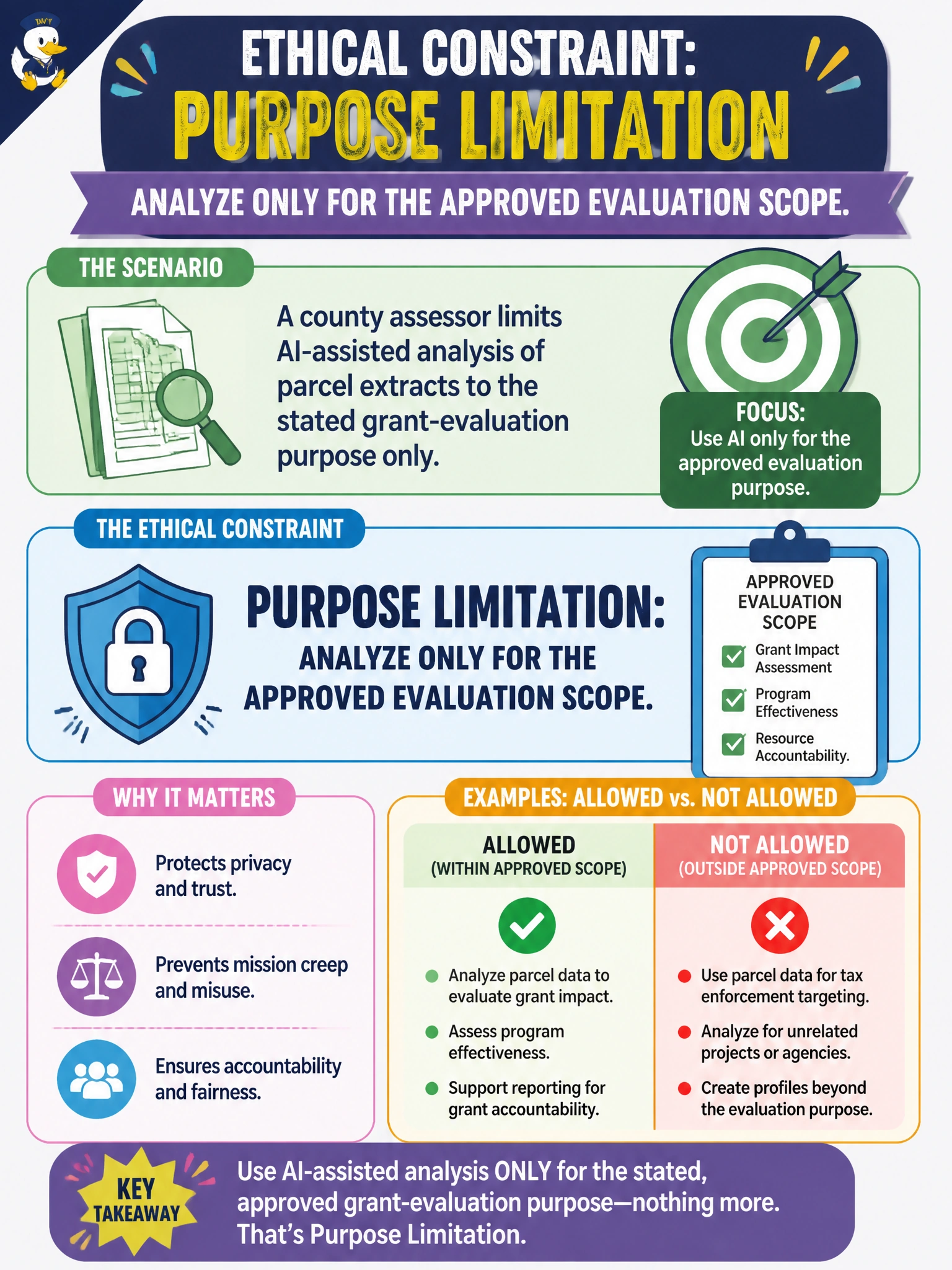
A county assessor limits AI-assisted analysis of parcel extracts to the stated grant-evaluation purpose only. Which ethical constraint is this?
Select an answer to reveal the explanation.
Short Explanation
Purpose limitation is the “we said we’d use it for the grant evaluation—and that’s the menu.” AI analysis does not unlock bonus missions like marketing or surprise enforcement. Stick to the approved why.
Full Explanation
Limiting AI-assisted analysis of parcel extracts to the stated grant-evaluation purpose is purpose limitation: processing occurs only for the approved evaluation scope rather than opportunistic secondary missions. County assessor ethics and often privacy law expect that data collected or shared for a grant evaluation is not silently reused for marketing, hobby model training, or unrelated enforcement. AI convenience does not expand the lawful or ethical purpose menu.
Secondary marketing use of assessor extracts without notice fails because it violates purpose limitation and public trust. Training a public hobby model on the full parcel owner list fails by concept: publishing or training on owner lists can create exposure and is outside grant-evaluation aims. Reusing grant data for unrelated code-enforcement sweeps by default fails because secondary enforcement use needs separate legal and policy authority, not an AI analyst’s curiosity.
Exam caveat: Purpose limitation is compatible with legally required disclosures or audits, but those are distinct pathways—not informal scope creep through a notebook. Documented amendments to purpose should go through the same governance that approved the grant evaluation.
Operational check: Encode allowed purpose in data-sharing agreements and warehouse access labels, configure AI tools with project-scoped data, review queries for out-of-scope joins, and prohibit exports aimed at marketing or hobby training. Require new approval before any enforcement secondary use.